

How To Deep Clean Stinky Dish Towels
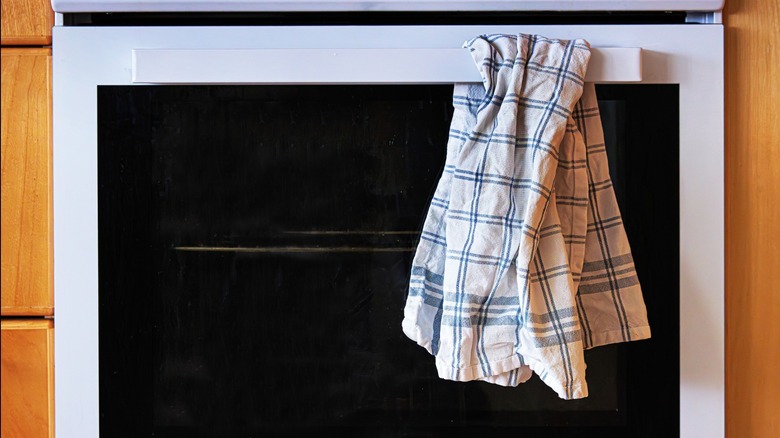
Picture yourself just finishing up with dinner in the kitchen. You've made a delicious meal, and now you're tidying up. You grab a dish towel to wipe the counter. The material feels damp and a little slimy. Once you lift the cloth, that sour, nasty smell immediately hits your nose and you're convinced the dish towel is dirtier than the counter you were trying to clean. All home cooks know that dish towels can get really dirty, really fast. So how do you stop that funk? It's easier than you think as long as you have hot water, vinegar, and baking soda.
To reduce the amount of bacteria on a dish towel, you should always wash it in hot water. The water should reach at least 60 degrees Celsius. At that temperature, bacteria reaches high-level disinfection, according to the journal Infection Ecology and Epidemiology, which is pretty clean. If you tumble dry at 70 degrees Celsius after washing, it kills even more bacteria, giving you almost bacteria-free towels.
If you use detergents and fabric softener, those can cling to the fibers even after cleaning. Some grease and odor may resist heat and washing. If the towel becomes damp again, bacteria and smells can build up, trapped by the residue of commercial cleaners. To battle that, wash dish towels with a half cup of vinegar instead of detergent. Vinegar has antibacterial properties that increase with heat, so this method offers an added line of defense.
Other ways to clean your dish towels
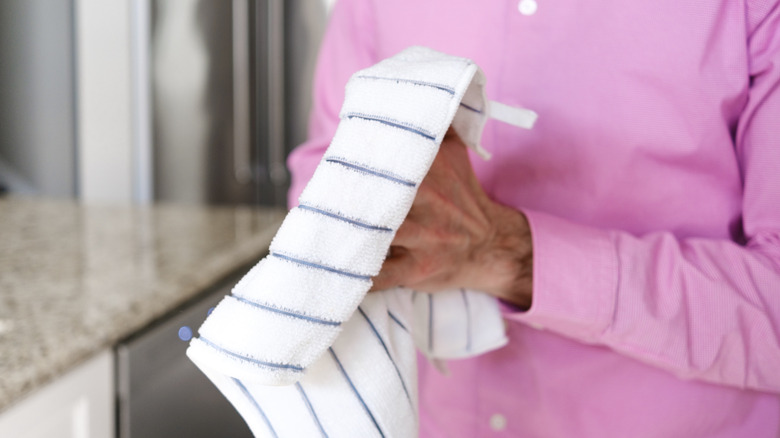
Like vinegar, baking soda can also help break down residue that is left over from detergent and fabric softener. Even though these products are meant to clean, any residue left behind can allow bacteria to grow. If you wash once with vinegar and then again with baking soda, the fibers in your dish towel will experience a deep clean and as much bacteria as possible will be removed. Given how easy this method is, it is likely the most efficient way to keep dish towels clean.
Another tip is to use different dish towels for different tasks. Avoid cross-contamination whenever you can, and you'll greatly reduce the spread of bacteria. It is common for someone to wipe their hands on a towel after handling meat. Later, they may use the same towel to dry a dish, forgetting it is already contaminated. Keep hand towels separate from ones that touch surfaces and dishes.
Make sure you give your dish towels a deep clean with vinegar and baking soda every couple of weeks, ideally no more than a month apart. Tumble dry the towels, and ensure they dry thoroughly between uses. The longer they remain bunched up and damp, the more bacteria will grow. You can also buy inexpensive towels, allowing you to change them every day to further limit the spread of bacteria. Keep the others rolled up in a drawer until you need them. It's simple, effective, and keeps your kitchen cleaner.