

Whole Foods Vs The Fresh Market: Which Grocery Chain Is More Expensive?
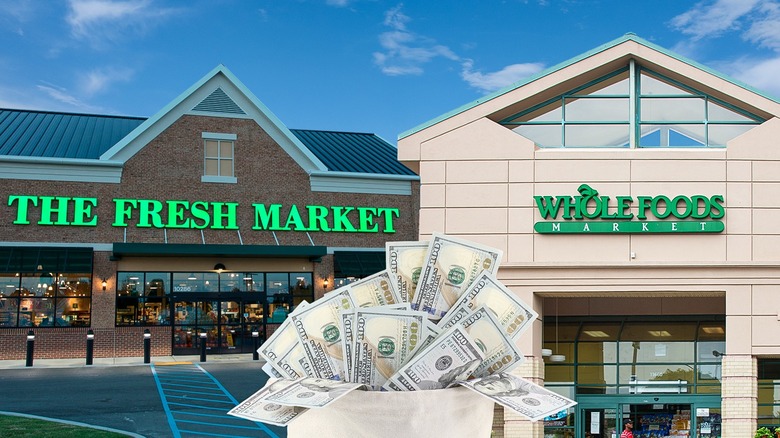
Everyone knows that sinking sense of dissatisfaction as the grocery bill totales higher than you thought for less than you wanted. Whole Foods and The Fresh Market are health-focused contenders on the U.S. supermarket scene, but Tasting Table couldn't resist digging a little deeper to see which provides the best bang for your buck. The findings were surprisingly revealing: The Fresh Market takes the edge ... just.
It isn't the first time that The Fresh Market has nabbed center stage (its rotisserie chicken is so good, we'd serve it at all our holiday meals). Yet, evidently, we need a new podium — this time, specifically for financial value. Our research revealed a subtle price difference on same-brand items: A 64oz carton of Lactaid Reduced Fat Milk cost $3.99 at The Fresh Market and $5.49 at Whole Foods Market. There were some outliers, though, especially in the meat section. For instance, at The Fresh Market, Atlantic Salmon Fillets cost $14.99 per lb, while at Whole Foods, a similar Atlantic Salmon Fillet costs just $12.77 per lb. Keep in mind that prices can fluctuate based on location and store too. As a general rule, though, the typical multi-item grocery haul is cheaper at The Fresh Market — even after Amazon swooped in to acquire Whole Foods and cut costs.
Should you swap to The Fresh Market?
Whole Foods and The Fresh Market might be cut from the same cloth (aka boutique grocery chains best visited for special occasions), but there's a subtle contrast in pricing. It's not as straightforward as switching solely to The Fresh Market for all your shopping needs, though, especially since some products at Whole Foods can be marginally cheaper anyway. In reality, it's probably best to take a middle-of-the-road approach: rotate between stores to find the best deals for specific items.
Ultimately, the answer lies in the different strengths and strategies of each chain. Deciding whether Whole Foods or The Fresh Market has the best produce might seem like a separate rabbit hole, but it actually explains the price divide. The Fresh Market follows a local sourcing strategy, meaning lower transportation costs and an emphasis on seasonal goods. In contrast, the reason why Whole Foods is best for organic shopping is that its range is incredibly expansive, which, of course, sometimes means a higher price tag. It's possible to shop seasonally at Whole Foods to save on produce, but that luxury of choice and the thin difference between prices leaves the two neck-and-neck regardless.