

The Exact Temperature That Chocolate Melts Based On The Type You're Using
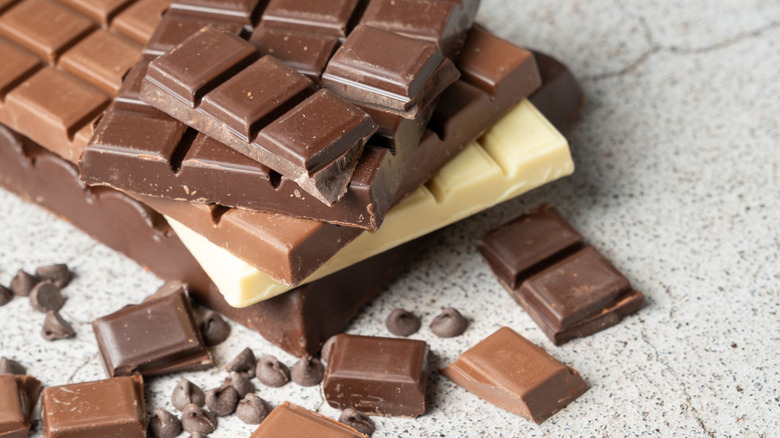
Whether you're learning how to temper chocolate the right way or just melting it for a batch of brownies, heating this ingredient takes more precision than you might think. Different types actually melt at different temperatures, and if you disregard this, you can absolutely overheat chocolate and bungle your recipe. Luckily, a candy thermometer and a little knowledge can put you on the path to the best chocolate-covered strawberries, homemade truffles, and more.
The way that a certain chocolate melts has to do with its ingredient makeup: The more fat it contains in proportion to cocoa solids, the lower the melting point. Products labeled "dark chocolate" usually contain at least 50% cocoa solids and starts to melt around 113 degrees Fahrenheit. Milk chocolate contains 10% to 50% solids, plus added dairy and milkfat, so most varieties melt at a lower temperature of 104 degrees Fahrenheit. White chocolate contains no cocoa solids — just cocoa butter — so it melts the most readily, starting at 99 degrees Fahrenheit.
What happens if you heat chocolate way past its melting point? It will seize, turning unworkably thick and lumpy, and it could take on a bitter, burnt taste. Dark chocolate will overheat starting around 120 degrees Fahrenheit, while milk and white varieties risk seizing at temps above 113 degrees Fahrenheit. Even if you don't need to carefully temper it, a few extra tips you need for melting chocolate can further help you avoid a sad outcome.
More tips for melting chocolate and preventing seizing
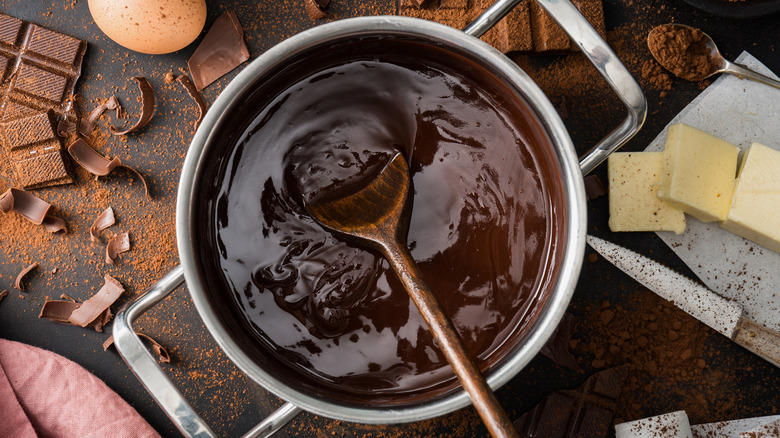
The best way to track the melting process of chocolate and ensure it doesn't burn is to use an instant-read candy thermometer, which differs from a meat thermometer (don't mix them up!). This tool is especially vital for tempering, which requires that chocolate be at the perfect temperatures during the melting, cooling, and re-melting steps.
To further ensure success, avoid harsh, imprecise melting methods like nuking chocolate in the microwave or plopping it into a pot over high heat. The gentlest approach is to use a double boiler, or a glass bowl set over a pot of simmering water. Stirring the chocolate around in the bowl melts it evenly with no risk of burnt or under-melted parts. If you must use the microwave, set it to the lowest power setting and heat the chocolate in 30-second intervals, stirring it and testing it with your thermometer in between.
The quality of your chocolate may also put road bumps in the melting process. For instance, most chocolate chips or morsels have a low cocoa butter content and may also contain additives to help them stay solid. Melting them smoothly can be difficult to impossible, even if you bring them to the same temperature you'd use for other chocolates. The ideal chocolate type for tempering (and therefore the best type of chocolate to use for dipping) is high-quality couverture, which contains plenty of cocoa butter and melts amazingly well, whether it's milk, white, or dark.