

There's A Simple Way To Ensure Your Homemade Candy Sets Properly
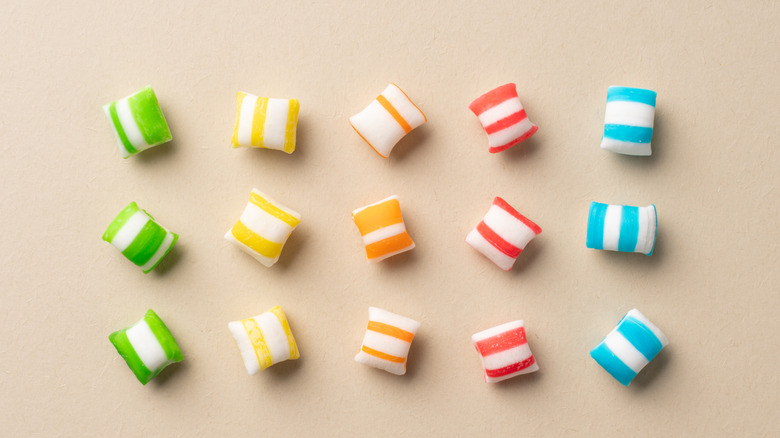
Making candy with your family is a wonderful way to spend a weekend afternoon. However, picky kids also happen to be the harshest of food critics, which means your sweet treats better be able to stand up against store-bought versions, offering that characteristic snap. The simplest way to ensure your candy sets properly (and gets the adolescent seal of approval) is to make it on a dry day.
Candy making may sound like an awesome rainy day activity to keep the family entertained indoors, but wet weather is the enemy of sugar-based sweets like hard candies, and even toffee and brittle. Hard candies are essentially made by heating sugar to a precise temperature and cooling it down rapidly so it can set quickly to develop a glassy finish and a firm snap. The problem is that on a wet or muggy day when there's lots of humidity in the air, the candy will absorb this extra moisture and take more time to cool, which can cause the sugar inside to crystallize. This not only results in candy with a grainy texture, but it prevents candy from hardening up, leaving it soft and chewy rather than crisp, as intended.
The good news, however, is that you can eliminate this issue by making brittle and lollipops on a cool, dry day. Simply check the weather report to guarantee that there's no risk of rain or hot weather, before you reach for a recipe card.
Save candy making for fall and winter
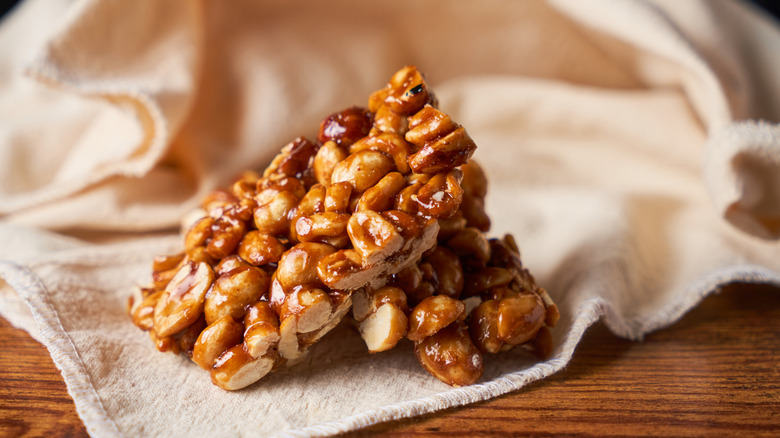
If you've ever made candy in the summer and winter months, you'll already know how the results can be affected by the weather. Even if you've used the exact same recipe, the outcome can be vastly different due to external factors that are out of your control. To ensure success, regardless of the weather, we recommend preparing some easy confections for beginner candy makers like caramels. They often contain glucose or corn syrup, which can slow down the rate of crystallization and provide a purposefully softer texture, such is the case with these chewy salted caramel candies. However, if you follow the recipe to a tee on a cool and dry autumn or winter's day, you might not need to stick to specific recipes.
Ignoring the weather (or season) remains one of the biggest mistakes when preparing peanut brittle, particularly after you've spent time selecting a heavy-bottomed pan to prevent scorching and a thermometer to guarantee sugar reaches an ideal 300 degrees. Once the mixture has been poured out onto a greased tray, it needs to cool quickly to prevent unwanted graininess or stickiness. As the name implies, brittle is supposed to be crisp and offer a snap. So, the final cooling stage has to be on point, which is why dry weather — or a cool blast from the air conditioner — is a must.