

Here's What Actually Makes Waterfall Kitchen Countertops So Expensive
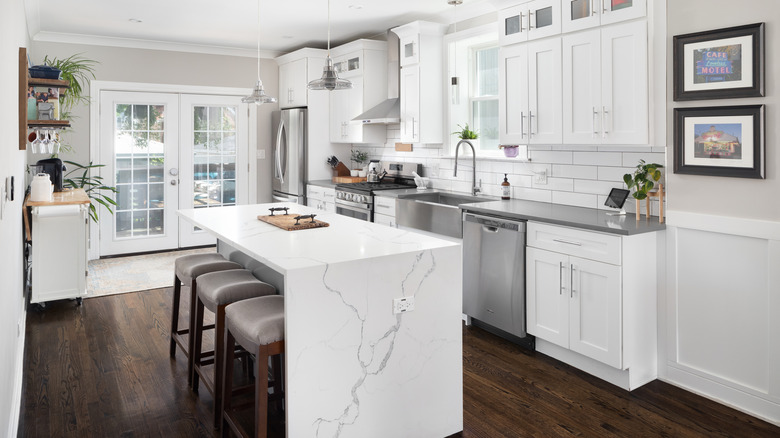
When someone mentions a waterfall countertop, they're not talking about flowing water or the waterfall-style faucets installed in many modern kitchens. This type of countertop is actually a bold, sleek design feature in which the surface doesn't stop at the edge, but cascades like a waterfall straight down the sides to meet the floor. This creates a seamless, sculptural look that's artsy but expensive. Although some versions may cost around $200, the price can easily exceed $1,200.
The elevated price point isn't just because of high demand. It mostly reflects the need for extra materials, precision fabrication, and skilled labor for installation. While standard countertops typically feature a flat slab resting atop the cabinetry, a waterfall countertop requires more of the same material wrapping down the sides. On kitchen islands, a popular place for waterfall counters, the price can vary depending on whether you opt for partial versus full‑height extension to the ground on one side or both. Material choice matters as well. The market price per foot for granite versus quartz, marble, concrete, porcelain, or wood will differ. Generally, options like marble will cost more than wood or concrete.
Achieving a seamless flowing "fall" down the side means meticulously cut pieces. Mitered edges are necessary when two 45-degree slab edges join to form a 90-degree corner. Sometimes fabrication requires the use of a computer numerical control laser cutter (CNC), which can increase the cost by as much as $2,000. Installation expense increases as well, since the slab edges must align perfectly to get the desired effect. Precision is crucial when marbled veins or other patterns must follow a contiguous path from countertop to floor.
More costs to consider
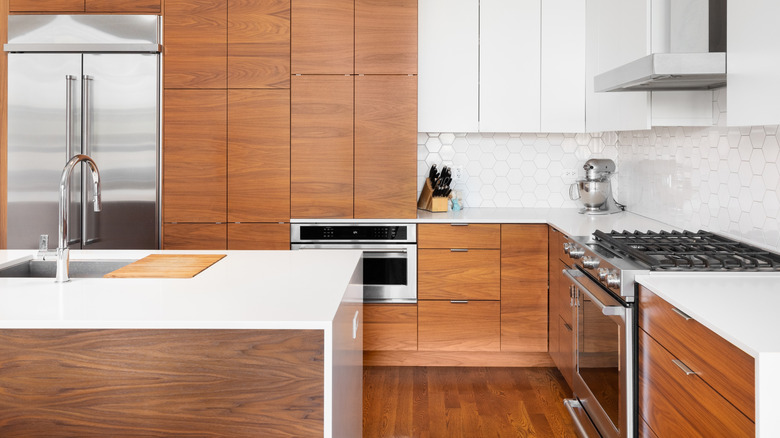
Any kitchen renovation requires a considerable investment of time and money. Granted, waterfall countertops do cost more, so it helps to plan for any creeping expenses involved, even the seemingly small ones. For example, when stone or other materials cover the sides of a kitchen counter, it reduces space for things generally positioned there, such as electrical outlets. Ideally, you'd avoid outlets to preserve the pristine waterfall aesthetic, so there may be a cost for electrical rerouting or reinstallation.
Since waterfall designs typically go all the way to the floor, the material may get more wear-and-tear from scuff marks, accidental bumps, or rambunctious youngsters at play. This means potentially more care and cost for maintenance, especially when sealing or treating marble or other soft stone surfaces. The waterfall side of a kitchen island, depending on placement, could also cut off cabinet access, built-in storage, or seating options. In that case, you'll need to consider any related expense for installing more cabinet space elsewhere, or adding a small bistro table and chairs for kitchen guests or helpers.
A waterfall countertop is more than a functional kitchen component — it can set the entire tone of this well-loved, highly frequented part of your home. The investment could well pay off in terms of the calming, elegant, luxurious ambiance it brings — as well as in potential increased resale value down the road.