

10 Tips For Designing A Coffee Bar In Your Kitchen
We may receive a commission on purchases made from links.
It is true that coffee often tastes better at a coffee shop than at home. But there is no denying the feeling of waking up to the rich, earthy aroma of coffee brewed in a cafe-style setup in your own kitchen that you can enjoy without having to put your outdoor sweatpants on. Say adios to hectic mornings waiting in a queue to pick up your caffeine fix. With a dedicated nook for displaying your mug collection, a state-of-the-art coffee machine, and brewing essentials, you are ready to awaken your inner barista.
Adding a coffee bar to your kitchen might sound like it involves some serious remodeling, but the good news is that this project can be as low or high maintenance as you want it to be. If you aren't keen on a major overhaul, simply set up shop with an existing kitchen cabinet away from heated appliances. If you're looking to make your coffee bar the focal point of the kitchen, you can give in to all the frills and fancies — can we tempt you with a chalkboard menu, bistro chairs, and a prep sink for efficient cleanup?
To transform an unused corner of your kitchen countertop into your favorite cafe, we turned to Rohan Jain, director at RJ Projects. With his expert advice and your design vision, don't be surprised if you decide never to step into a Starbucks again.
Choose a convenient spot away from heated appliances
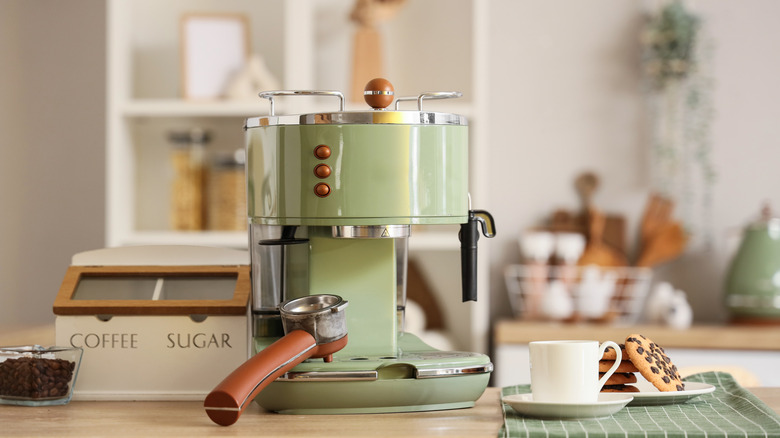
With a wealth of design ideas and decor suggestions at your fingertips, you are likely itching to wake up to the smell of fresh coffee brewing in your kitchen. But the work truly begins once you have chosen the right location for your coffee station. Areas that generate high volumes of heat and steam can harm your coffee supplies and equipment, so Rohan Jain advises you to cross out any spots that are too close to the stove's burners or the oven. He also recommends you steer clear of any sun-bathed spots, as direct sunshine can often degrade the quality of coffee beans.
So, what should you consider instead? "A coffee bar should be placed in a low-traffic area of your kitchen, preferably next to a water supply and an electrical outlet. This maintains its functionality without interfering with your primary cooking space," Jain explains. He has found that corners adjacent to the refrigerator or near a breakfast counter can be a good spot for setting up your private cafe.
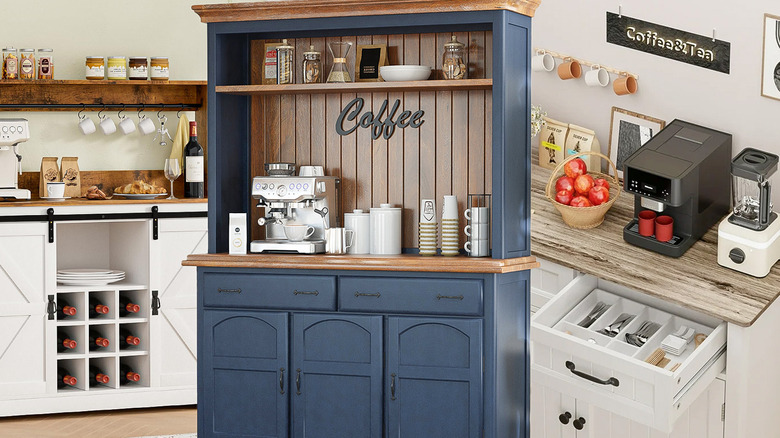
An unused corner or alcove in your kitchen is an excellent way to integrate a coffee bar into your existing cabinetry, but your options don't end there. If you don't have any cabinets to spare, you can consider hauling out that neglected china cabinet or hutch from the garage. Those strapped for space can also consider converting an office cart into a mocha-spewing masterpiece.
Opt for warm neutrals
Once you have penciled in the right spot, you'll want to set the mood with the right colors. After all, the coffee bar is going to be your first pit stop in the morning — you won't want an eyeful of electrifying neons to jolt you awake.
According to Rohan Jain, there are several ways this can play out: Your coffee bar can blend in unobtrusively with the rest of your kitchen, or it can become the focal point where guests linger for a post-dinner coffee after a weekend feast. If you belong to the first camp, your best bet lies in borrowing the same colors as your kitchen walls and cabinets to create visual harmony.
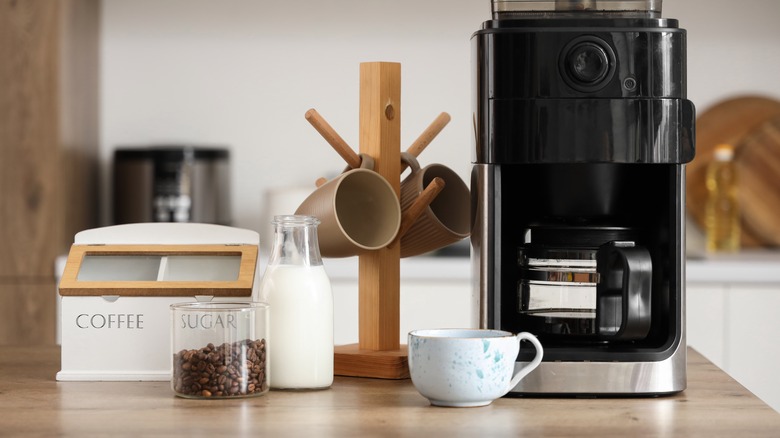
If you were to browse through the best coffee shops in every state, you'll find earthy hues leading the way. It comes as little surprise then that Jain recommends warm neutrals for imparting a snug, homey feel: Think cream, taupe, and beige. "Terra-cotta hues and soft greens also give off a cozy vibe," he says. "Consider deep charcoal or navy cabinetry with warm lighting for balance if you like a burst of contrast." However, you'll want to avoid saturated hues, such as neons, that can disrupt the tranquility of this morning ritual.
Pick durable materials
Steam hissing from the coffee machine. Accidental coffee spills. Dripping mugs. Hectic mornings mean that the coffee station can become a magnet for a wide array of leaks, splashes, and overflows. If the materials surrounding your coffee bar aren't resistant to heat, steam, and stains, you might have to regularly shell out a pretty penny for repairs.
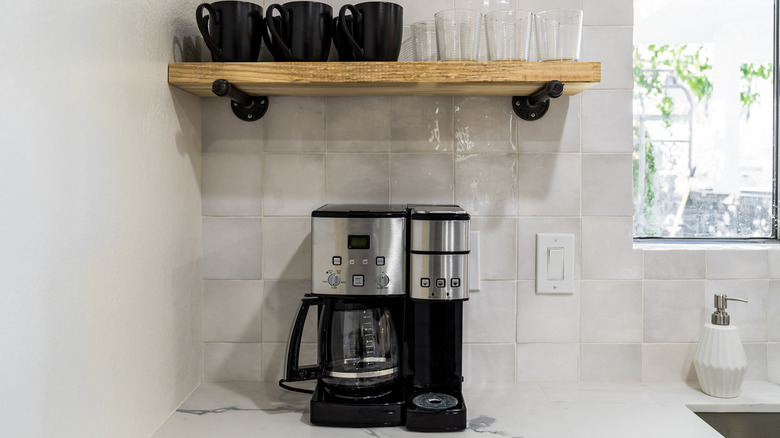
"Granite and quartz are great options for coffee bar countertops because they are easy to maintain, long-lasting, and stain-resistant," Rohan Jain says. Since there is a fair amount of steam, spills, and splatters being generated in this area, you'll also want to make strategic choices beyond the countertops. "Stone, tempered glass, or subway tiles make attractive and easily cleaned backsplashes," he adds.
If you are housing your coffee bar within the existing cabinetry in your kitchen, it helps to check first whether the materials can handle steam. Jain has found that laminate cabinets can withstand moisture, but the same can't be said for porous materials. Untreated marble and limestone aren't good candidates for a coffee station as they can get easily discolored with spills. Wooden cabinets can also readily swell when faced with humidity, but there is a handy workaround to be considered. The steam from a coffee machine generally travels upward, so it helps to fix a thin sheet of stainless steel to the bottom of the upper cabinets as a moisture shield.
Avoid harsh lighting
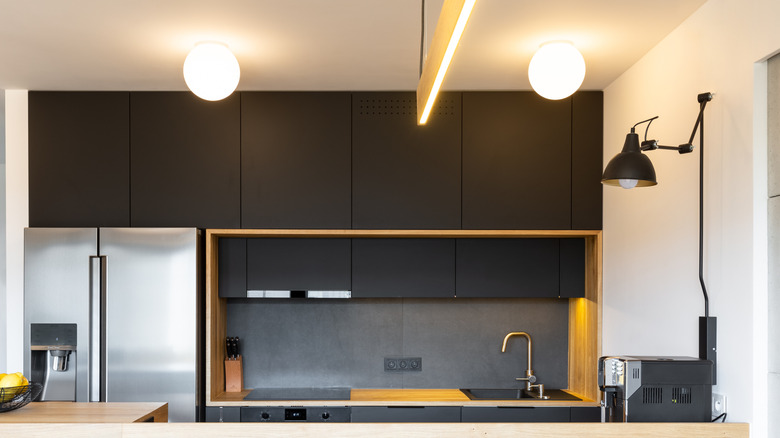
As you may already know, modern kitchens are incomplete without layered lighting: a mix of ambient overhead lighting, task lighting for visibility while doing chores, and accent lighting for creating the mood. A coffee bar needs adequate task lighting for the important business for measuring, pouring, and ensuring that you don't accidentally burn yourself with steam. But lighting doesn't have just a functional role to play in this area. With a soft infusion of warm, welcoming illumination, the space can recreate the cozy charm of your favorite coffee shop.
The harsh glare of fluorescent bulbs or cool-toned lighting runs directly opposite of this by dousing the room with a sterile, clinical feel. This is backed up by the psychology behind how restaurant lighting influences diners: dim lighting is known to boost intimacy and slow-paced tranquility.
"Coffee bars benefit greatly from soft lighting since it gives the space a homey, café-like atmosphere," Rohan Jain notes. When setting up a coffee station in your kitchen, he urges you to consider hanging pendant lights with metal or glass shades to add elegance, layered with under-cabinet LED strips. If your coffee nook is tucked away in a cozy corner, he suggests adding wall sconces to infuse charm and warmth into the space.
Pick open shelves
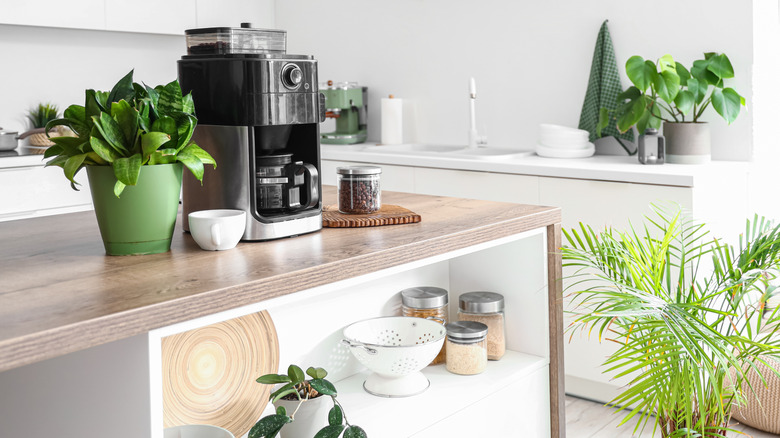
While your coffee machine will rightfully assume pride of place, the supporting cast can make or break the cafe-style ambience you are aiming for. To ensure that this spot doesn't devolve into a chaotic jumble of cups, pods, and junk mail, it helps to design strategic shelving.
When choosing shelves for a coffee bar, Rohan Jain's list of requirements is straightforward. The layout? Open. With all your coffee-making essentials on display, you can easily reach for what you need on busy mornings. The materials? Metal or wood. Durability is key, and you'll need materials that can withstand the weight of mugs and related appliances. The colors? Neutral. "Matte black or white shelves may give a sleek touch to a modern layout, while rustic wood is a great choice for a homey, farmhouse-style setting," he says.
Open shelves do not take kindly to clutter, so you'll want to run a tight ship when it comes to ensuring that this space is aesthetically organized. Use decorative baskets to conceal unsightly or odd-sized items away from the view of the general public. Intentionally leaving some space empty can allow a few key highlights to grab the eye, while creating an element of airiness. A gallery rail is another easy addition for maximizing the practicality of open shelves by ensuring that cups and jars aren't accidentally knocked off.
Add ceramic containers for storage
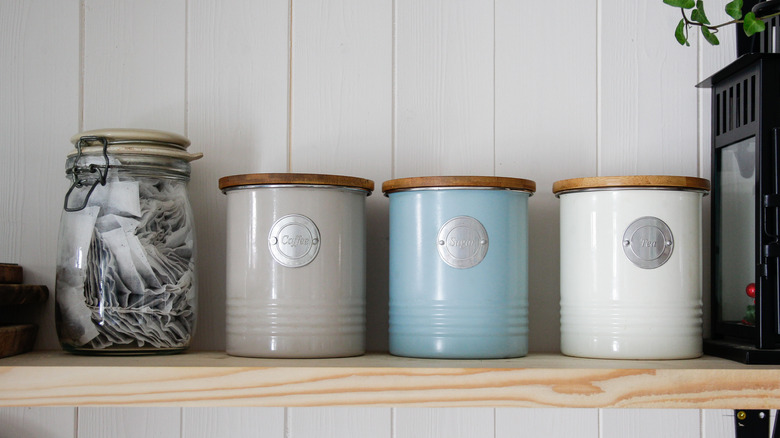
Nothing can ring the death knell on those freshly roasted coffee beans like the fatal kiss of oxidation. To avoid having mismatched coffee bags detract from the aesthetic you are aiming for, it helps to transfer your favorite beans into decorative jars.
Rohan Jain has found that airtight glass jars and ceramic containers are the ideal resting spot for keeping coffee beans and pods fresh. "While opaque jars may be superior for long-term freshness, clear jars allow you to see your supplies," he adds. If you don't mind going the extra mile to preserve the sanctity of your morning cup of joe, vacuum-sealed storage canisters will prevent exposure to oxygen.
If you are looking to maximize the storage capacity of this space, Jain also recommends adding a pull-out drawer for storing accessories, tea bags, and pods. What about all those syrups that you love to DIY? After using extra-strength coffee as your secret weapon in homemade coffee syrup, you'll want to group it along with stirrers and filters in small baskets inside drawers. A rolling bar cart can offer portable storage when you are expecting guests, while pegboards for hanging mugs can help you maximize vertical space.
Make room for a prep sink
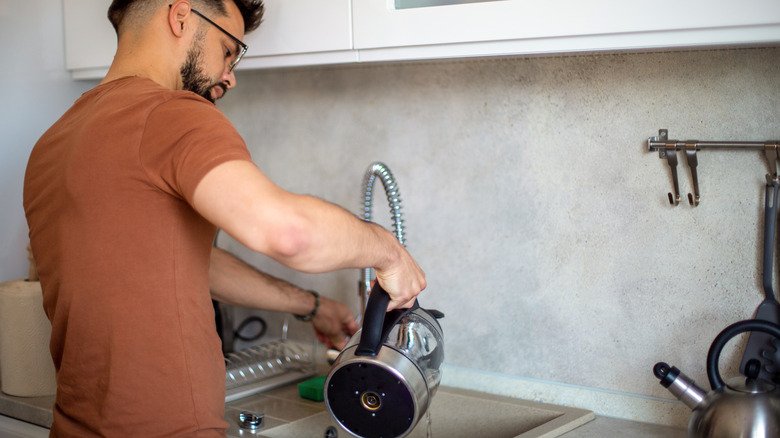
Many coffee-bar wish lists include a prep sink, which is typically a want rather than a need. True to its name, this secondary sink is used for prepping ingredients and usually measures between 15-22 inches in length and width. If you can spare some room, having one at your espresso station can streamline your morning coffee routine in several ways.
The most significant payoff of adding one to your coffee bar comes in the form of less back-and-forth in the mornings for depositing stirrers and mugs in the sink. This handy space can also give your guests a convenient spot to place their used mugs out of sight in the sink without breaking the flow of the conversation.
For making the most of this compact addition to your morning coffee bar, Rohan Jain suggests opting for durable, low-maintenance materials, such as stainless steel. "Plumbing can be tricky, especially if your coffee bar isn't near existing lines, so plan its location during a kitchen makeover or renovation to save costs," he says. If providing the necessary plumbing for a secondary sink isn't a feasible option, the backup plan involves maintaining a small carafe of water nearby for your brewing and rinsing needs.
Include sound-dampening elements
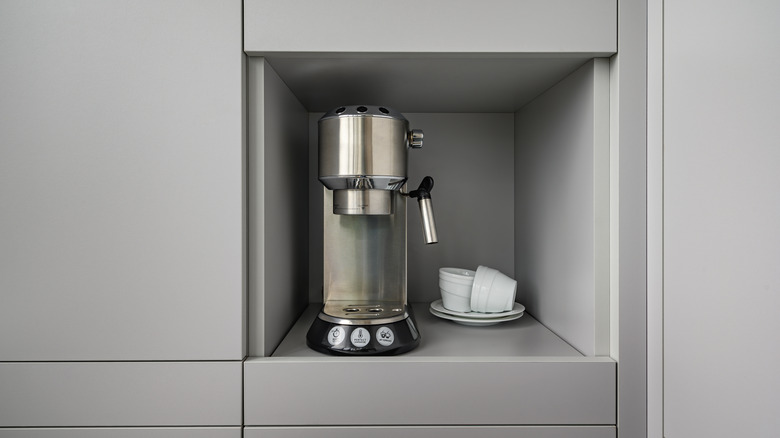
As much as bean-to-cup technology has advanced, the noise generated by the routine grinding process is the last thing you'll want to hear on a cozy morning. For dialing back the sensory overload and reducing any disturbances for those still sleeping, it helps to plan ahead by opting for sound-dampening elements.
To minimize disturbance from the noisy process of grinding beans and brewing coffee, Rohan Jain recommends positioning your coffee bar away from silent areas or bedroom walls. "You can reduce the noise by keeping your espresso machine or coffee grinder within closed cabinets," he adds. If you have the room to spare, he advises getting creative by adding a small screen or decorative divider with shelves and greenery. "It will serve as both decoration and a sound-absorbing barrier," he says.
Given the hard surfaces in an average kitchen, it is easy for sound waves to get amplified and bounce back. Laying out a cushy rug in front of your coffee station can help absorb some noise, instead of reflecting it back. Beyond layout changes, you can also take heart in the fact that the new generation of coffee makers is being designed with sound-reducing features to avoid interrupting your zen on serene mornings.
Go for space-efficient seating
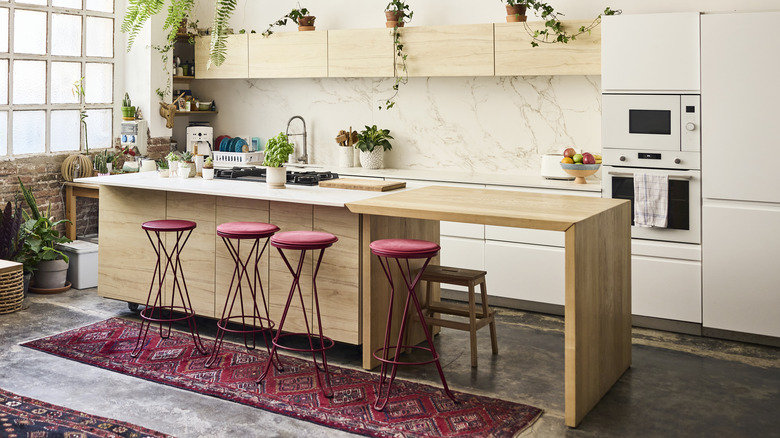
On paper, the only essentials that you need for creating a coffee bar in your kitchen are an empty expanse of counterspace, a coffee maker, and a few mugs. But if you are looking to truly bring this space alive, it helps to consider seating options. Suddenly, what was once a space for grab-and-go espresso has doubled up as a reading spot or a cafe-style hub that brings the family together.
A window seat makes for a great spot to soak in some rays while you enjoy your sunrise sips. If your coffee bar is positioned near a corner, built-in banquette seating will make everyday coffee a family affair. If you are looking to truly bring home the cafe core aesthetic, petite French bistro chairs with rattan accents will transport you to the Riviera.
For those concerned about taking up too much room in this high-traffic area, Rohan Jain recommends space-saving stools that slide beneath the counter when not in use. "Small kitchens benefit greatly from stackable or foldable stools," he says. "Stools with adjustable heights can also be used for both working and eating." Your options include adding Ottoman stools with integrated storage to create extra seating as well as space to stash coffee supplies. Two birds, one stone.
Add personal touches
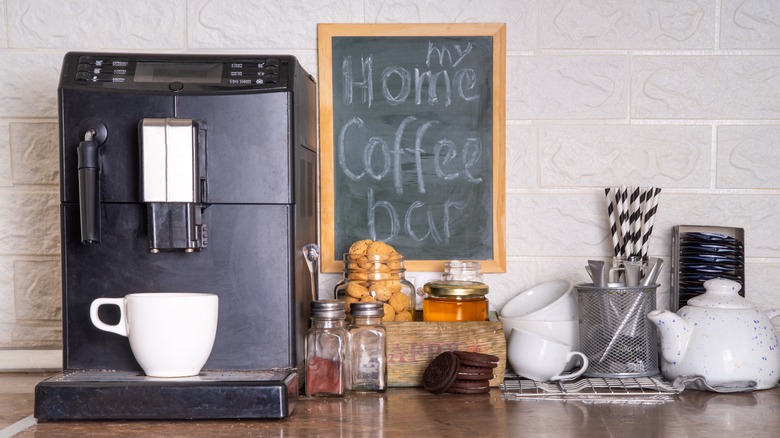
When done right, the coffee bar won't just be a spot to fuel up on your caffeine needs. It will also become the canvas where every morning will begin and nights will end with your dinner guests. With meaningful touches, this nook can be elevated beyond just another corner of the house into a space where you truly savor every moment.
For making this area feel curated rather than cookie-cutter, Rohan Jain suggests you add little splashes of your personality. "A menu board, framed art prints, or a tiny indoor plant can all add coziness. Show a few of your favorite mugs, an antique sugar jar, or a memento from a café you've visited," he says. Statement canisters, personalized coasters, and seasonal decor such as autumnal leaf garlands can make this nook an instant conversation starter. Dousing the backsplash with chalkboard paint can further create a canvas for everything from daily specials à la your favorite French cafe to doodles, lettering art, and grocery lists.
However, Jain believes it is imperative not to overdecorate this space because you will need to leave adequate space for the serious business of brewing coffee. "Consider it a functional little café nook that nonetheless feels well-chosen and unique," he concludes.