

Giada De Laurentiis' 9 Tips For Eating In Italy

If you are planning a trip to Italy from the U.S., it would be reassuring to get some tips and advice from someone with a little inside knowledge. Enter Giada De Laurentiis, who has experience living and eating in both countries and is well-placed to give some insight on the differences you may come across.
De Laurentiis was born in Rome and grew up in L.A. and often posts on TikTok and YouTube about her beloved home country. Having moved between both cultures throughout her life, she has plenty of secrets to share to help you blend in once you touch down in Bella Italia. From drinking your cappuccinos pre-lunch to eating spaghetti in the most acceptable way, her advice will help you spend your time in Italy eating like a local and making the most of its wonderful cuisine. Whether it's your first trip to Italy or you're just hoping to get more out of your next vacation, let's take a look at Giada De Laurentiis' nine tips for eating in Italy.
Order the correct coffee at the right time

Italians are known for their love of coffee, but they have some unwritten rules that differ from the way people would enjoy a cup of Joe in the U.S. They love a cappuccino (after all, the word is Italian and refers to the brown hoods that Capuchin monks wore), but there is a limited time to drink it if you want to follow Italian customs. Giada De Laurentiis explained that a cappuccino is a breakfast drink, and you are unlikely to catch Italians drinking one after 11am.
The reason likely stems from milk being a hard-to-digest food, and the amount of savory food that Italians eat from lunchtime onward can be significant, meaning a milky coffee is not appealing. Come lunchtime, they like to switch to straight espresso to keep them powering through the rest of their day.
Does this mean that you can't order a milky coffee after breakfast? No, it doesn't. But as De Laurentiis says, you may be met with a raised eyebrow, especially if you are outside a main tourist zone. If your aim is to blend in and soak up as much of the local way of life as possible, you may want to enjoy your milky coffee first thing, then stick to the stronger stuff for the rest of the day. If a latte is your preference, rather than a cappuccino, be sure to ask for caffé con latte. Since latte is the Italian word for milk, ordering as you do here is likely to get you a cold, refreshing glass of the white stuff!
Slow down and savor the food

With the busy lives that most of us lead, sitting down to eat a leisurely meal is not a luxury we can always afford. For many of us, ordering food or snacks to go has become the norm, but this is not a custom that Italians are keen on.
Giada De Laurentiis explains that in Italy, they still have a culture of enjoying meals slowly and savoring the food — when the cuisine is that good, why wouldn't you? She points out that there are a few exceptions to this rule, including gelato, which can, of course, be eaten walking along the beach or around town; pizza, which is often sold "al taglio" as takeaway food; and street food, such as risotto-filled arancini, which is especially popular in the South.
If you are expecting to order lunch and coffee to go every day, though, you may be disappointed, and you won't find Italians doing the same. Instead, set aside at least an hour to sit down and enjoy lunch in the traditional way; order a few different courses and revel in the wonderful flavors before you. After all, there could be worse things than spending your day relaxing with authentic Italian food.
Use only a fork to eat pasta
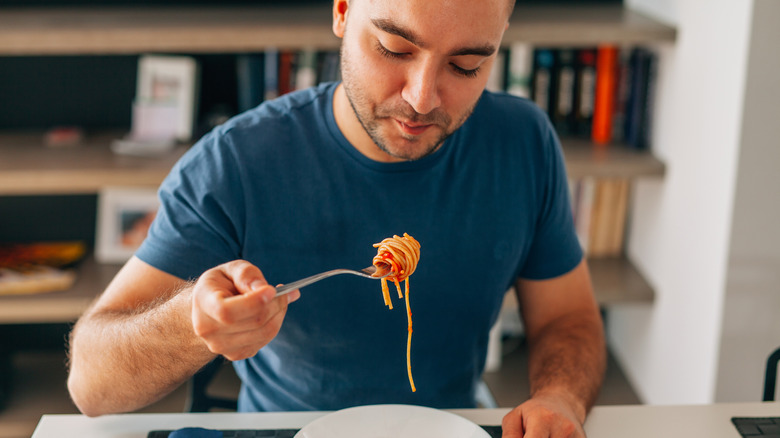
If you like to use a spoon to help twirl your spaghetti or a knife to cut up your tagliatelle into manageable pieces, you might want to practice one-handed twirling before you go. Giada De Laurentiis explained that Italians use only a fork for their pasta, and eating it any other way may get you some looks.
In Italy, pasta is always served al dente, which means "to the tooth." That means the spaghetti you order in an authentic trattoria will be firmer than you may be used to, so it should be more likely to stick to the fork as you twirl it against the plate. If you try this for the first time with a bowl of spaghetti al pomodoro, things could get messy fast! So before you head off on your trip, try cooking your pasta for a few minutes less than usual, and master the art of the spaghetti twirl in the comfort of your own home.
De Laurentiis also has a genius tip for serving your long pasta to make it look restaurant quality. It involves the unusual utensil of a carving fork — not the first thing you would associate with pasta. She uses the fork to twirl a large portion around it and slides it elegantly on the plate, creating the illusion that a top-class chef has been busying away in the kitchen. If you want a perfect pasta presentation, this carving fork trick is a great one to add to your repertoire.
Try eating pizza the Neapolitan way
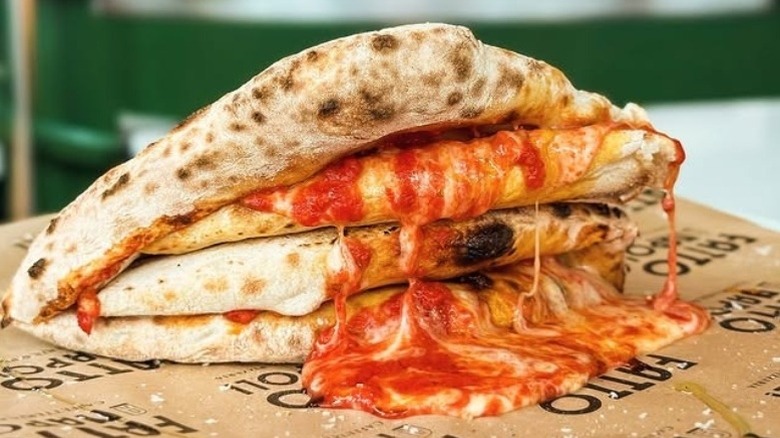
You may have assumed that there were two ways to eat a pizza: Cut it with a knife and fork, or divide it into slices and eat with your hands. But neither of these classic methods suits the people of Naples, who have their own way of devouring this wonderful dish, of which Giada De Laurentiis is a fan.
Pizza libretto, or pizza portafoglio, which means book or wallet, involves folding the whole pizza in half, then in half again, then eating it wrapped in paper, pulling large chunks off and watching as the mozzarella stretches into long, delicious strands. De Laurentiis shared a video on TikTok enjoying the libretto, which is smaller than a regular pizza and designed to be eaten as street food rather than a sit-down meal.
Since the original modern Italian pizza was created in Naples, we have to assume that they know their stuff when it comes to eating it in the best possible way. Just make sure to buy it from a street food vendor rather than trying to do it yourself in an upscale restaurant to avoid some dubious looks and an inevitable tomato mess on your shirt.
Use bread to soak up pasta sauces
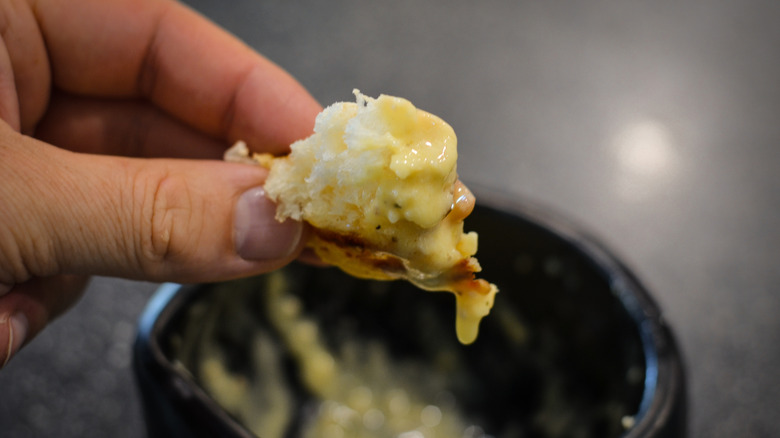
When you sit down at your table in an Italian restaurant, you will quickly be served a small basket of fresh bread. While it may be tempting to tuck into it as you peruse the menu, this is not what the bread is for, and Giada De Laurentiis recommends that you leave it where it is until your "primo piatto" arrives.
The purpose of the bread is to soak up all the delicious pasta sauce that is left behind on your plate once the pasta itself has been eaten. Italian sauces are so packed with flavor from garlic and aromatic herbs, it would be disastrous to leave them coating the plate instead of enjoying them. Instead, you should take one of the slices of bread and use it to wipe the plate clean, creating the most delicious, saucy sandwich in the process.
If you're worried that this will be seen as rude or overly casual, you needn't be. De Laurentiis explains that "scarpetta," as the Italians call it, is expected as part of the pasta-eating process, especially if you are eating with family or friends. If you are in a very formal restaurant, you may want to be more subtle with your scarpetta action, but for general vacation dining, pick up that bread and swipe away.
When in Rome ... order pizza bianca
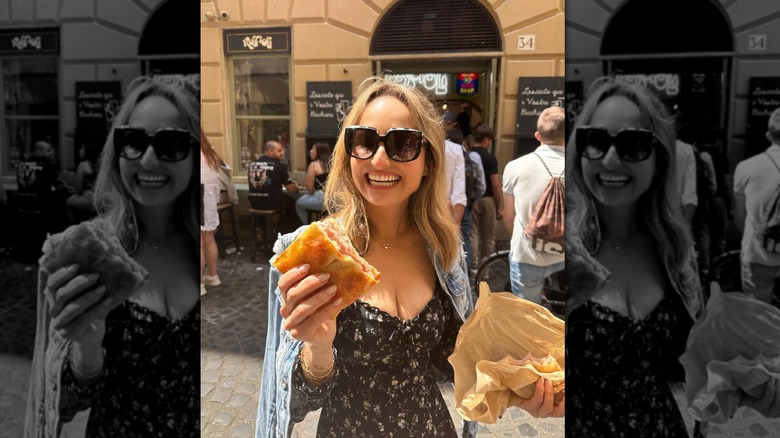
As an Italian, Giada De Laurentiis has many dishes that she loves to eat in her home country, but there is one special treat she just has to have as soon as she arrives in Rome. Pizza bianca is a pizza with a difference; it contains no tomato sauce and often no cheese either. Instead, De Laurentiis' favorite version consists of two pieces of cooked pizza dough with a delicious filling in between — a little like the ultimate Italian sandwich.
De Laurentiis' filling of choice is mortadella, a thinly sliced cured pork, which is like the Italian equivalent of bologna meat, but better. Although Italians rarely eat entire meals on the go as Americans do, this type of sandwich is very common in big cities and tourist areas and allows you to enjoy a taste of Italy as you stroll around the city and take in the amazing sights.
Pizza bianca is another classic example of how Italian cuisine takes simple ingredients and turns them into something special. It has the perfect contrast of texture with the crispy pizza dough and the soft mortadella, and the rich meat pairs beautifully with the comforting base. It may not be the highest level of Italian cuisine, but De Laurentiis describes it as "home," and that's enough for us to give it a try.
Be prepared to eat late
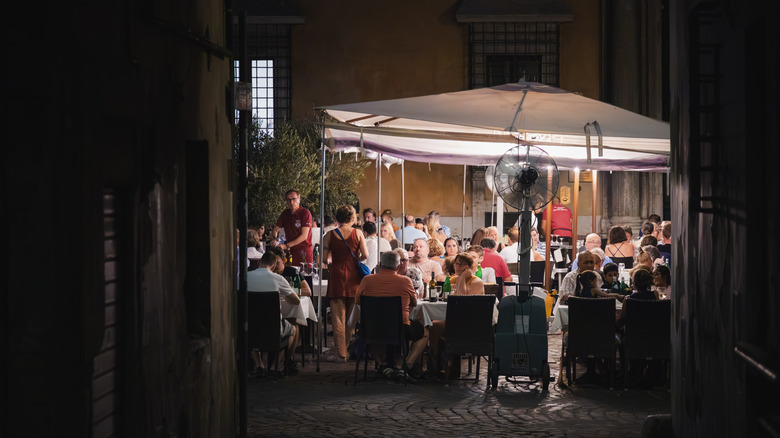
If you are used to eating your evening meal at around 6 p.m., you may need to adjust your internal culinary chronometer on your trip to Italy. Italians almost never eat as early as this, and if you insist on eating dinner at this time, you may find you are the only diners in the restaurant. Giada De Laurentiis explained that 9 p.m. is a much more common time for Italians to eat, so you will find restaurants and pizzerias buzzing around this time.
If you don't think your stomach will be able to wait until later in the evening, there is a handy trick that could keep you ticking over, especially if you are visiting the north of Italy. Aperitivo refers to a drink served before a main meal, but in Italy it has become a custom to eat alongside it. If you order an aperitivo, you will often be served finger foods such as olives, nuts, or other savory canapés that could keep the hunger pangs at bay for a few hours. In some northern areas, there may even be a finger buffet to choose from, which means you can fill up for a bargain price and maybe even save money on your main meal a few hours later.
You don't need to order every course
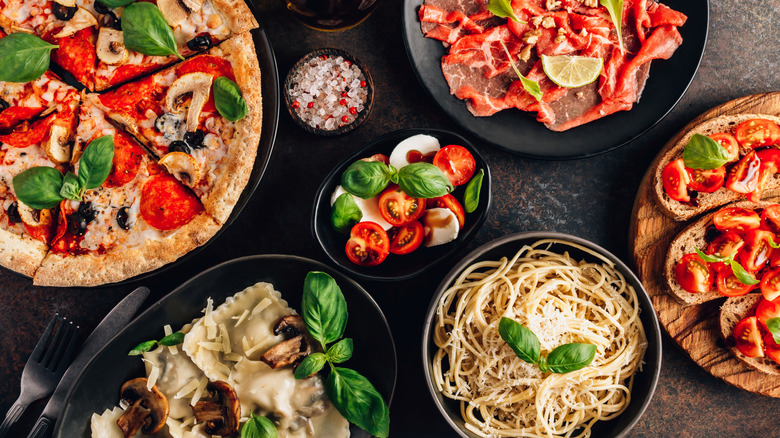
When you first sit down and glance at the menu in Italy, it can be pretty overwhelming. Giada De Laurentiis explained there are many sections to an Italian menu, and it can be hard to work out what to order and how much you will need. The first course is the antipasto, and this can sometimes feature sharing platters, such as a charcuterie board or mixed seafood dish, for the whole table.
Then follows primi, which is the official first course, usually pasta or risotto, then secondi, which is the second course of meat or fish. You will also see contorni, which are side dishes that are almost never included with the main meals, and dolce, which is dessert. You may be relieved to know that you are not expected to order every course. De Laurentiis admits that she often orders two antipasti rather than an entrée, meaning she can enjoy delicious local delicacies without filling up too much. On your trip to Italy, this is also a great tactic to sample more of their delicious cuisine without breaking the bank.
If you think that two appetizers won't quite be enough, a sensible option would be to share an antipasto platter, then order either a primo or a secondo rather than both. This should leave just enough room to enjoy an authentic tiramisu or panna cotta for your final course and a robust espresso to finish the meal — if you think you can handle that much caffeine just before bed!
There is no requirement to tip
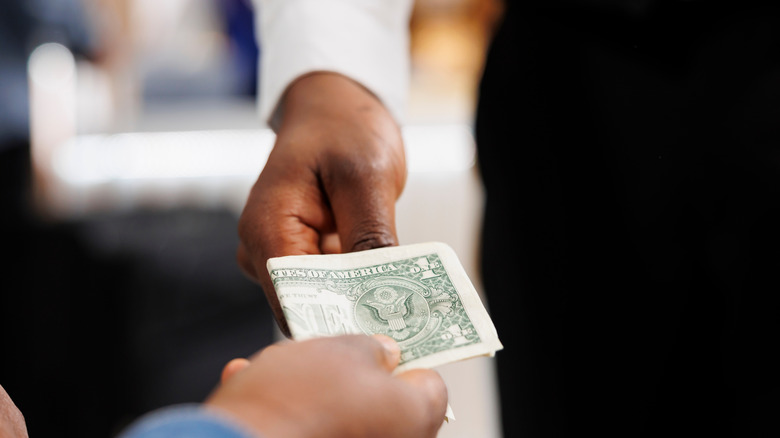
When you finish your meal in a restaurant, chances are you automatically add somewhere between 10% and 20% to the bill as a tip. Not doing so may get a funny look from your fellow diners and a disappointed one from your server. In Italy, however, the tipping custom is very different, and your waiting staff won't be expecting a gratuity, especially one as generous as 20%.
Giada De Laurentiis explained that tipping in Italy is not an automatic expectation, mainly because restaurant staff are paid a more substantial wage relative to their living costs, which is not always the case in the U.S. There is also often a "coperto" charge on the bill, which covers the bread used to mop up your sauce, so adding even more at the end is not standard. Of course, if you offer a tip, it is unlikely to be refused, but you may want to save generous tipping for situations where the service is especially good or the staff went to extra lengths to get you a good table or accommodate a special request. In this case, you can usually just round the check up to the nearest 10 euros rather than painstakingly working out an exact number. The staff will accept it gratefully and will be hoping to see you return again. Before you offer a tip, check that a service charge hasn't been added on already, especially if you are dining as a large group.