

A Controversial Retro Dessert Has What It Takes To Become Timeless

Picture a cafeteria tray in the 1970s or '80s, where a sludgy scoop of tapioca pudding sits next to meatloaf and flaccid, grayish-green beans, the gelatinous pearls bobbing under a layer of dusted cinnamon. Back then, tapioca pudding was served from large vats on lunch trays in school cafeterias and hospitals, its lumpy texture and muted flavor inspiring both nostalgia and mockery. It is the kind of food that has made its way into pop culture as textural shorthand for institutionalized blandness. Tapioca pudding's reputation is complicated. Many grew up with it as a comfort food, while others remember it as a weird, wobbly oddity. But a new generation of younger eaters, whose tastes veer toward the adventurous or ironic, may be poised to rediscover tapioca pudding, finding something to bounce off of in its chewy pearls and creamy base.
This could be part of a broader revival of retro foods that pop back into fashion under fresh, enthusiastic eyes. It is a fascinating, unexpected test case of how foods cycle through history, gaining and losing cultural caché with each generation's reinvention. From nose-to-tail eating strangely making offal trendy again to the recent resurgence of homemade charcuterie boards, food memory is anything but linear. Tapioca pudding's comeback taps into that larger pattern, belying a collective willingness to rethink, and reclaim, the foods we once lost a taste for.
Past the virality of irony and aesthetics, tapioca pudding holds a valid place in the dessert pantheon. Its mild flavor and unique texture offer a foundation for creativity, supporting fresh interpretations that range from tangy blueberry-lemon versions to rich dulce de leche takes. The sweetly inert flavor profile and singular, jiggly composition invite textural interplay and flavor layering, which align well with current culinary trends favoring contrast, complexity, and riffs on nostalgia.
Pudding the tapioca pieces together
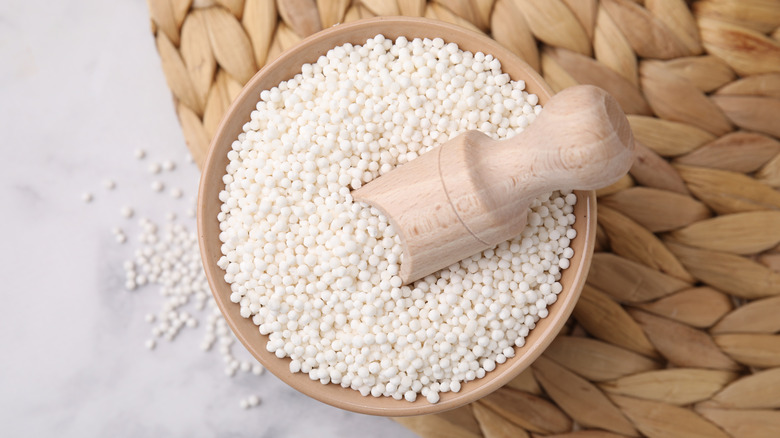
The new generation of eaters are not diving headfirst into the vat of tapioca pudding but, instead, have most likely approached it sideways, through the beloved bobas of bubble tea. Those satisfyingly tender, bouncy beads, first popularized in the fruity or milky drinks from Taiwan, have become a global phenomenon, particularly among young people. In much of Asia, that chewy, elastic mouthfeel is a beloved texture, not a freaky novelty, and it is celebrated in sweets like Japanese mochi to Filipino halo-halo. Western dessert trends have only recently started embracing that pleasure in chew, which might be why younger palates are more open to tapioca's charms.
The same tapioca pearls that make bubble tea a sensation can be coaxed into a slow-simmered milk pudding with almost no effort: Soak, sweeten, and cook them gently in milk or coconut milk until translucent and suspended in a thick custard-like base. From there, the pudding can be dressed up with citrus zest, tropical fruits, or spicy, caramel notes. Tapioca balls, and the delicately flavored, gluey textured pudding they make, may find new life as a visually striking treat primed for social media and younger generations' appetite for rediscovery. Tapioca pudding's third act shows that even the most unlikely foods can bounce back with surprising style and substance, and that food connects us to history, identity, and evolving tastes. If the cycle of food nostalgia has taught us anything, it's that nothing is ever truly out of style. It is just waiting for someone to serve it in a better bowl.