

Why It's Illegal To Harvest Certain Caviar In The US (And Which Kinds Are Still Legal)

Any way you spin it, caviar is luxurious. The expertly harvested, salt-cured eggs of the sturgeon fish can cost hundreds of dollars per ounce. But, some varieties of caviar are considered even more luxurious than others — and some are illegal altogether. Kaluga roe and Osetra roe caviar are totally legal in the U.S., but the sale, import, and farming of Beluga caviar remains (mostly) illegal. As of 2021, according to U.S. Customs and Border Protection, Beluga sturgeon are so rare that the annual catch doesn't exceed 100 units. Compounding the population issue, female Beluga take a lengthy 15 years to reach reproductive maturity (i.e., the point at which they can produce caviar eggs at all).
Due to the demand for its mild, smooth flavor, the Beluga sturgeon was hit hard by overfishing, and in 2005, the U.S. Fish and Wildlife Service enacted a ban to protect the critically endangered species. In other countries, however, the sale of Beluga caviar remains legal. The United Nations issued a temporary ban on all caviar sales (including Beluga) in 2006 to give overfished species a chance to repopulate, but lifted the ban in 2007. It's an ethical epicureanism issue reminiscent of Nobu's past controversy over serving bluefin tuna, even after it became an endangered species. The commercial seafood industry at large has adopted more sustainable farming practices to help curtail ecological issues. But, still, Beluga caviar is off-limits under U.S. legislation.
You can buy Beluga caviar from one American company
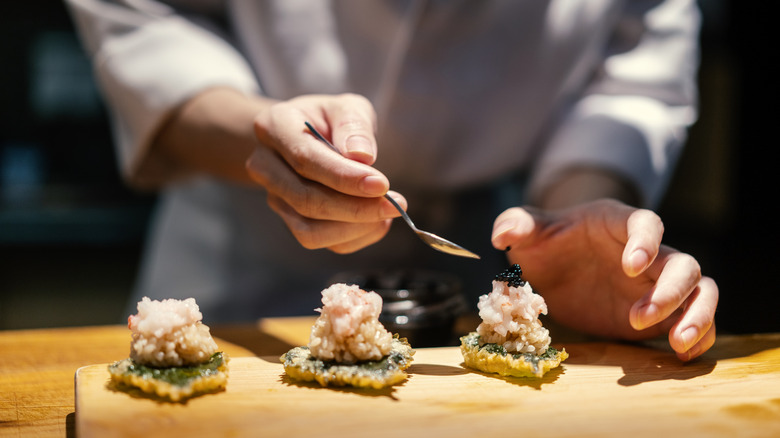
Osetra caviar (one of the most popular legal varieties) comes from the Acipenser gueldenstaedtii sturgeon of the Caspian Sea. Nutty, buttery osetra roe is prized for its creamy yet firm mouthfeel, and can be identified by its amber-brown hue and notably larger egg size compared to Beluga caviar. Kaluga caviar, another legal variety, is less commonly seen than Osetra caviar at gourmet seafood counters, likely in part due to its uncanny likeness to the taste and texture profile of illegal Bulega caviar. On the palate, Kaluga caviar is a firm brown roe with buttery, earthy, and slightly salty notes.
Doppelgangers notwithstanding, Beluga caviar remains nearly impossible to find in the U.S. As the U.S. Fish and Wildlife Service notes, even Beluga caviar purchased overseas on a vacation can only legally be brought back into the U.S. if it weighs 125 grams or less. There are, however, exceptions to the domestic rule. Due to the company's sustainability commitments, Florida-based caviar purveyor and aquafarm Marky's has bypassed the legislation as one of the only U.S. Fish and Wildlife Service-approved commercial retailers of Beluga caviar in the U.S. Now, foodies can order Beluga caviar directly from Marky's and have it delivered to their door (convenient yet pricey, at $155-$280 per half-ounce). If that's in the budget, then serve it with some of the 13 must-have caviar accouterments. If not, consider some of the best types of sustainable seafood to satisfy the craving.