

Yes, This Popular Food Dye Actually Relies On Ground-Up Beetles
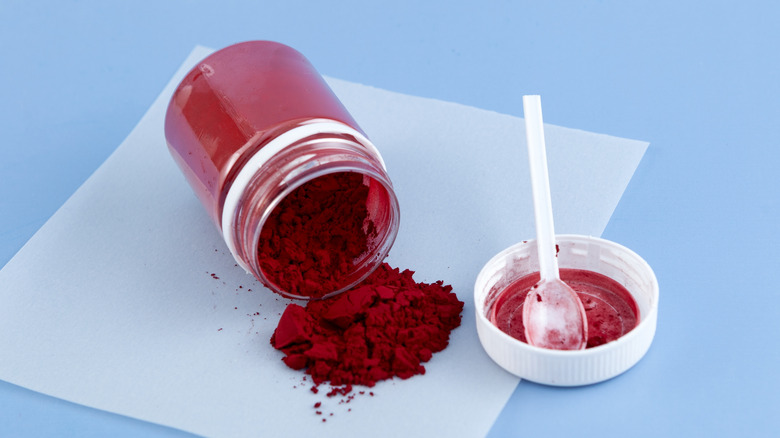
Everyone wants to be healthy, and most food manufacturers are well aware of this. Labels often state when something is cholesterol-free, fat-free, or has reduced sugar or trans fats, all to convince consumers that their product is the best. One way this is accomplished is by labeling products as "all natural," implying that they contain no artificial colors or flavors. It's comforting to think that your strawberry yogurt's pleasant pink color comes from fresh, ripe berries. But the truth is that some of that red and pink natural coloring comes from carmine, also known as cochineal, which is made from ground-up cochineal beetles.
The practice of extracting red dye from cochineal beetles (which feed and live on prickly pear cacti) dates back thousands of years. In the Americas, the Maya and Aztecs used it to dye their garments red. In the Mediterranean region, Phoenicians used a similar beetle to dye their textiles. As time passed, the cochineal fell out of favor as a fabric dye, but it remained popular as a food additive for the bright red hue it can bring to jams, candy, and even meat.
The FDA approved cochineal for food back in 1967. In 2009, the FDA required that labels clearly identify when cochineal is used in a product. Cochineal can be used in chocolate to achieve specific shades of brown, as well as in frozen desserts such as ice cream, sorbet, and sherbet. It also colors Nerds Gummy Clusters, some Skittles, imitation crab meat, many brands of red velvet cupcakes, and even the exterior coating of vitamin supplements. Those little 0.2-inch-long bugs are practically everywhere when it comes to food and drink.
The ups and downs of coloring with cochineal
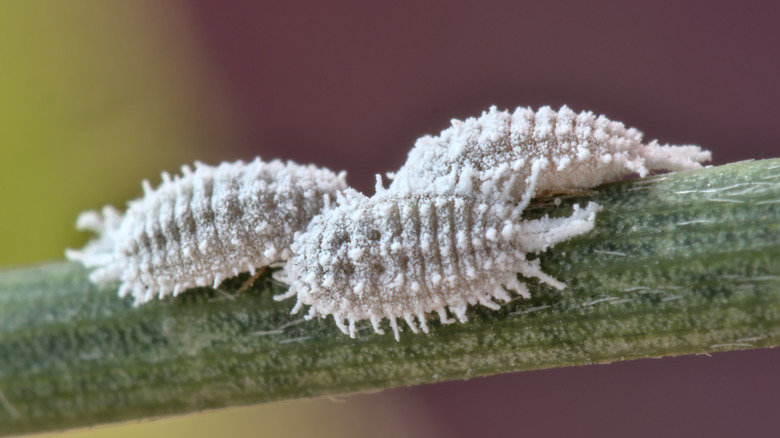
Yoplait has an entire section in its FAQs about carmine, indicating that this has come up for them before. The company explains that most of their products don't use carmine, and those that do will clearly label it. The truth is that cochineal is entirely safe and much safer than artificial red dyes. People just find it off-putting because of cultural taboos against eating insects. Artificial red dyes, such as Red Dye 40, FD&C Red No. 2, and No. 3, have been shown to cause serious side effects. Efforts are underway to tighten restrictions on unsafe dyes in the United States. Cochineal is a much safer alternative, at least in terms of health.
Even though cochineal is relatively harmless, except to those with allergies, not everyone is happy to learn they're consuming products derived from living creatures. This is especially true when it's used in something that otherwise seems vegan. In 2012, a petition was circulated to get Starbucks to stop using cochineal in strawberry drinks, which was successful. It is also not suitable for anyone who wants to remain kosher. In 2025, a biotech startup called Debut revealed that it had engineered fully animal-free carmine. Debut was initially making the product for the beauty industry (since carmine is also used in makeup), but plans to scale into the food industry down the road.