

Are Green Beans Actually Beans? Here's What You Should Know

The botany of the dinner plate can be a confusing subject, with names and uses for various ingredients leading us scientifically astray. Tomatoes, famously, are actually a fruit, despite being used primarily in savory dishes. Then again, so are cucumbers and plenty of other "vegetables," like squashes. When it comes to green beans, there is slightly less subtlety to the designation — at least in the name. Green beans are, in fact, beans; they are simply harvested a little bit earlier in the growth cycle. However, at this stage they too are technically considered a fruit.
Most of the beans we eat actually come from a single species, the common bean, also known as Phaseolus vulgaris. Kidney beans, black beans, navy beans, pinto beans, and cannellini beans — all of these common kitchen ingredients come from different variants of the same plant species, including green beans too. Most of the green beans that we eat derive from a plant that may have produced kidney beans, but rather than allowing them to reach maturity, they are instead plucked from the vine in an immature state.
When harvested earlier like this, the bean pods are good to eat whole, functioning in the pan more like a green vegetable than a legume. If you want to see this for yourself, all you have to do is split a green bean in half. When you do, you'll be able to spot the small, immature beans in the middle.
The botany of green beans
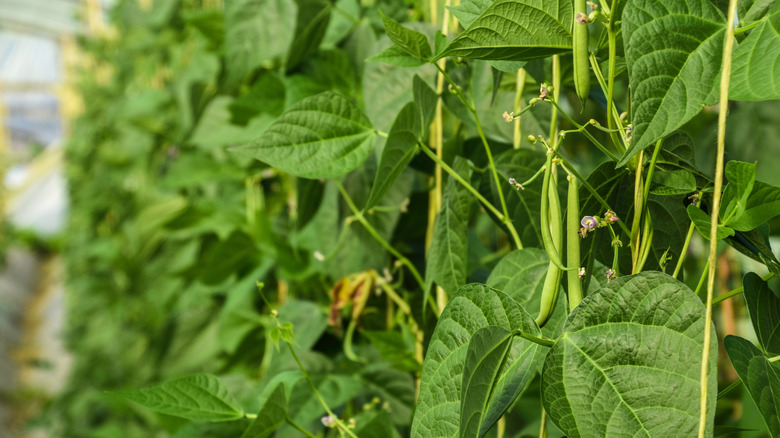
Despite being a single species, the common bean plant has come to hold many different forms and produce a wide variety of products. As mentioned above, many of the most popular types of beans come from this plant. But the plant itself also comes in several forms. Bean plants can grow as small, self-supported bushes, or they can grow as a climbing vine, reliant on trellising to grow upward. As they grow, the flowers are pollinated and grow into bean pods: the fruit of the bean plant. These long, thin, fleshy pods are filled with seeds, which are, of course, the beans.
Throughout the growing season, the beans grow in size inside the bean pods, and the pods become more fibrous. If left to their own devices, at the end of the season the bean pods dry out and split, releasing the beans to fall to the ground and eventually grow into the next generation of plants. The magic of green beans is that they are plucked at just the right time, before the pods become too fibrous to be pleasantly chewed. Instead, this provides that sweet, tender vegetable that you recognize from your grandma's classic green bean casserole.
Beans have long been a staple crop for a number of reasons. As members of the Fabaceae family, they actually improve soil quality by fixing nitrogen from the air and leaving it as fertilizer in the soil at the end of the season. Beyond that, they can provide both early-season sustenance as green beans and a stable dried food for the winter months in the form of the mature beans.
How to prepare green beans
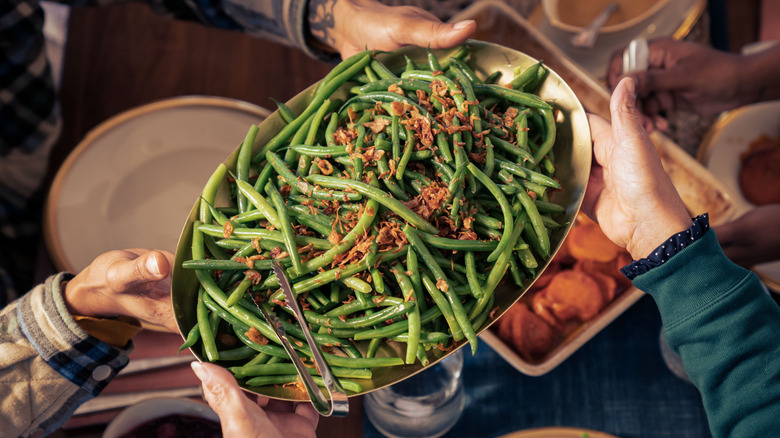
While you may not technically need answers to everything you've ever wondered about beans in order to cook up any of the excellent green bean recipes out there, more knowledge never goes astray in the kitchen. It will certainly help you to understand why, every once in a while, you might bite into a green bean with a little bit too much chew to it — especially if it came from your neighbor's garden.
In the kitchen, green beans should be treated like a green vegetable rather than the legumes that the plants eventually yield. This means storing them in the refrigerator and generally cooking them only briefly to soften the tender flesh without leaving them limp. There are plenty of tips out there for cooking green beans, but simple is often best. They can be prepared in myriad ways, but uncomplicated preparations like these lemon garlic green beans or this fresh green bean almondine recipe are guaranteed hits.
Green beans are popular all over the world as well, and there are plenty of recipes out there that carry a perhaps less familiar array of flavors. This quick pan-fried Chinese green beans recipe keeps the beans crisp while gilding them with the flavors of garlic, soy sauce, oyster sauce, brown sugar, and toasted sesame oil. Or, try this copycat Din Tai Fung green bean recipe, where the beans are quickly fried and then flavored with just garlic, salt, and a touch of bouillon powder. However you choose to cook them up, rest assured that this tender green vegetable does, in fact, count as eating your beans.