

Bigger Does Not Mean Better When It Comes To A Lobster And Its Meat

Whether it's Maine, Massachusetts, Florida, or any other lobster-fishing states in America, the crustacean is a gourmet commodity that's synonymous with high-end dining. As such, you'd think the old adage of "bigger being better" applies, with larger lobsters offering more meat to enjoy. As it turns out, this is one of many lobster myths you need to stop believing. Smaller crustaceans are actually tastier and more tender than their larger siblings. So, adhering to the idea of "the more, the merrier," you'll have a better feast when your plate is piled with youngsters.
Generally speaking, petite lobsters are younger in age, making them softer, sweeter, and more delicate on the palate. Large ones, by contrast, have been around the ocean-block a few times, building up muscle fibers with all that swimming and molting. This results in meat that's often tougher and more on the rubbery side. Since more juvenile crustaceans haven't bulked up yet, their muscle fibers and connective tissues are finer and looser.
Petite lobsters also cook more quickly and uniformly, delivering that moist and buttery texture and flavor that's famous in the world of sea-centric cuisine. A large lobster — though impressive when plopped onto a serving platter – can cook unevenly due to its mass as outer edges that are closer to the heat source will be ready long before its interior flesh. You may even need to remove the meat from its shell for more consistent cooking when incorporating the crustacean into any of the classic lobster recipes adored by seafood lovers.
Which lobster size is the best size to eat?
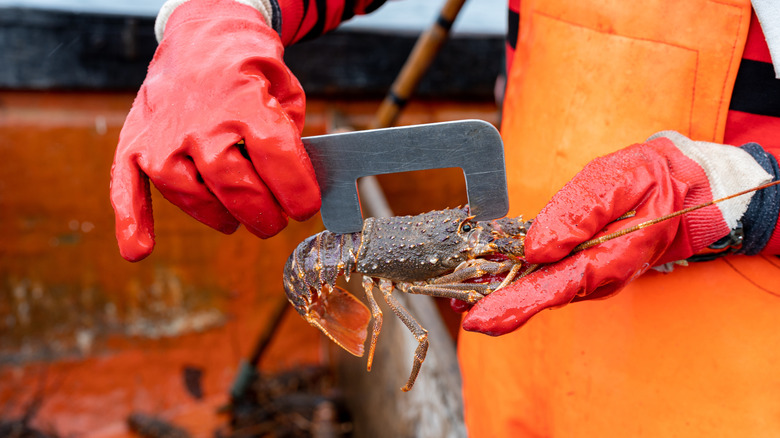
Lobsters aren't just categorized by size. They're also regulated according to species and location, with a goal of protecting healthy lobster populations. For example, in Maine, the only lobsters that can be caught and kept must have a carapace (the shell from eye socket to start of the tail) that measures between 3 ¼ and 5 inches. You can assume these fishing requirements have been adhered to as you select a lobster.
By the time they arrive at a fish market or grocery store, the general method of buying lobsters is by weight. Most people relish the sweet tenderness of little lobsters. If you like a strong, briny taste and a heartier mouthfeel, go for the big crustaceans. Lobsters weighing around 1.5 pounds (often referred to as "halves") hit the ideal sweet-spot by providing plenty of succulent meat, while still being youthfully tender and flavorful. Those "halves" also provide just the right amount of lobster for a main course. Crossing over the two-pound mark (known as "deuces" in lobster-industry lingo) gives you more meat, but also a denser texture and less sweetness.
For more tips on purchasing the best lobster, be sure to avoid these 10 mistakes when buying fresh lobster. It also doesn't hurt to ask your local fishmonger these make-or-break questions before buying, either.