

15 Vintage Ice Cream Flavors No One Seems To Eat Anymore

What would summer be without ice cream? This frozen treat has been cooling us down for centuries, and the thought of enduring the hottest months of the year without it is, quite frankly, pretty bleak. Americans eat, on average, about 20 pounds of ice cream every single year, according to the U.S. Census Bureau. Whether you stop at a kiosk on the beach for a waffle cone or eat it out of the tub at home, ice cream can plunge you straight into the vacation spirit and soothe heartache after a tough day.
When it comes to flavors, there is something for everyone, and in recent years, it seems as though there are more options than ever. In addition to the standard chocolate, vanilla, and cookie dough, you can now get ice cream flavored with lavender, pickles, Cheetos, and garlic, to name a few. It might seem like the list of choices just keeps expanding, but there are many flavors that used to be popular that have undergone a slow slide into obscurity. There are the flavors that helped popularize ice cream in the first place and the ones that linger in the minds of adults as nostalgic memories from their childhoods. Keep reading to discover some of the vintage flavors that have either dwindled in popularity or disappeared completely.
1. Orange-flower water
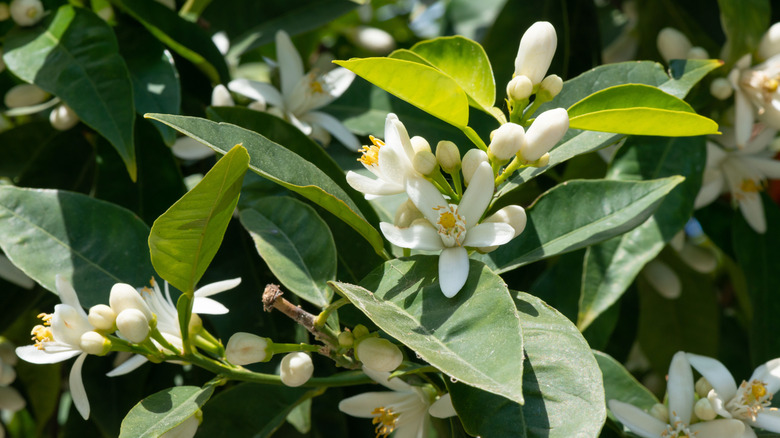
Although you can probably find a boutique brand selling orange-blossom ice cream, it's a far from mainstream flavor. Back when ice cream was making its first rounds of the European aristocracy, however, this ingredient was common. In fact, orange-flower water appeared in the very first printed ice cream recipe in Europe. In 1665, Lady Anne Fanshawe, the wife of England's ambassador to Spain, wrote a recipe for "Icy Cream," suggesting orange-flower water as an addition.
In 1692, the French confectioner Nicolas Audiger published "La maison réglée," a book in which he wrote extensively about frozen delicacies. He was writing at a time when France was just becoming the gold standard of culinary excellence, and he had plenty of advice in his book about how to replicate the latest trends in haute cuisine. The book's only recipe for ice cream contained just four ingredients — milk, cream, sugar, and orange-flower water.
Eastern ingredients, including orange-flower water and rosewater, were popular in European ice cream recipes at the time because it was their Eastern neighbors, particularly the Persians, who had pioneered frozen desserts by making sweet, semi-frozen drinks called sherbet. It might not be a well-known flavoring now, but it's easy to imagine the fragrant, floral taste of orange-flower pairing exquisitely with ice cream.
2. Cheese
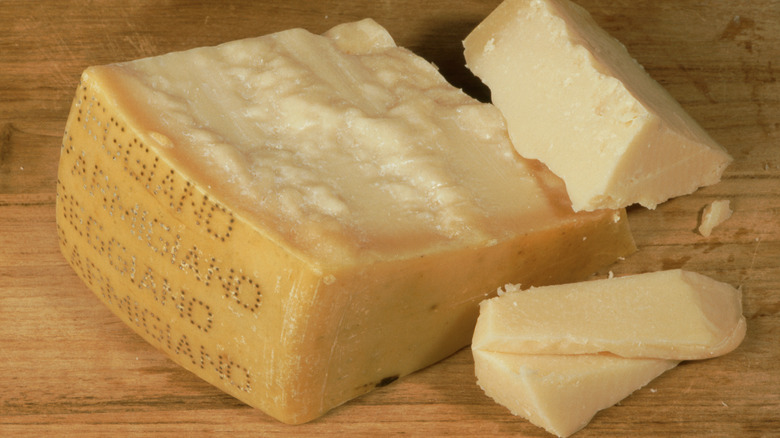
Parmesan cheese ice cream might sound like a parody flavor, a comedic jab at the escalation in outlandish flavors that have hit store shelves in recent years. However, back in the 18th century, no one would have batted an eye at the mention of such a dessert, and they might have paid a pretty penny for it, too. At the time, frozen food of any kind was a luxury and a status symbol because modern refrigeration was still centuries away.
During this time, ice cream hadn't yet been narrowed into the dessert category and it was not uncommon for chefs to present their diners with savory options. Truffle ice cream was popular, as was Parmesan. Neither of these sounds particularly appetizing to the modern palate, now that we're all so conditioned to think of ice cream as sweet, but there were also sweet versions of Parmesan ice cream. One recipe from 1789 called for eggs, syrup, cream, and grated Parmesan. Since the proportion of the cheese was low, it merely added a hint of savoriness, which if you think about it, is commonly found in popular ice cream flavors today, whether it's salted caramel or peanut butter.
3. Plum Nuts
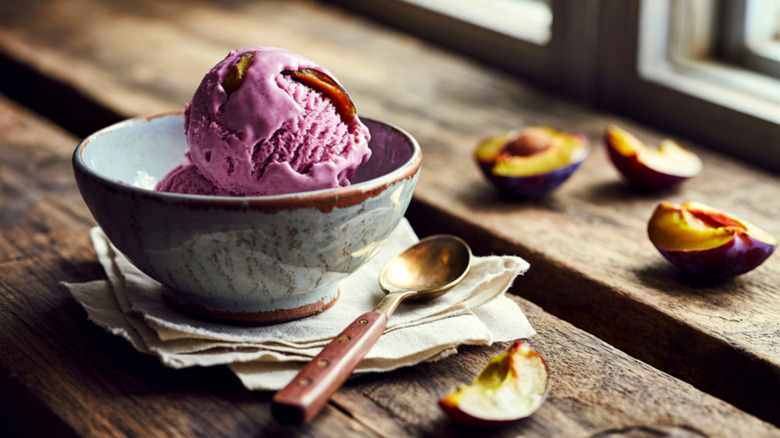
It's hard to name more than a handful of fruits that aren't popular ice cream flavors. Strawberry, cherry, even peach are commonly found at ice cream parlors and on store shelves, but one that is strangely elusive is plum. At one point in the mid-20th century, however, the flavor was available from multiple major ice cream brands, and both of them used the same pun.
Baskin-Robbins, a company known for its rotating 31-flavor line-up, had the idea to make a plum flavor when a young customer visited one of the stores for the first time and marveled, "My god, I've never seen so many flavors. The people who think of these flavors must be plumb nuts." Plum Nuts, a vanilla ice cream containing plums and walnuts, was then born. Another brand to capitalize on the wordplay was Sealtest, which had its own Plum Nuts flavor that featured striations of plum color. You won't find Plum Nuts or plum of any kind in Baskin-Robbins' current lineup, but there's always hope that it will be brought back into rotation someday.
4. Devil Mint
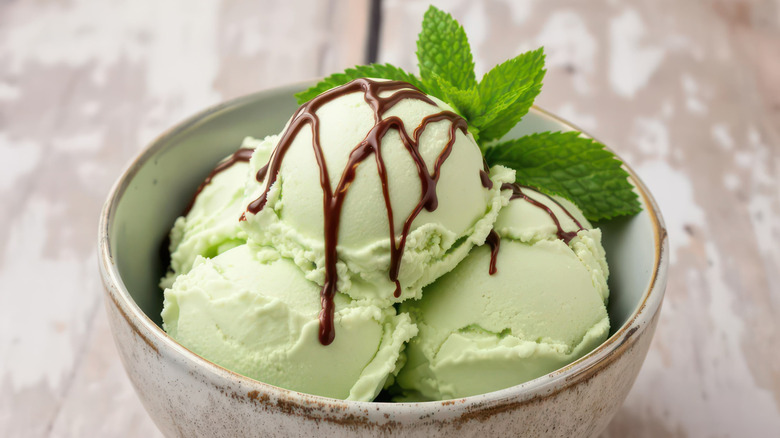
Some flavors just belong together. Peanut butter and jelly, caramel and salt, pumpkin and cinnamon. All of these combinations have been used extensively and have had many iterations over the years, providing the basis of countless delicious recipes. However, one of the greatest of all time is chocolate and mint. Chocolate, with its rich, slightly bitter flavor, and mint with its coolness, are somehow a match made in heaven. You can find ice cream that capitalizes on this harmonious combo in mint chocolate chip ice cream, which you can find at almost any ice cream-selling establishment.
Once upon a time, however, there was another popular blend of these flavors. Devil Mint ice cream was an offering from the popular dairy brand Sealtest, and it boasted "Extra-special Sealtest Chocolate laced with zippy, green Peppermint." Instead of featuring chocolate chip-studded peppermint ice cream, it featured a swirl of the two flavors, adding enough food coloring to the mint recipe to yield a striking visual contrast. With the demise of Sealtest, Devil Mint disappeared, but it's surprising that other brands haven't jumped in to make their own versions of this eye-catching showcase for a beloved flavor combination.
5. Tutti frutti
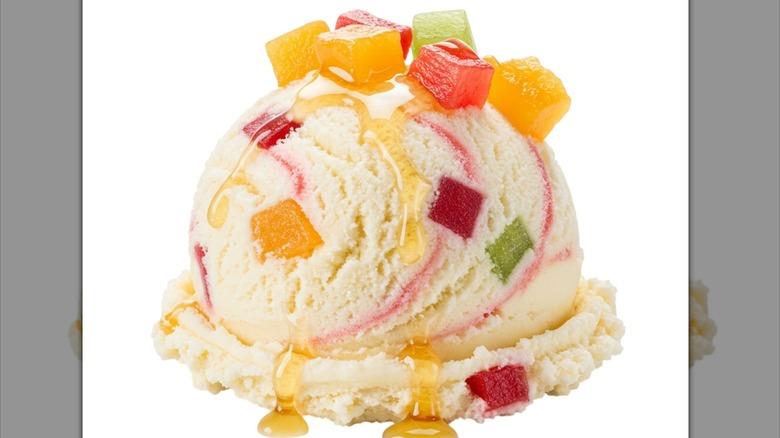
Ice cream flavors come and go for many reasons and to varying degrees. But one of the most dramatic disappearing acts is tutti frutti, which went from being ubiquitous to being all but untraceable. Its name means "all fruits" in Italian, and although that's a pretty tough claim to live up to, it did boast a distinctive fruity flavor that couldn't be narrowed down to a single one. Known for its bits of candied fruit and often having a bright pink hue, it was a wildly popular ice cream flavor at one point, one you could find just about anywhere ice cream was sold.
It was never an Italian food. The fact that "tutti frutti" is not grammatically correct is a dead giveaway on that front. However, its origins are far from certain. It might have been the brainchild of a Kentucky confectioner sometime in the 1940s or '50s or of an Indonesian one a decade or two before. Atlas Obscura suggests that the term dates all the way back to the 19th century in America, where it referred to candied fruit that was widely used as a sweet flavoring. Whatever the real story, its use in ice cream seems to have run its course.
6. Bubblegum
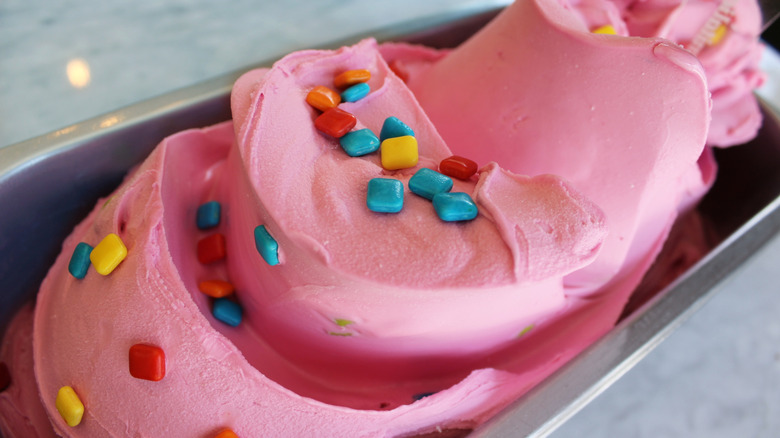
Bubblegum and ice cream might not seem like a match made in heaven, but for some, it is the holy grail of frozen flavors. Good Humor's Bubblegum Swirl ice pops, with their distinctive pink and blue design and uncanny flavor resemblance to gumballs, were popular a popular ice cream truck offering in the 1980s and '90s, but they were discontinued, leaving fans with few similar options to fall back on. It's clear that they still have a core group of fans, though, because the company has a request form on its website. As of yet, however, no re-release has occurred.
Other brands have gone through a similar trajectory, though some have caved to the fans' outcry. Baskin-Robbins, for example, brought its bubblegum flavor back to its lineup in 2024, while Lolly's Creamery in Virginia Beach recently recreated the bubblegum flavor for which High's Ice Cream was once so popular before it filed for bankruptcy in 1997.
7. Spumoni
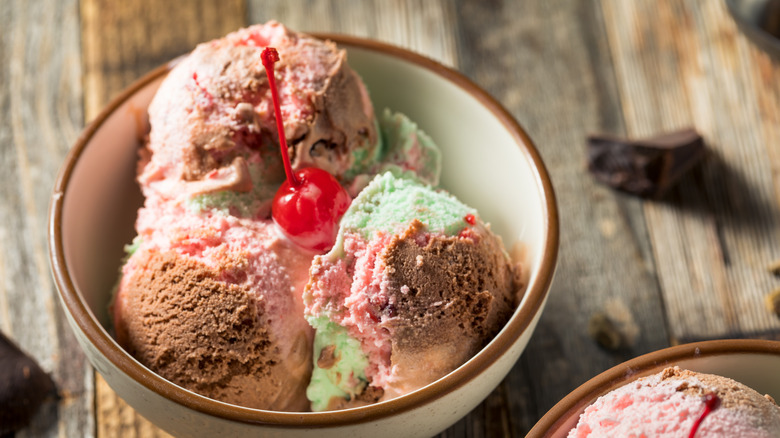
Spumoni isn't your classic ice cream. Made in candy and nut-filled layers and sliced in slabs like cake, it has three distinct flavors — pistachio, vanilla, and cherry — giving it a colorful, striped appearance. It was created in Italy sometime in the 19th century when molded, layered ice cream was having its heyday. The original recipe wasn't ice cream at all, but airy gelato, hence its name, which is derived from "spuma," the Italian word for foam. Although gelato is differentiated from ice cream by using no eggs and a lower proportion of cream to milk, spumoni is made by adding cream to gelato, making it slightly richer.
By the late 19th and early 20th centuries, Italian immigrants had brought the recipe to the United States, where it became a popular treat for celebrations. Soon, however, it was adapted into the now more well-known variation, Neapolitan ice cream, which contains chocolate, strawberry, and vanilla ice cream instead. You can still find spumoni in some parts of the U.S., but it is far from common, and in Italy, you'd struggle to find it at all.
8. Rum raisin
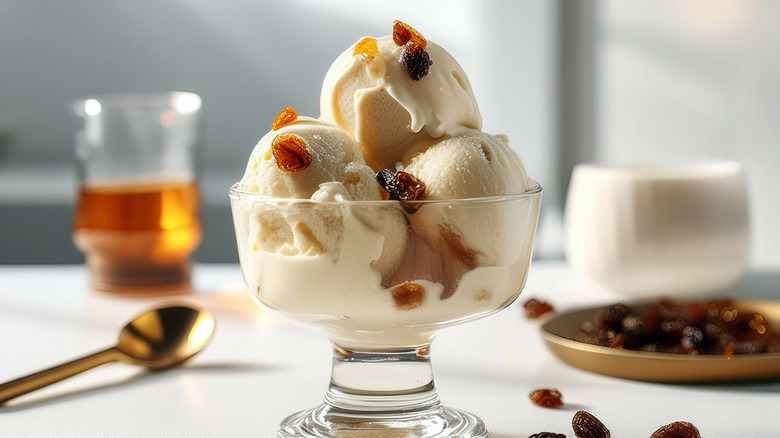
Unlike tutti frutti and plum ice cream, you can still find rum raisin at some stores, but its stint as one of the most ubiquitous ice cream flavors is long gone. You might remember it as a big deal in the 1970s and '80s, but its history is much more extensive, dating all the way back to Sicily in the early 20th century. Back then, it was made with marsala-soaked Málaga raisins and gelato, but when it made it to the U.S., regular ice cream and rum-soaked raisins became the norm. Its first wave of popularity in America can be attributed to the end of Prohibition. No longer banned from drinking alcohol, Americans added it just about everything, including desserts.
It came back into style in the '70s and '80s, so much so that many people today still associate it with that period instead of the '30s. However, these days, it's far from guaranteed that you'll find it at a specialty ice cream parlor, let alone a mainstream one.
9. Pineapple
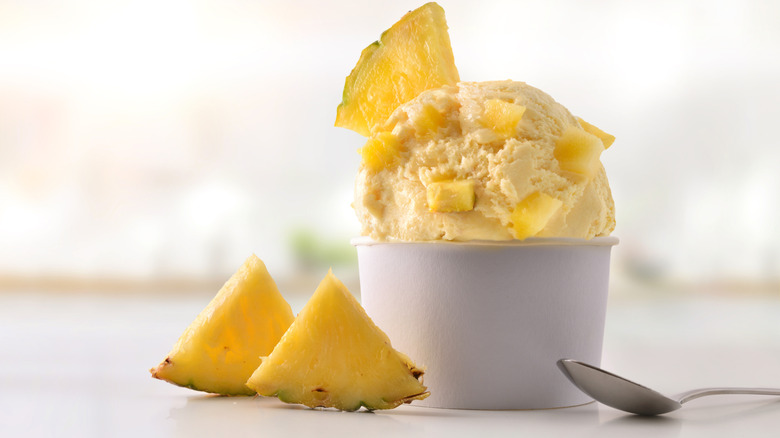
After its first wave in the 1930s, Tiki culture took hold of the U.S. after World War II and tropical flavors became the norm in the 1950s. American service members who were stationed in the Pacific returned home with tales of a tropical island paradise that captured the nation. The infatuation with all things tropical extended beyond cocktails like the Mai Tai and the Bahama Mama to fruit more broadly. Pineapple ice cream was everywhere, from Lady Borden's Tropical Isle Pineapple to Foremost's Coconut Pineapple and Sealtest's Pineapple Perfection.
It was even shoe-horned into flavors in unusual ways. Meadow Gold's Hawaiian Sherbet boasted "pink pineapple sherbet," for example, while Lady Borden's Holiday Bisque Tortini was made with "luscious red and green pineapple." Suffice it to say that pineapple does not hold such a sway in the ice cream world today, though it's easy to see why this delicious fruit was once at the pinnacle of the flavor pyramid.
10. Black walnut
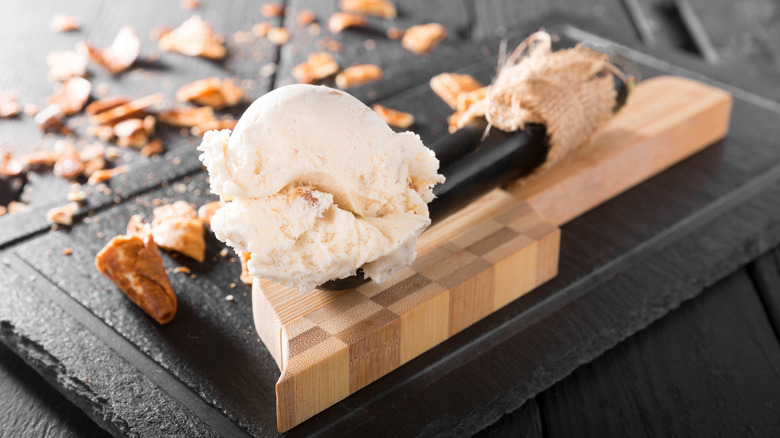
Have you ever eaten a fresh tomato straight off the vine and marveled at how different and more vivid it tastes compared to the kind you buy at the store? Black walnuts provide a similar experience, making the standard English walnuts that you find at most supermarkets seem like a mere shadow of their bold, earthy American cousins. In the Midwest and South, black walnuts are popular baking ingredients, but in the past, they were also a beloved central character in ice cream.
Part of their success comes down to Baskin-Robbins, which featured this sweet, earthy nut in its original lineup of 31 flavors. But even before then, home cooks and local ice cream shops had been making black walnut ice cream, to the point where it was a staple flavor for some generations of Americans. Over time, its popularity faded, and it became a nostalgic flavor that people remembered from childhood but rarely got to enjoy in the present. Thanks to the current rise in niche flavors, however, black walnut ice cream may be back on the rise. It isn't as popular as it once was, but its deep flavor is ripe for reimagining.
11. Teaberry
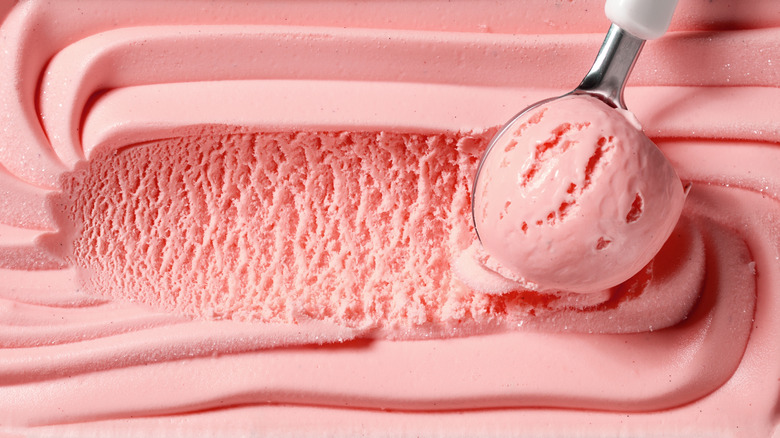
If you were to stride into an ice cream parlor and confidently ask for a scoop of teaberry, you would probably be met with baffled faces. Most people would struggle to define teaberry, let alone procure it. Made, appropriately enough, with teaberries, this bright pink ice cream was all the rage in the 1960s but is now hard to find outside of Pennsylvania. Despite the color of the ice cream and the word "berry," the flavor is closer to mint than strawberry or raspberry. Also called wintergreen, boxberry, and checkerberry, teaberry is a red berry that grows in the Eastern U.S. and has been used to flavor chewing gum, thanks to its minty freshness.
You can still find teaberry ice cream around Pennsylvania, but it is no longer available throughout the country, and even in the Keystone State, it isn't a universally beloved dessert. Maybe it's the cognitive dissonance of eating something that looks like a fruit-flavored ice cream and tasting mint, or maybe it's the common associations with Pepto Bismol, but whatever its handicaps, it's worth snagging a few scoops of it if you happen to be in Pennsylvania, just to decide for yourself.
12. Tiger tail
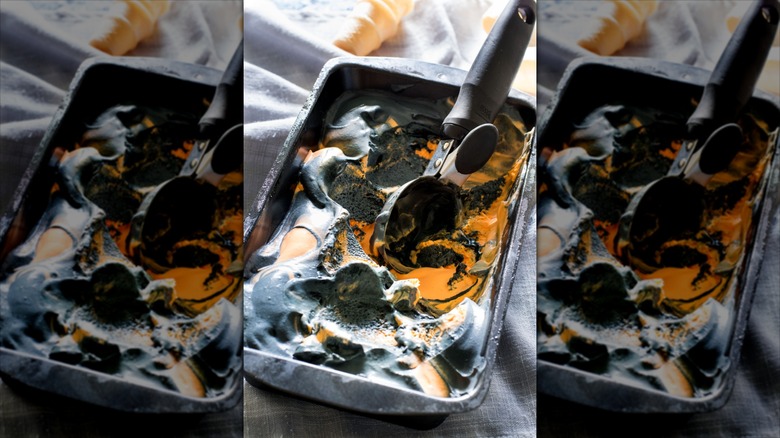
There aren't many truly original flavors out there. Most are either variations on favorite combinations (such as mint chocolate chip) or are reminiscent of more popular flavors, such as teaberry. But the nostalgic Canadian classic, tiger tail, stands alone. Made by adding a swirl of licorice to orange ice cream, it is a unique combination of flavors that certainly isn't for everyone. During the 1950s and '60s, however, Canadians were crazy about it and it was downright mainstream. Nowadays, it's mostly confined to the Ontario area and is by no means the region's most popular flavor, even if ice cream parlors still keep it around out of respect for its history.
Despite how popular it was, its origin story is a mystery and its precise formula is challenging to replicate. Given how polarizing licorice is, though, it's safe to say that it was probably never going to be an enduring favorite, even though Canadians still hold it in high esteem as a fond throwback to their childhoods.
13. Superman
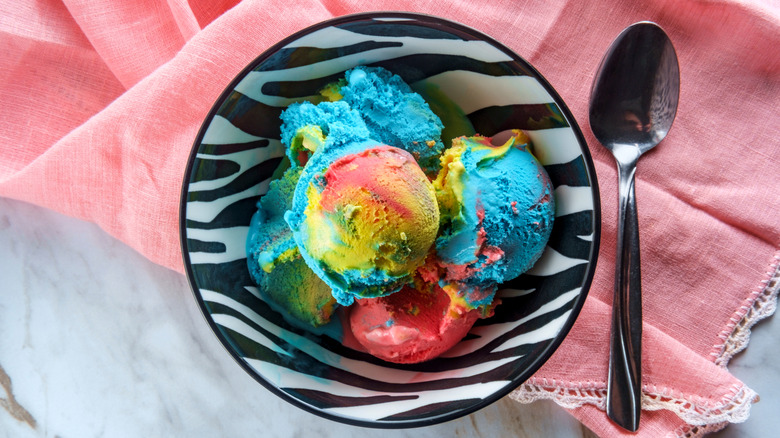
It's hard not to make certain assumptions about Superman ice cream. For instance, you might assume that it was named after the classic superhero or that its garish colors have something to do with comic books. The truth is that the ice cream initially had no connection to the character nor to comic books more broadly. In fact, when it was created in the 1920s, the character of Superman had not yet been created, and it's likely that the ice cream was given the name after the Man of Steel landed on comic book shelves in the late 1930s to capitalize on their mutual escalation in popularity.
Things get stranger when you try to explain to people outside the ice cream's native Midwest what this nostalgic treat actually tastes like. The one that is most consistent is the blue, which is made of blue moon ice cream. The taste of this beloved Midwestern flavor is, in itself, highly contentious and extremely secretive. Associations range from marshmallow and amaretto to raspberry and Froot Loops. The red was originally made with a type of strawberry soda called Redpop, but it has also been flavored with cherry, strawberry, and bubblegum. Meanwhile, the yellow has been flavored with everything from banana to regular old vanilla.
14. Heavenly hash
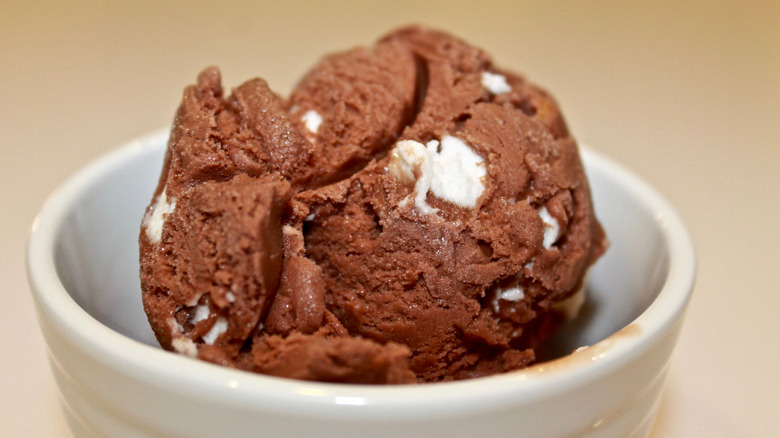
The name might not give much away, but heavenly hash has a surprisingly lengthy history and twisty evolution. Its first known printed use came in 1887, when it referred to a mixture of oranges, bananas, lemons, apples, raisins, and pineapples that were mashed and fitted into a hollowed-out orange. Over time, it evolved to include nuts and marshmallows, then excluded all the fruit entirely and added chocolate. In 1923, Elmer Candy Corporation released its Heavenly Hash candy, which was comprised of marshmallows and almonds coated in chocolate. By the 1970s, it was enjoying its heyday as an ice cream flavor, usually in the form of chocolate ice cream studded with marshmallows and nuts.
If this sounds familiar, you're probably thinking of Rocky Road ice cream, which is also comprised of chocolate, marshmallows, and nuts. If the two were ever in direct market competition, it's clear that Rocky Road won the day, possibly because its name is more illustrative of its contents.
15. Artichoke
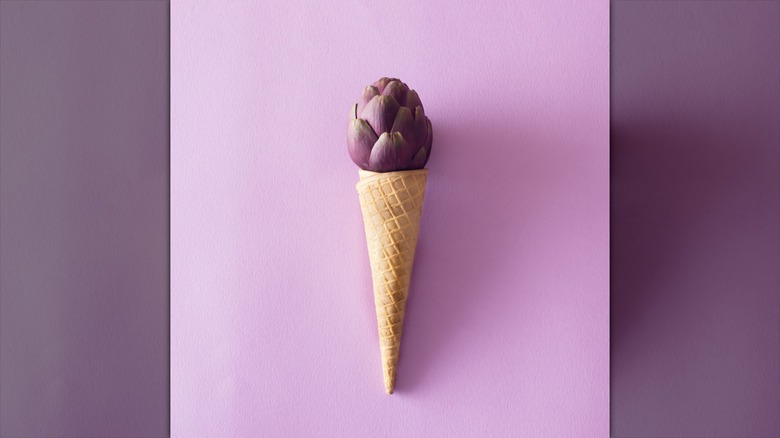
Early in its history, ice cream was not necessarily sweet. Its savory flavors ranged from truffle to (rather alarmingly) oyster, and guests would not have batted an eye at the sight of a Parmesan-flavored frozen course. However, when it comes to artichoke ice cream, it could go both ways. If you were part of the wealthiest class in the 1700s, you might be presented with a savory artichoke ice cream during your meal. Equally, you might have been presented with a much sweeter concoction made of artichoke, pistachio, and candied orange. The finished product probably tasted more like the latter two ingredients than the former, putting it firmly into dessert territory.
Needless to say, you're unlikely to turn up to your local ice cream parlor and find artichokes on the menu, but there are plenty of recipes out there for people to try for themselves at home. It might not be topping vanilla as the most crowd-pleasing option there is, but it might have more potential than you'd think.