

Meet Carambola (Star Fruit): What It Is And How To Use It

We may receive a commission on purchases made from links.
If you're looking for an underrated tropical fruit to embellish and elevate your dishes and drinks with its distinctive shape, cheerful color, and versatile flavor range, then carambola is a strong contender. Scientifically named Averrhoa carambola, it's technically a berry (but it certainly doesn't appear like one) that belongs to the Oxalidaceae family. Some people call it star fruit, kembola, caramba, or country gooseberry, while to others, it's commonly known as belimbing besi, belimbing manis, belimbing sagi, kamrak, or even five-finger (referring to its prominent ridges).
Though carambola is mainly grown in South America, some U.S. states, and Australia, as well as India, Taiwan, Malaysia, Sri Lanka, Thailand, and Queensland, it's available in the produce section in various parts of the world, albeit seasonally. Still, you could always freeze or dehydrate the fruits when you finally get your hands on them, as they would definitely come in handy for your last-minute juices and snacks. So, here's all you need to know about the whimsical-looking star fruit: its benefits, kitchen and domestic uses, and side effects, as well as how and where it grows best and where in the U.S. you can purchase it.
What does carambola look and taste like?
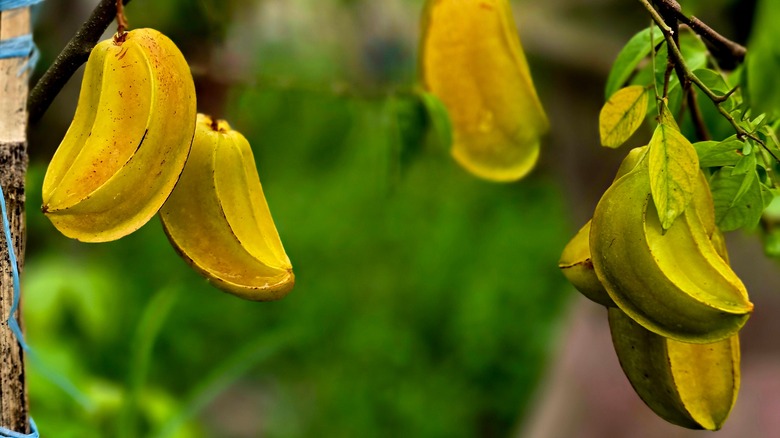
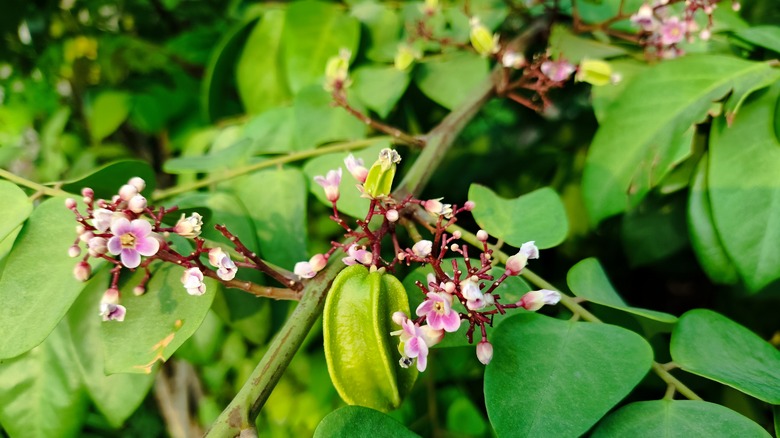
Sporting drooping branches, compound leaves that are between 6 and 12 inches long, and deep pink or lavender flowers, star fruit trees are evergreen and live up to 40 years. They yield oblong, fleshy, yellow or amber crops that can grow up to 6 inches long and feature four or five ribs, a rather thin and waxy peel, a juicy pulp, and about 12 light brown seeds in the center.
As for the flesh's distinctive taste, it can range from tart to sweet, depending on the size of the crop and its degree of ripeness. However, if we were to compare it to other fruits, we could easily describe it as a surprising (but satisfying) mix of apple, grape, pineapple, and pear, with some bright citrusy notes. In short, carambola may not exactly be what you'd expect from a berry, but it will definitely catch your eye in any platter, beverage, or buffet, be it as an ingredient or a fun edible ornament.
Star fruit varieties
Unlike other fruits and their countless subspecies, carambola comes in only two main varieties: small to medium and medium to large. Indeed, the smaller they are, the tarter they taste, whereas the largest ones lean toward the juicy, rich, and sweet side.
Some of the most smaller star fruits you can find in the grocery aisle include the Cheng Chui, the Miss, the Pasi, and the Erlin from Taiwan. As for the finest quality and flavor, they're typically exhibited by the B-10 and the B-17, which are grown in Malaysia through cross-pollination. For its part, Thailand has given us the popular, pale yellow Fwang Tung, which can grow up to 8 inches, and the amber-colored Sri Kembanqan, which is 5 or 6 inches long. Both are particularly noted for their sweetness, firmness, juiciness, and small number of seeds.
How to eat carambola
Star fruit is entirely edible, including the seeds (though the latter aren't particularly tasty and are usually discarded). The general consensus is, if it's tart, use it for cooking, and if it's sweet, it's better consumed fresh — unless you feel like whipping up a truly unconventional fruit pie.
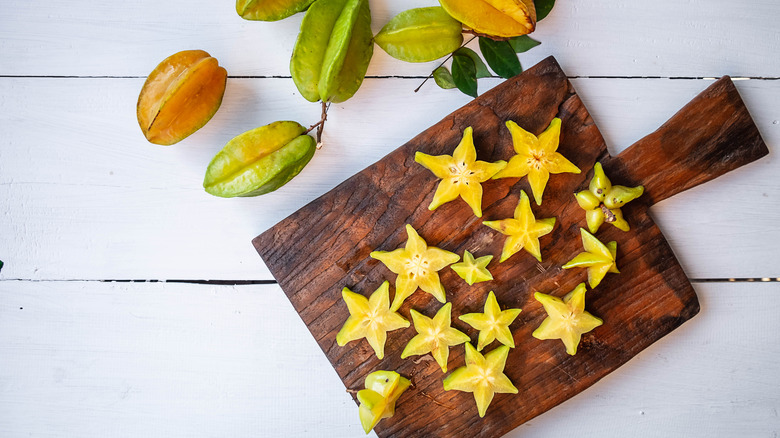
You can, of course, simply bite into it, but cutting it crosswise will give you cute, aesthetic, star-shaped pieces to decorate and elevate your salads, desserts, iced teas, and cocktails. This doesn't mean that you can only consume carambola raw or use it as an edible decoration, though. After deseeding and slicing it, just toss the fruit pieces in your air fryer until they dehydrate, and then, coat them in chocolate syrup or pumpkin pie spice for an irresistible delicacy.
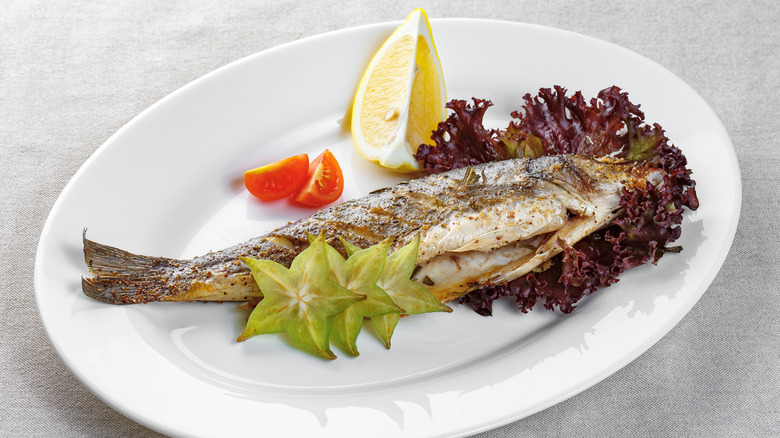
Carambola would also make a standout ingredient in a seafood dish, alongside avocado and lemon; in a Vietnamese soup; or in an Indian curry. In the Malay Peninsula, for one, it's commonly stewed with sugar, cloves, and/or apples. As for Chinese foodies, they enjoy it with fish or canned in syrup, while India is partial to carambola jam and chutney.
How to select and store carambola
Generally, you should steer clear of carambolas that are deep green and rough (i.e., unripe) or deep yellow/amber with dark brown spots (i.e., overripe). The fruits have to be pale or bright yellow/orange, with a smooth and slightly firm texture. If they're a little green around the edges, you can still buy them, but make sure to let them ripen on the counter for a few days. If, however, your purchased star fruit are already yellow or orange, then simply store them at room temperature or in a cool, dark, but well-ventilated place.
Naturally, ripe carambolas are best consumed within two or three days, but you can always refrigerate them in a zip-lock bag for about a week or in the crisper drawer for up to two weeks.
Alternatively, you could opt for freezing your sliced, pureed, or juiced star fruit in freezer-friendly bags and silicone molds.
Is carambola nutritious and beneficial for your health?
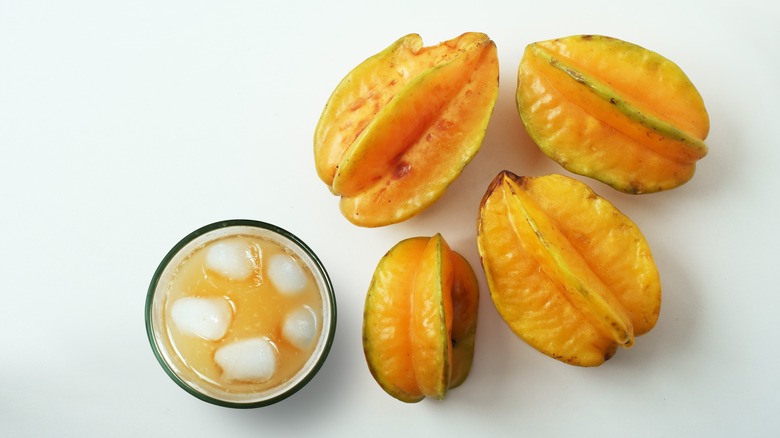
Besides their appealing look and refreshing taste, do carambolas bring any beneficial and therapeutic properties to the table? Let's consider the essential content provided by one medium-sized fruit (via Healthline): vitamin C (52% of the recommended dietary intake, or RDI); copper (6% of the RDI); vitamin B5 (4% of the RDI); potassium (3% of the RDI); folate (3% of the RDI); magnesium (2% of the RDI); 3 grams of fiber; 1 gram of protein; about 28 calories; and 6 grams of carbs.
Therefore, based on the low calorie content, star fruit is, indeed, quite nutritious. It may help people shed a few extra pounds; relieve their constipation, bloating, and diarrhea; lower their blood pressure and inflammation; and boost their immune system and heart health (via WebMD).
Carambolas also provide the body with gallic acid, epicatechin, and quercetin, which could keep cholesterol levels and fatty livers in check.
Who should not eat carambola?
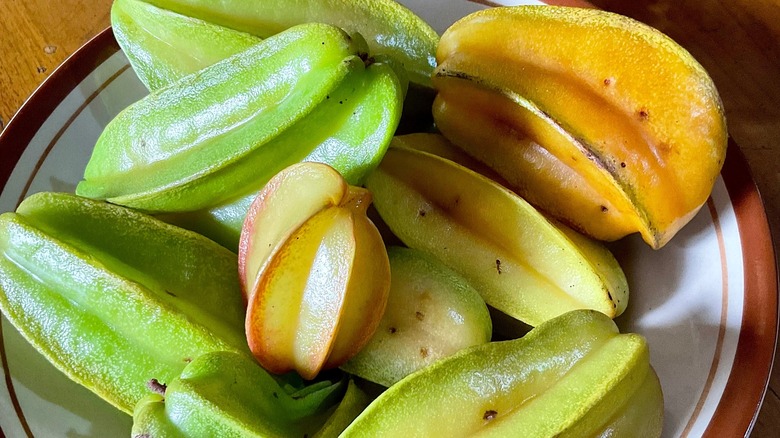
Despite its many health perks, carambola, which could be included in a keto diet if eaten in moderation, also has a reputation as one of the world's most dangerous fruits. As it turns out, it contains oxalic acid, which may very well weaken kidney function; therefore, people with kidney problems should probably refrain from consuming it.
Moreover, star fruit provides the body with caramboxin, a neurotoxin that could affect the nervous system. So, look out for symptoms of carambola poisoning, which may include seizures, hiccups, and/or an overall state of confusion.
That's not all avid star fruit consumers should be weary of, though. That tropical fruit has been proven to interact negatively with certain prescription drugs, such as Venetoclax (for the treatment of chronic lymphocytic leukemia), Panobinostat (for patients with plasma cell cancer), and Bosutinib (a potent cancer growth inhibitor).
How else can this fruit be used?
Carambolas are delicious and quite versatile in the kitchen, but they also have other great uses inside and outside the household. To begin with, boasting a manageable size, fragrant flowers, and a proven resistance to small frosts, this evergreen tree has ornamental value and can spruce up your home, office, or garden. Moreover, thanks to its fine texture and medium/hard density, the wood extracted from the tree, which reddens with time, can be fashioned to create small pieces of furniture, utensils, and decorative items.
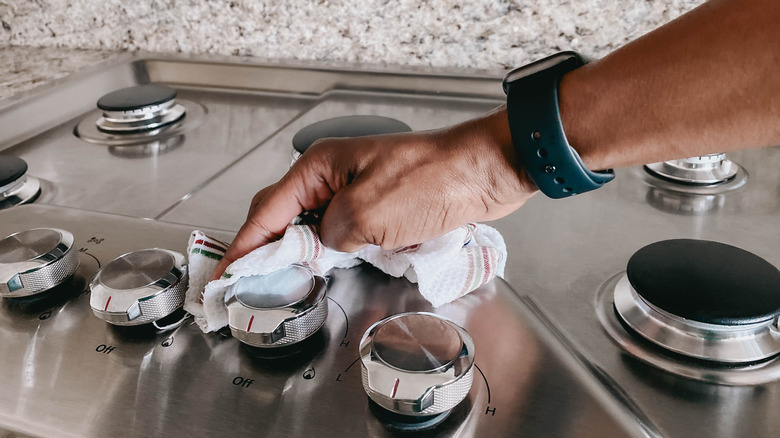
Moving on to the crop itself: the high acid content of a sour and green star fruit, for example, is quite beneficial for polishing metals like brass and eliminating rust stains from fabric. Finally, carambola extracts have been incorporated into beauty, skin, and hair products, from facial masks for minimizing pores and fighting free radicals to organic lip balms and shower gels.
What are the ideal conditions for growing carambola?
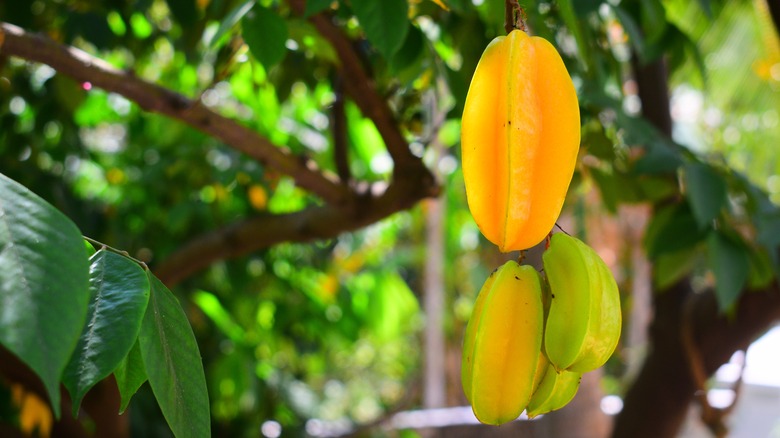
Carambola trees could grow up to 33 feet, as long they're planted at least 20 feet apart in a well-drained soil and away from buildings, power lines, and other types of trees. The best environment for growth and fruiting is a warm-to-hot tropical or subtropical climate; complete sun exposure; temperatures that range between 68° and 95°F; a soil that isn't excessively dry or wet; and safety from strong winds. Also worth noting is that saline water or soil may cause leaf browning and yield smaller crops.
Overall, the trees produce fruit starting 10 months after planting, and the fruits usually mature at 60 days. Delaying harvesting for a couple of weeks, though, will yield much sweeter results. In case they're grown in areas that are prone to hurricanes (a common occurrence in tropical climates), carambola trees are often pruned and kept at below 12 feet so that they can bend with those deadly winds.
Where is carambola cultivated and sold in the United States?
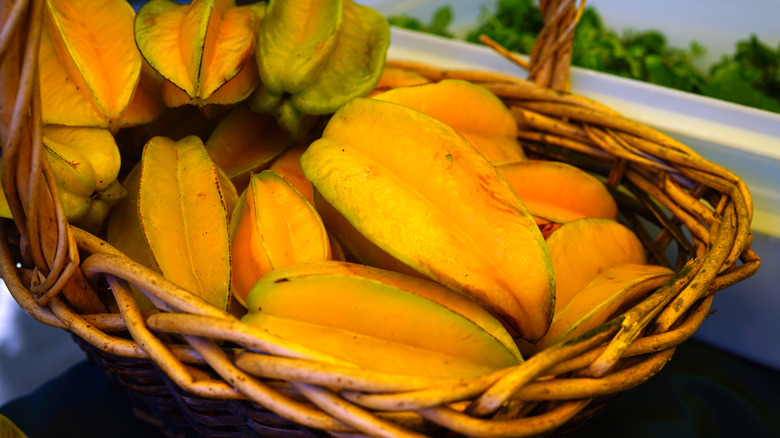
Besides lychee, kiwano, rambutan, and cherimoya, carambola is one of those uncommon fruits you can buy in the United States. Though primarily cultivated in Asia and South America, it can also grow in the tropical climate of South Florida and Hawaii, where it's warm year-round. Counties Lee, Broward, Dade, and Palm Beach are especially indicated for those seeking the freshest star fruit crops, but you'll also get lucky in some protected zones within Polk, Highlands, Brevard, and Pinellas, and Polk Counties. Common Florida varieties include the flavorful Arkin and Lara; the mildly tart Golden Star (it's sweeter when it's harvested completely ripe, though); and the tart Newcomb and Star King. As for Hawaiian subspecies, they range from the moderately flavored Kajang to the sweeter and more popular Kary.
Typically, carambolas experiences two blooming periods in Florida: April through May and September through October. Though they could be available year-round, they're mostly harvested from August through September and from December through February. You can purchase carambola from numerous fruit importers and online marketplaces, including a 3 pound box of star fruit that sells on Amazon for $79.99 Note that, in an effort to contain pest diseases, fruits like carambola, Florida Mango, Spanish plum, and white and pink guava cannot be shipped to California.