

9 Best Types Of Wine To Pair With Fish Tacos
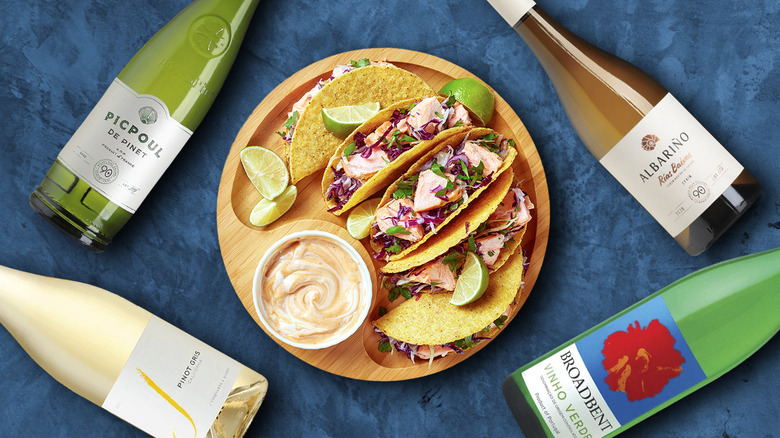
When it comes to pairing wine with fish tacos, you are entering a tasty world with a lot of creative opportunities for making those "chef's kiss" types of pairings. It's a chance to take something often regarded as laid-back and elevate it by adding a wine that brings out the best of each flavor profile. Tender, flaky mahi-mahi nestled in a warm corn tortilla, topped with citrus slaw, pickled red onion, and vibrant salsa verde is undeniably amazing on its own, but when you add a chilled, acid-driven white with a hint of sea salt, it slays in a whole new way.
Between mildly effervescent whites, briny coastal varietals, sharply high-acid grapes, island-rooted vines, and piquettes, there are a handful of wines that are well-suited to sip alongside any array of fish tacos. Each highlights characteristics from components of the fish taco while layering in complexity through aromatics, citrus zest, herbaceous undertones, bubbles, and texture. The best wines to pair with fish tacos balance the flavor profiles of each while highlighting new, nuanced flavors between the two. As a sommelier, these are the wines I believe bring acidity, salinity, and texture, ultimately creating a well-rounded and inherently fresh pairing with fish tacos.
Albariño
Let's start with albariño. Arguably one of my favorite whites to drink on its own, this lively Iberian grape is a great pairing for fish tacos. There's something inherently fresh about albariño. Pronounced salinity, citrus zest, and satisfyingly sharp acidity define the overall characteristics of the grape. Vibrant grapefruit, lime peel, and sea spray keep this wine feeling very light in body, yet with underlying texture and enough backbone to cut through richness and balance any heat in a dish. Salsa, anyone?
Pairing albariño with fish tacos is a natural fit. The wine echoes any citrus from a splash of lime juice or citrus-marinated slaw while the acidity refreshes the palate between bites of heavier components, like avocado crema. Albariño easily highlights the brightness typically found in a fish taco without overshadowing the delicate flavors of whitefish. This is one you want to drink cold, preferably in a beach scene where you can watch the beads of condensation on your glass develop while alternating between crisp sips of wine and large, messy bites of taco post ocean swim. If you reach this point, you've truly gone beyond the pairing and have now created a coastal moment in a glass. Congrats, and welcome to vacation. I would highly recommend Dandelion Albariño from Nanclares y Prieto in Rias Baixas, Spain. It's bright and saline-driven with a softness from extended lees aging, adding texture and balance.
Vinho Verde
Let's talk Vinho Verde, the cheeky Portuguese wine that feels like summer in a glass – and is a killer pairing with fish tacos. This "green wine" from Portugal's lush northwest is light-bodied, bracingly acidic, often low in alcohol (about 9 to 11%), and typically has a tinge of effervescence. Think bright lime zest, green apple citrus blossom, a touch of melon, and a saline edge from the Atlantic influence. These wines usually come from blends of indigenous grapes like loureiro, arinot, alvarinho, azal, and trajadura – all high-acid and food-loving.
When it comes to pairing with fish tacos, Vinho Verde steps up with ease. Its delicate effervescence and zippy freshness cut through crispy fried fish and avocado crema, while complementing spicy salsa verde or pickled red onion. It's a particularly fitting pairing for tacos topped with citrus slaw or mango salsa, where it plays off of the light and fresh vibe. Vinho Verde is bright, balanced, and refreshing, not to mention very affordable with an all-day sipping ABV level. Assinatura de Familia Vinho Verde from Quinta de Santiago in Portugal is a classic blend that has a high-energy acidity and a surprising amount of complexity — an incredible value bottle from a fourth-generation family estate.
Picpoul
If you love a taco that's citrusy, crunchy, and has a little spicy edge to it, then you're going to want to splash some Picpoul into your glass. This southern French varietal — most famously grown in the Languedoc wine region's Picpoul de Pinet AOC – is basically a lemon in wine form. Nicknamed "lip-stinger" for its electric acidity, Picpoul is wildly crisp, bone dry, and full of zingy citrus, green apple, and a saline mineral edge that feels tailor-made for seafood.
When pairing Picpoul with fish tacos, it's good to think about how that high acidity cuts through the fattiness of a meaty fish or the crispy exterior of fried white fish. It brings a sharp and necessary edge to flaky whitefish like cod or snapper, echoing lime juice from salsa verde, and pairing well with anything pickled or herby. There's also just enough texture to stand up to grilled mahi or a spiced crema without overpowering the tacos' lighter layers. Picpoul isn't a flashy wine, but make no mistake, it's clean, bright, and fresh, making it a perfect pairing to sip alongside any fish taco. Veering from the birthplace of the grape, the Picpoul from Two Shepherds Winery in California is organic, unfiltered, and brimming with Meyer lemon, wet stone, green apple, and honey. Super delicious.
Sauvignon Blanc
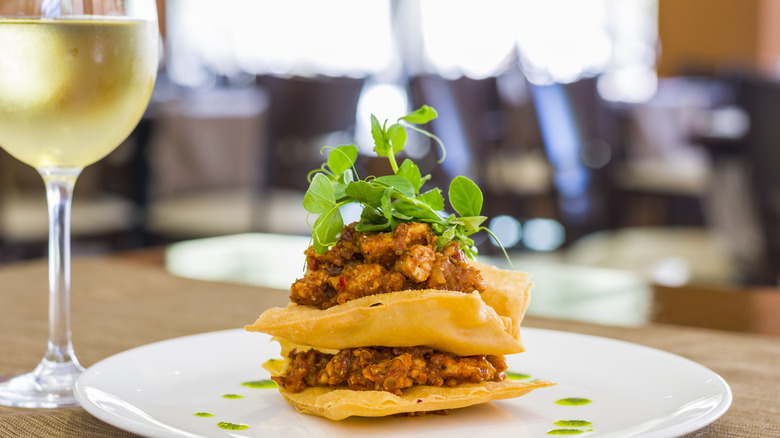
We all know and love sauvignon blanc. It's versatile, expressive, and known for its edgy freshness. Citrus-spritzed and green-edged aromatics live on a scale of playful to serious depending on which sauvignon blanc you reach for. A New Zealand sauvignon blanc leans a little louder with more tropical fruit notes, lime zest, and that quintessential fresh-cut grass characteristic. While a Loire Valley Sancerre or Touraine is a little bit more restrained with lemon peel, gooseberry, and a cool herbal snap. Because sauvignon blanc is widely grown around the world, there are these iterations, and then there's everything in between.
Whichever bottle you go for, it's bound to have crisp acidity and a bit of a savory edge, which is a natural match for grilled fish piled high with citrus cilantro slaw on a charred corn tortilla. This pairing amplifies freshness, and the grape plays off any herbaceous notes from ingredients like jalapeno and cilantro better than any other wine. If you have a particularly boisterous fish taco combination, sauvignon blanc is likely your golden child here. It's like the extrovert at the table — sharp, sociable, and always down to turn up to taco Tuesday.
The Gaspard Sauvignon Blanc from the Loire Valley, France, gives crisp citrus, fresh-cut grass, and mineral structure that aligns well with a bite of fish taco. Looking for a different kind of Sauv? I do love a curious wine drinker. The Somewhere on Another Hill Sauvignon Blanc from Jauma in Adelaide Hills, Australia, is high-elevation with incredible structure and minerality. It's a skin-contact rendition with tropical citrus zest, chamomile, and bruised apple.
Rosé Pét-Nat
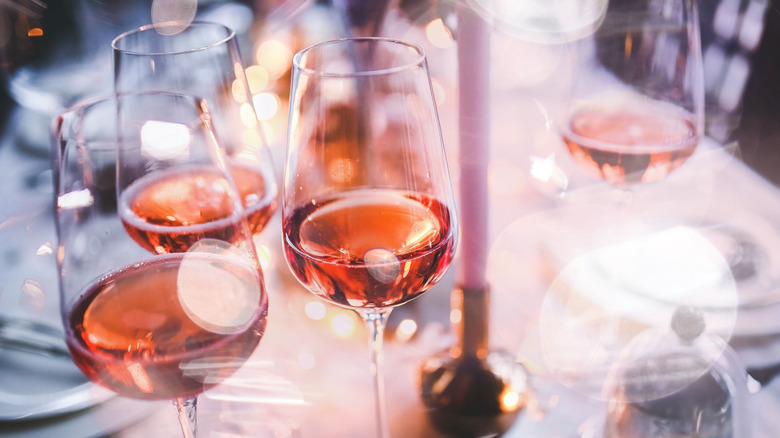
Who doesn't love a pét-nat?! Pétillant naturels are kind of like the endearing kid that never grew up in the wine world. Lively, juicy, unpredictably fizzy, cloudy in texture, and unapologetically themselves, pét-nats are arguably the most playful (and OG) wines out there. A rosé pét-nat that is dry, chillable, full of bright red fruit, citrus zest, wild herbs, and with a tinge of funk makes for a lively fish taco pairing.
Because pét-nats are unfiltered, they bring an incredible textural palette, which can be a particularly fun pairing for a hard shell taco. You want to look for a rosé pét-nat that has relatively high acidity, making it food-friendly with nuanced fruit characteristics that play between watermelon, raspberry, and herb garden. Both the lightness of a rose and the spritzy characteristic of bubbles make rosé pét-nat a refreshing pairing for tacos that add layers of flavor, well cleansing the palate after each sip.
The unfiltered nature of pét-nat paired with the bubbles makes this wine feel like a casual yet celebratory pairing, elevating your taco dinner to all the places you dreamed it could go. Rosa, Rosé, Rosam is a spirited pét-nat with creamy, delicate bubbles and vibrant aromas and notes of strawberry, cherry, red currant, and herbal spice. It's a fun blend of old vine gamay, grolleau, cabernet Franc, and malbec from the Loire.
Vermentino
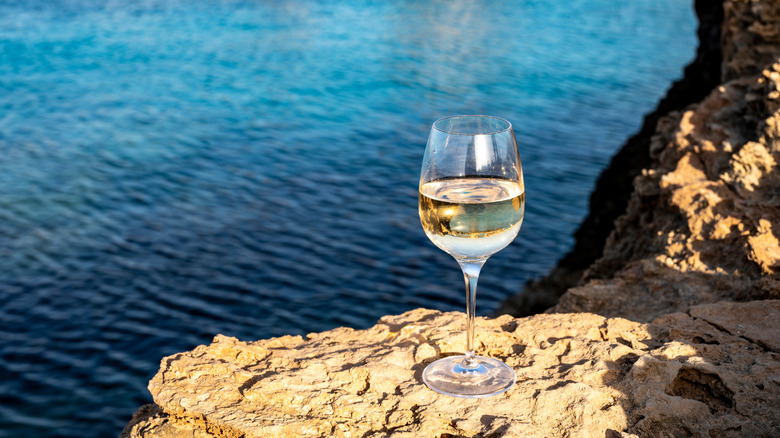
Vermentino is one of my favorite under-the-radar whites. Grown mostly along the Mediterranean in Sardinia, Liguria, Corsica, and parts of southern France, it's a grape that loves the coast and tastes like it. Defined by the salt-tinged air, it has bright notes of citrus, green almond, sea salt, and crushed herbs. It's truly one of the best wines to drink in summer, on the beach, and/or with fish tacos.
The zippy acidity and savory edge make it incredibly food-friendly, and like-with-like plays into the freshness of any citrus slaw that might be atop your fish taco. If you're using grilled fish, vermentino brings out those charred notes while keeping things light. And if you've got something tropical going on — say a mango habanero salsa or a grilled pineapple topping – it meets that juicy sweetness with just enough structure.
Vermentino might be one of the more underrated/overlooked whites, which is honestly kind of baffling to me, considering how delicious, reasonably priced, and food-friendly it is. It's one of the best wines to search out for your next fish taco night. The vermentino from Cardedu is a quintessential representation of the grape coming from the island of Sardinia in Italy. It's so flavorful and gives island vibes with each sip.
Sparkling piquette
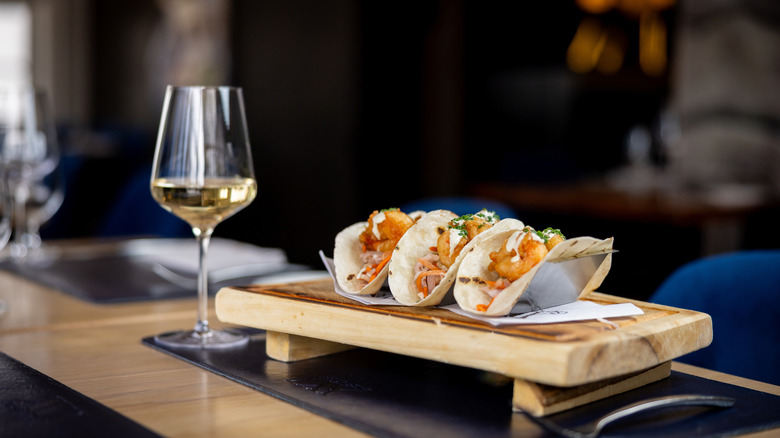
While sparkling piquette isn't technically a wine, it's a very close relative — made from the leftover grape pomace already used for winemaking, then rehydrated and re-fermented into something fizzy, fresh, and glou-glou. Piquette is kind of like the reuse and recycle part of winemaking, which, when done right, can make a real thirst-quenching, low-ABV beverage. The sparkling part gives that lightly flavored, lightly spritzed energy that cleanses the palate in a delicate way while being food-friendly.
A good sparkling piquette will have a bit of texture, acidity, and a slightly rustic edge that works beautifully with charred fish, crispy hard-shell tacos, and all the toppings that go along with it. You'll find a wide range of sparkling piquettes made from different grape varietals. You may find notes of tart red berries, citrus peel, or floral notes. Sparkling piquette is totally unpretentious, which is part of why we love it and why it pairs with ease. Piquettes usually sit around 6% ABV, making them an easy session wine and a great pairing for a sun-soaked fish taco afternoon. The Limited Addition Public Service Piquette from Oregon's Willamette Valley is a blend of aromatic white grapes with a bit of maceration that gives up grapefruit zest, guava, and lychee. Effortlessly drinkable.
Riesling
Let's just clarify, I'm talking about a dry riesling here. Something lean, racy, and aromatic — a real thirst quencher. Rieslings like this are bright, and depending on where they're from, will give up notes of green apple, juicy white peach, lime leaf, crushed stone, and a really nice tension that's quite energizing overall. Rieslings are grown in a wide geographic area, but tend to drink particularly well when from higher elevation sites where they can retain more acidity and deliver taut fruit notes. Looking for rieslings with extended lees aging can add texture and savoriness, which is ideal for tacos with charred elements.
The layered flavors, aromatics, and assertiveness of a dry riesling pair really well with grilled fish and other components of fish tacos, like jalapeno or pickled onion. If you have a riesling that has prominent stone fruit or tropical aromatics, think of making a pineapple or mango salsa to go on your fish tacos to mimic some of the flavors. The crisp nature of the wine brings you back for sip after sip while acting as a subtle palate cleanser between bites. A great place to start is with the Seckinger Vom Löss Riesling from Pfalz, Germany. It's clean, balanced, and eternally zingy with citrus fruits.
Skin-contact pinot gris

A skin-contact pinot gris brings big texture, big aromatics, and big flavor. While a typical pinot gris is directly pressed off the skins immediately, letting the juice macerate on the skins for anywhere from a couple of hours to a couple of weeks, it layers in color, tannins, and dimension. The skin maceration makes for a bit more of a robust wine that really highlights complex notes of dried citrus peel, stone fruit, and/or tea leaves, all with a bit more body. For fish tacos, you don't want a really skinsy orange wine that could overpower the fish, so look for a short window of skin-contact, likely not over two weeks.
When it comes to pairing skin contact pinot gris with fish tacos, this extra structure and grip complement tacos that lean into earthy, smoky, or richly spiced territory. Think grilled salmon, charred swordfish, or mahi-mahi. Its earthy nature also pairs well with savory toppings like grilled zucchini or roasted tomatillo salsa. Any taco that has a little more substance to it will go best with a skin-contact pinot gris. Try the carbonic expression from Marigny.