

What Exactly Are Energy Star Appliances?

In May 2025, the New York Times reported that due to "reorganization" of the U.S. Environmental Protection Agency by the Trump Administration, the Energy Star program is officially on its way to being shut down. For over three decades, the program has been helping home cooks and homeowners choose appliances that won't send their electricity bills through the roof (as a matter of fact, you might find the program's blue sticker on one of your appliances right now). But what exactly does the Energy Star program measure, and how does it benefit you as a consumer? More importantly, does it really "drive up costs and lower the quality of life for the American people," as Trump's Department of Energy alleged?
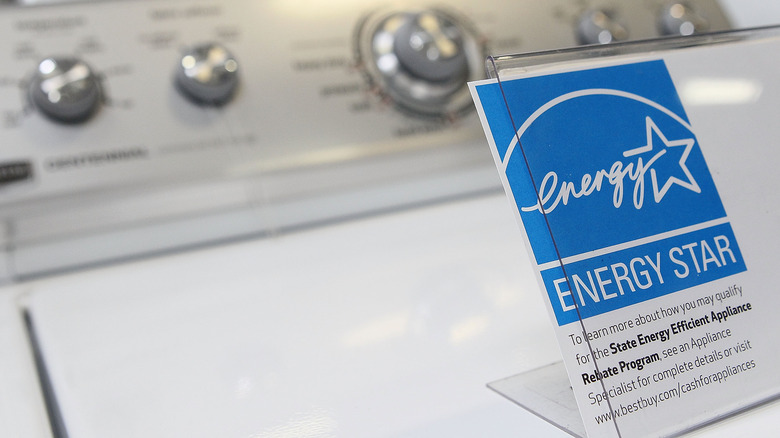
First, some historical background: Before Energy Star, most consumers didn't really have a clear idea of how energy efficient their appliances were, despite Congress having energy labeling laws and setting a lower limit on efficiency for manufacturers. So in 1992, the EPA came up with the Energy Star program. It doesn't have confusing numbers or complex statistics, just a plain sticker. The idea is that even if a buyer knows nothing about energy efficiency or electronics, they can buy any appliance with this sticker and be confident that their purchase won't send their utility bill soaring.
The DoE uses a special database that lists how efficient a product has to be in order to qualify for Energy Star, which is typically anywhere from 20% to 30% more efficient than the federally mandated limit for that product. For example, a "standard-sized" refrigerator-and-freezer combo must use less than or equal to 637 kilowatt-hours a year to get the sticker.
Is it the same as the Energy Guide label?
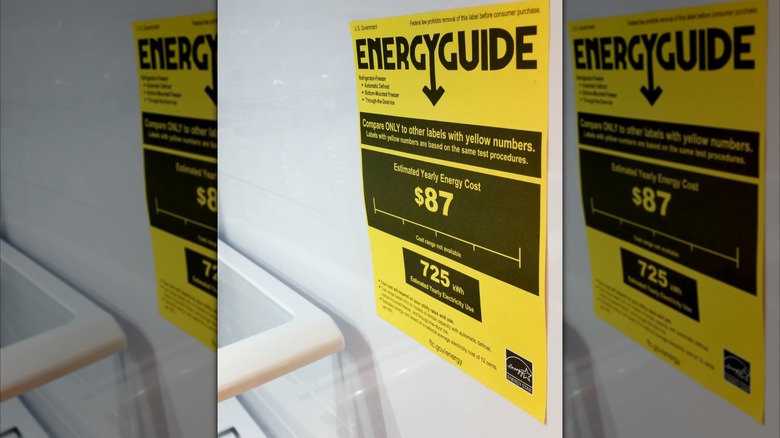
When you browse through the home, furniture, & appliances section in Walmart, besides the Energy Star sticker, you'll likely recognize the bright yellow, poster-sized EnergyGuide "card" attached to the front of every product. EnergyGuide came about even earlier than Energy Star in the '70s. Unlike Energy Star, which is a voluntary program administered by the DoE, EnergyGuide labels are required by law on all appliances and managed by the Federal Trade Commission.
On that yellow label, you'll see the numbers that actually matter to your wallet — how much electricity the appliance uses and what it'll cost you to run it for an entire year. The FTC does all the testing to figure out these numbers, so when you're standing there trying to decide between two dishwashers, you can actually compare apples to apples instead of having to guess the difference. Other than being a fast "hack" to help you build an energy-efficient kitchen, these numbers also serve as the basis for Energy Star qualification. If the energy usage hits the right benchmarks, boom — you'll see that familiar blue logo somewhere on the appliance.
Together, these labels have changed the way most of us shop for new electronics and appliances for decades. These labels have become so iconic, in fact, that 89% of the population recognizes them (according to the EPA), and have often been lauded as one of the most successful programs in the agency's history. The result speaks for itself: $500 billion in savings for the average consumer since the program started. This spectacular run, however, is about to come to an end.
Energy Star's shutdown and what it means for you
This isn't the Energy Star program's first brush with budget cuts. During Trump's first administration, the program faced proposed defunding but survived after bipartisan and industrial pushback. In 2025, however, the situation is looking a lot more serious. According to the New York Times, EPA staffers have been told internally that the program is wrapping up, and in the administration's proposed budget for the 2026 Fiscal Year, the program is set to be cut entirely.
So what does this mean for your next kitchen renovation or appliance upgrade? There are two pieces of good news: energy-efficient appliances and their potential savings won't disappear from store shelves, and there are still ways to find them — you just need to be a savvier shopper.
Instead of looking for an Energy Star sticker, you'll need to look through the specification sheet of every model, hand-calculate the power consumption, and compare the numbers between different models yourself. But perhaps a less headache-inducing method is checking in with your local utility company. Many actually offer rebate programs for efficient appliances and maintain their own lists of recommended models. Without Energy Star, you'll be doing a lot more work than before when you're out shopping, but by staying informed about energy efficiency, you can still save money on appliances both in the short and the long term!