

This Kitchen Staple Can Polish And Condition Wood Furniture

Real wood furniture is a classic design element that gives your home a timeless charm. But all wood furniture needs maintenance, and doubly so for bare wood pieces. Properly maintaining the wood furniture in your house is key not only to keep it looking its best, but also to extend the life of these prized pieces, and allow them to age beautifully. Fortunately for you, odds are, you already have a product in your kitchen that can help you both polish and condition your wood furniture: olive oil.
While it may be new to you, this is actually an age-old practice. Olive oil has had many uses throughout history — in addition to being an important foodstuff, another one of them is treating wood. A thin layer of oil seals and protects the wood, allowing the natural beauty of the grain to shine through while also keeping out water and protecting the furniture from stains. Best of all, you already know that it is totally harmless; if you can use it in a salad dressing, there is no concern with also using it to treat the surfaces you eat off.
Now, we wouldn't suggest that you take that luxury bottle of single-origin olive oil with the floral bouquet and start slapping it onto your bare wood furniture — save that one for dipping your freshly baked sourdough bread — but a decent bottle that you would use for day-to-day sauteing will work great. And it only takes a little bit to treat a lot of wood.
How to condition and polish furniture with olive oil
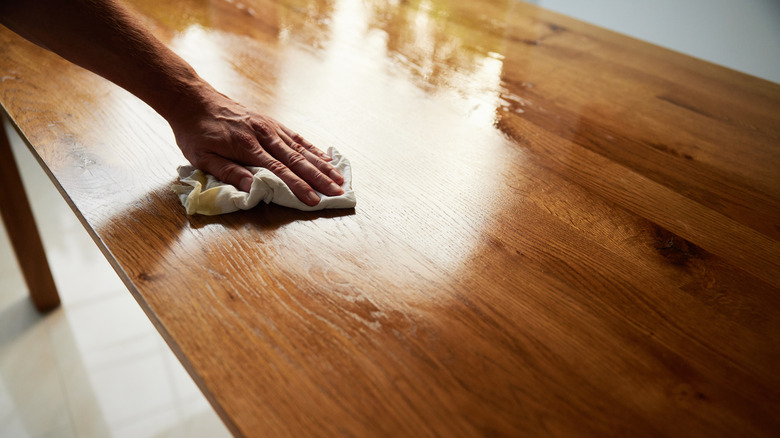
Conditioning wood with olive oil is a pretty simple process. All you need to do is pour a bit of olive oil onto the wood and spread it evenly with a cloth, being sure to follow the grain of the wood. Allow around 10 minutes for the oil to soak into the wood, then wipe away any excess with a clean rag. The wood should take on a lovely warm and slightly darker hue with a slight sheen.
Wood pieces treated with olive oil will need to be re-oiled from time to time. Unlike varnish or sealant, which are fairly permanent, the effects of the oil will fade. When the wood starts to lose its sheen, you will know that it is time for another treatment. Just repeat the same process as before, spreading the oil on the wood with a cloth and then wiping away the excess after a few minutes have passed.
You can also use olive oil to make quick and easy wood cleaner and polish. While the above advice was for treating raw wood furniture, this works for all of the wood furniture in your house. A little bit of olive oil on a clean rag will quickly restore shine to wooden furniture and protect against small nicks and scrapes in the finish. Additionally, by simply adding an equal measure of an acid like white vinegar to the mix, you have a quick DIY cleaning product that both removes grime and polishes your wood.
Other wood items to treat with olive oil
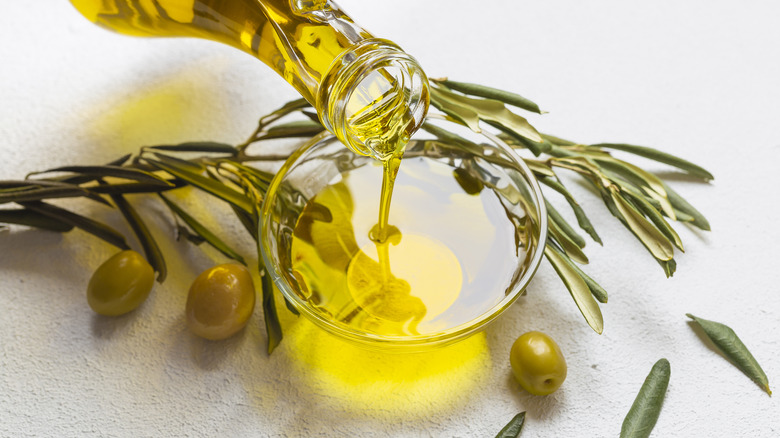
When it comes to treating wood in the kitchen, olive oil is a perfect fit, and that doesn't just mean the chairs and the butcher block countertop. Wooden cutting boards need to be seasoned with oil regularly to keep them in good shape. Repeated washing strips the oil from the wood, and if you aren't diligent, it will dry out and begin to crack. Follow the same method as instructed above for raw wood furniture, and your wooden cutting boards will last you many, many years. You can also use oil and lemon to clean your wood cutting boards. The lemon helps to remove stubborn odors like onion and garlic.
The same goes for all of the wooden utensils in the kitchen. Just like cutting boards, you need to oil wooden utensils to keep them in good shape. The oil seals out moisture and protects the wood, extending its life and turning that favorite wooden spoon into a potential family heirloom. Regular oiling keeps your wooden utensils in good working order, but it is important to note that you shouldn't ever put wood in the dishwasher or allow it to soak in the sink with the other dirty dishes. Both the dishwasher and soaking will strip the oils from the wood, leaving it dry and vulnerable to stains and damage. Stick to hand washing with gentle soaps, and be sure to regularly reapply oil when they start to dry out.