

The Paint You Should Avoid In Your Kitchen At All Costs

It can be an exciting and stressful experience picking out new paint to decorate your home. Maybe you've decided on using Behr's Calm Water light blue color in the family room, but you're stuck between a farmhouse red or an earthy green in the kitchen. Whatever color you ultimately go with, the most important rule to remember about kitchen paints is that you should avoid flat paints at all costs.
Flat paints are not moisture resistant, so in a messy, high-traffic area where steam and humidity are common, flat paints are more of a hindrance than a help. This paint is more likely to peel and bubble when exposed to long periods of moisture, potentially leading to mold or mildew and creating a blemish in your otherwise perfect kitchen. Flat paints are also incredibly hard to clean and are unable to hide small scuffs or marks since they don't contain a protective finish the way other paints do. That means any oil pops or accidental volcanic red sauce eruptions will become permanent fixtures on the wall because scrubbing flat paint isn't an option either, since the paint can easily rub off under too much pressure and is more likely to hold on to that stain for dear life (among 14 other things to avoid when renovating your kitchen).
If not flat paint in the kitchen, then what?
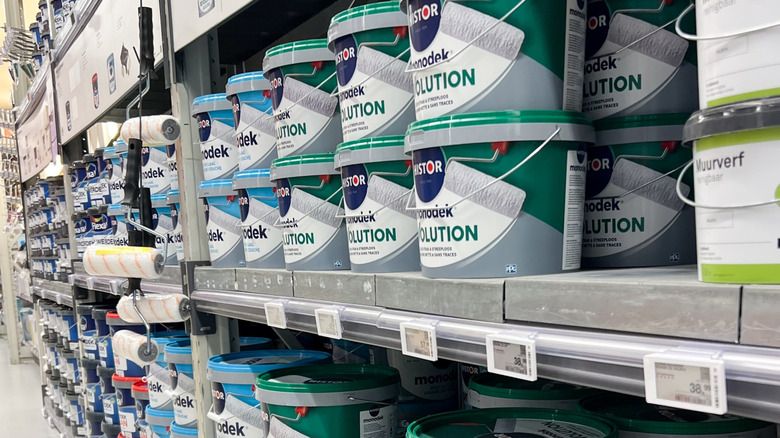
Instead of painting the kitchen with flat paint, you'll want to stick with a satin or semi-gloss paint. Satin paints provide an attractive shine level without looking too reflective, with a protective finish that means they perform well with moisture and are receptive to a good scrubbing. Semi-gloss paint is also moisture-repelling but has the added advantage of being heat-resistant. It's durable, holds up well when cleaned, and is a more ideal choice for high-traffic areas like the kitchen. For even better results with semi-gloss or satin paint, experts recommend priming your walls first and following these other tips for a DIY kitchen remodel.
Flat paints, while not great in the kitchen, have their own benefits. They help hide imperfections on surfaces such as bumps or lumps thanks to their matte nature, which doesn't draw attention to surfaces the way glossy paints do. Flat paints are best in low-traffic areas of the house, such as an office or spare bedroom, where you're less likely to accidentally slosh pasta water out of the pot or find messy toddlers creating a pea soup masterpiece on the walls (that's a kitchen cleaning job you should let your sliced bread do).
In the kitchen, put down the flat paint and stick with your favorite color of satin or semi-gloss. We promise there are just as many options.