

17 International Dishes That Make Cabbage The Star
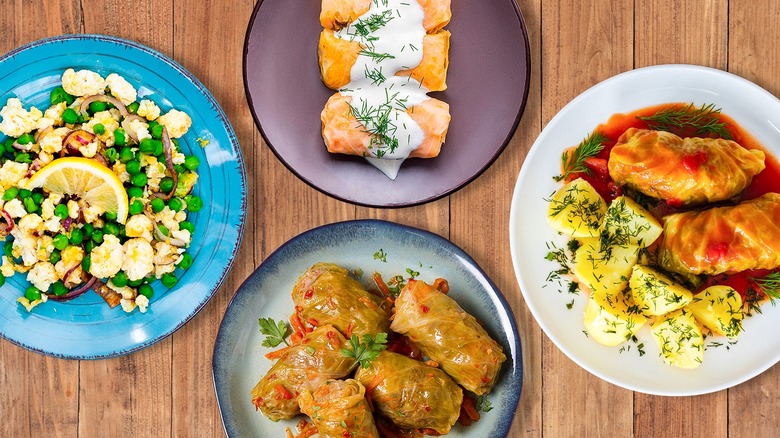
Do you find it hard to get excited about cabbage? You're not alone. Per YouGov, while plenty of Americans love the vegetable, around 12% of U.S. adults either hate or dislike cabbage, while around 21% of people feel totally neutral about it.
But there are many reasons to get on board with cabbage. One of the biggest is just how incredibly healthy it is. It's packed with many important nutrients, including fiber, vitamin C, vitamin K, and folate, for example. Another reason to love this leafy green is its sheer versatility. It can be fried, stewed, braised, and eaten raw, and as long as it's prepared well and combined with the right ingredients, it tastes spot on every time.
If you need some cabbage-related inspiration, you've come to the right place. Each of these dishes from around the world make cabbage the star of the show. From Chinese stir-fried cabbage to bubble and squeak to the many different styles of European cabbage roll, we've got you covered.
Southern fried cabbage - U.S.
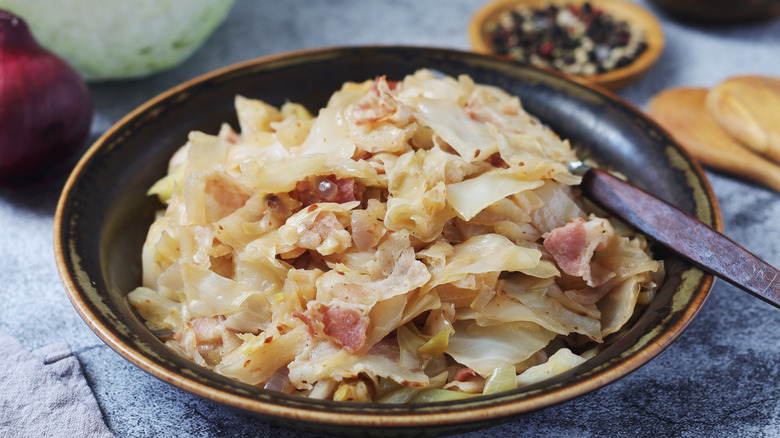
One surefire way to make classic green cabbage more exciting is to fry it with crispy bacon, butter, sweet onions, garlic, and spices like paprika. This way, the cabbage caramelizes, and you get a sweeter flavor and a nice, tender texture. As the name implies, this dish is particularly popular in the Southern states, where it's often served as a side. But if you're looking for lunch or dinner ideas, it's also tasty enough to hold its own as a main, especially when served with some crispy, fried potatoes.
According to recipe developer Susan Olayinka, the key to tasty Southern fried cabbage is to choose thin-cut, good-quality bacon. She also told TastingTable that the dish is particularly suited to busy evenings, as it can be whipped up in just a few minutes. For those who prefer to eat plant-based, it's easy to make Southern fried cabbage without the meat. Just swap in vegan ingredients like coconut bacon and vegan butter.
Stir-fried cabbage - China
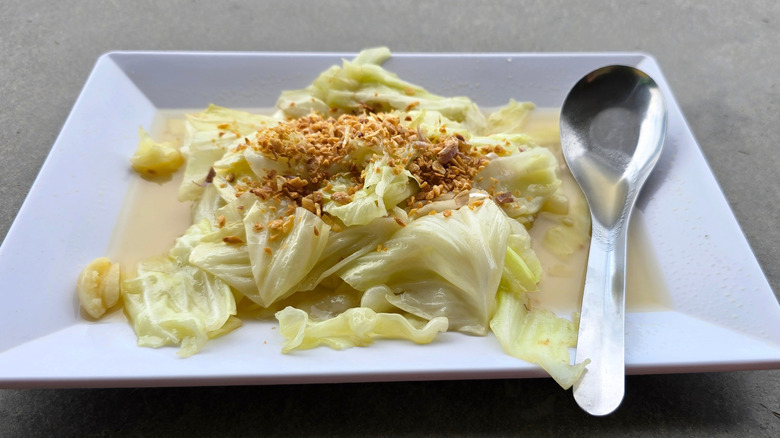
Thousands of miles away from the Southern U.S., in China, fried cabbage is also a favorite. It's not surprising: Napa cabbage is native to the country, and has likely been eaten there since it was first cultivated in Yangzhou in the 7th century.
Napa cabbage complements many dishes, thanks to its mild and sweet flavor, but it can also become the star when it's stir-fried alongside umami-packed ingredients like Chinese black vinegar, Shaoxing wine, soy sauce, dried chiles, and pork belly (or tofu, if you're keeping it meat-free). If you like a kick, prepare it the Szechuan way, with hot chilies and sichuan peppercorns.
Stir-fried cabbage is enjoyed in many regions across China, where it's usually made with hand-shredded or torn napa cabbage. Not only is this easier and quicker than chopping the vegetable with a knife, it also improves the taste and texture of the dish, too.
Buttered cabbage - Ireland
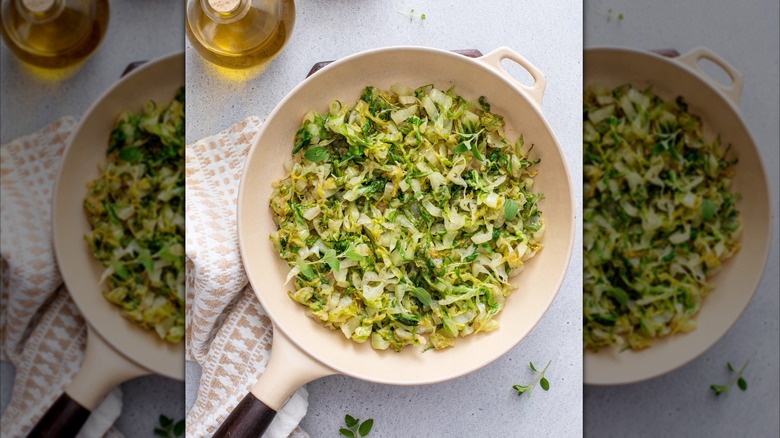
Another great way to elevate cabbage? Sauté it with lots of high-quality butter, just like they do in Ireland. And when we say high-quality, we mean it. This ingredient brings the flavor to the dish, so finding the best-tasting option in the store is paramount. Just like in the South, you can also add fried bacon to the recipe for that extra smoky flavor.
Buttered cabbage can be made with any type of cabbage, but popular options are basic green cabbage or savoy. Despite originating in France (in the Savoy region, but that much was probably obvious), the latter has long been popular in Ireland thanks to its rich flavor.
In fact, alongside potatoes, cabbage, an affordable vegetable that grows in abundance across the country, has helped to sustain generations of Irish people for centuries. So it's no surprise that they have figured out tasty ways to cook with it. Another great example? The traditional St. Patrick's Day dish, colcannon.
Bubble and squeak - U.K.

Similar to colcannon, British bubble and squeak is also made with potatoes and cabbage. The ingredients, which are mixed together and fried, are usually leftovers from Sunday roast or Christmas dinner. They're often combined with anything else that needs using up, from broccoli to ham to eggs to carrots.
Bubble and squeak has been eaten in the U.K. since the 1800s, although earlier versions of the dish were made with beef rather than potatoes (the beef was swapped out during the war, when meat was harder to get hold of due to rationing). The unusual name comes from the sound the dish makes when it's frying in the pan. Because of its high water content, cabbage is responsible for the "bubble."
Just like in Ireland, people in the U.K. have been eating cabbage for centuries. In fact, there is some evidence to suggest that it was eaten in the country as far back as the Iron Age.
Holubtsi - Ukraine
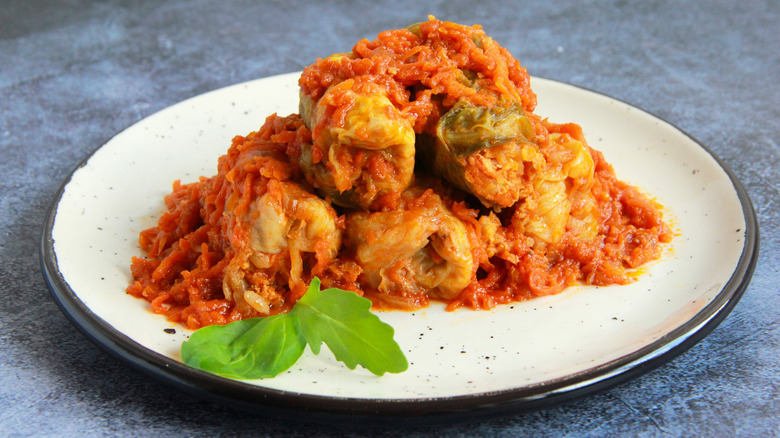
Across Europe, cabbage rolls have been a staple vegetable dish for centuries. In fact, there is evidence to suggest that they were eaten as far back as Ancient Greece. They're particularly popular in Eastern Europe, but each country has its own unique take on the recipe.
In Ukraine, stuffed cabbage rolls are known as holubtsi, and they're usually stuffed with a mix of ingredients like rice or buckwheat, onions, and some type of meat (often pork or beef), before they're baked in tomato sauce. The name translates to "little pigeons," which is likely because the cabbage leaves were once stuffed with pigeon and then roasted on a spit. Across Ukraine, you'll find different ways of preparing holubtsi. Some opt for white cabbage, for example, while others opt for Savoy. In the Carpathian Mountains, holubtsi is made with pickled cabbage and corn grits, and the tomato sauce is swapped for mushroom.
It's easy to put your own spin on holubtsi. If you want to make them vegetarian, for example, you can ditch the meat for beans. Prefer a meaty texture? Soy-based meat is a great alternative.
Lahano salata - Greece
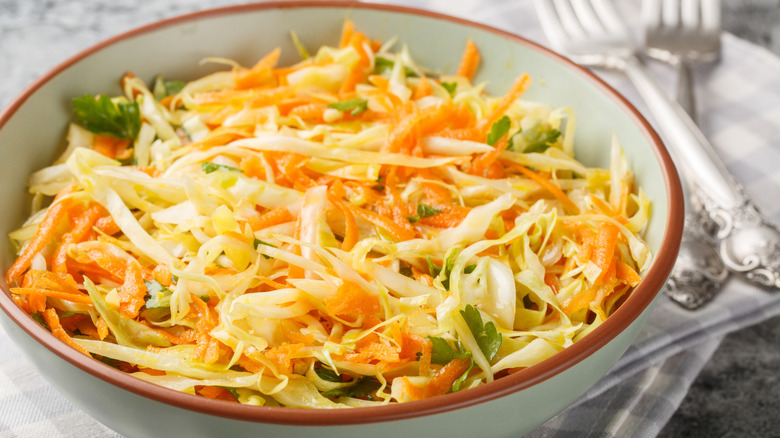
Greece's version of holubtsi, known as dolmades, isn't usually made with cabbage leaves. Instead, vine leaves are stuffed with a mix of vegetables, herbs, and rice. But the Greeks do still enjoy feasting on cabbage. Lahano salata, for example, is a type of crunchy, tangy, Greek salad, made with lots of cabbage.
Similar to coleslaw, lahano salata is usually made with a crunchy cabbage variety, like green or red, which is shredded and combined with grated carrot, chopped parsley, olive oil, vinegar, and salt and pepper for maximum flavor. It's a quick and easy dish that works perfectly as a side for other Greek favorites like roasted lamb and potatoes, but it can also become the star of the show, too. Just pair it with a thick slice of bread and mix in your favorite protein to make it more substantial, like grilled chicken, tofu, or beans, for example.
Kapusta - Poland
Cabbage has long been eaten in Poland. In fact, as far back as the 1500s, Polish rural communities used cabbage in folk medicine, prescribing it to treat everything from measles to tuberculosis. To be clear, while cabbage is packed with beneficial nutrients, there is no modern research to back up these alleged healing powers.
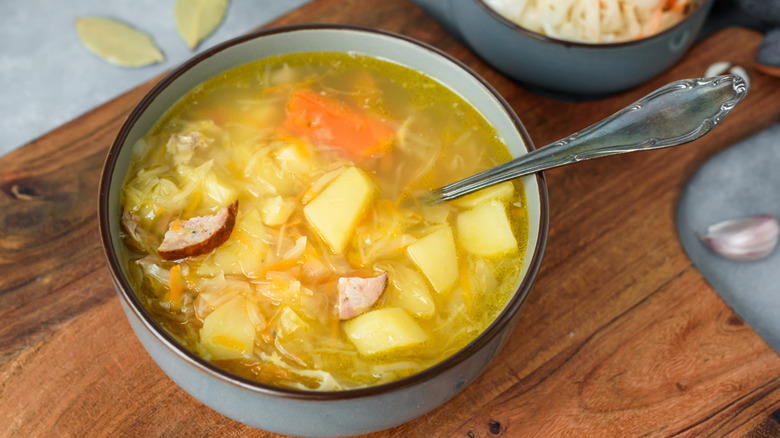
Most don't see cabbage as a firstline defense against measles anymore, but it does still taste good in a soup. In Poland, cabbage soup is known as kapusta, kapusniak, or kapusta kiszona duszona. It's an incredibly comforting and warming dish, which is usually eaten together as a family. In many Polish homes, the cabbage (usually in the form of sauerkraut) is combined with ingredients like pork ribs, carrots, and leeks, which are all simmered together in an umami-rich broth.
Recipes vary from family to family. Some make cabbage soup with stewed tomatoes, for example, and serve it with rye bread and butter, while others top the dish with crispy bacon bits and serve it with mashed potatoes. Some serve it with egg noodles or pasta and sausage. Want to make it plant-based? Just omit the meat and swap in potatoes for a heartier texture.
Lou fassum - France
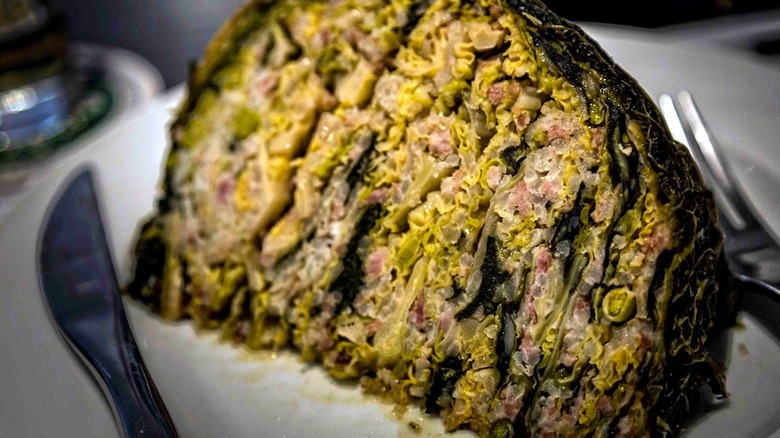
France is known for its meat and cheeses. Some of its most iconic dishes include coq au vin (chicken with red wine), onion soup (which is laden with cheese), and boeuf bourguignon (beef stew with red wine). Cabbage is a humble ingredient in comparison, but it still features in many traditional French recipes. Take lou fassum, for example.
Similar to stuffed cabbage rolls in Eastern Europe, lou fassum (also known as sou fassum) usually consists of an entire head of Savoy cabbage, which is cored and then stuffed with ingredients like sautéed vegetables, pork, ham, bacon, tomato pulp, peas, cheese, and rice. Historically, however, the dish, which comes from Grasse, was a favorite of peasant cooks, and stuffed with whatever was available to them. You can fill lou fassum, which is usually served by the slice, with whatever you choose, from meat leftovers to greens and breadcrumbs or even black truffle, if you're feeling decadent.
Schmorkohl - Germany
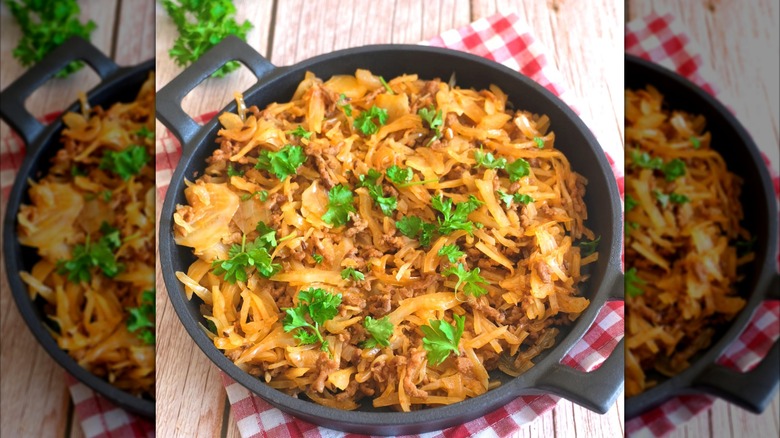
If you're familiar with German food, you're probably familiar with sauerkraut. Although it didn't originate there (it is likely Mongolian), the tangy fermented cabbage dish has been eaten in Germany since at least the 17th century. But sauerkraut isn't alone. Many German dishes make good use of cabbage. Take schmorkohl, for example.
Like bubble and squeak, schmorkohl is a great way to use up leftover cabbage. To make the dish, cabbage is simply braised alongside onions, garlic, tomato paste, beef, and various herbs and spices, including paprika and caraway seeds, before being served with parsley and sour cream. You can use any type of cabbage you have on hand, but it works best with green or Savoy varieties.
Again, there are many different variations on schmorkohl. Some leave out the beef, for example, to make it vegetarian, while others choose to serve it with sausage and potatoes.
Sarmi - Bulgaria
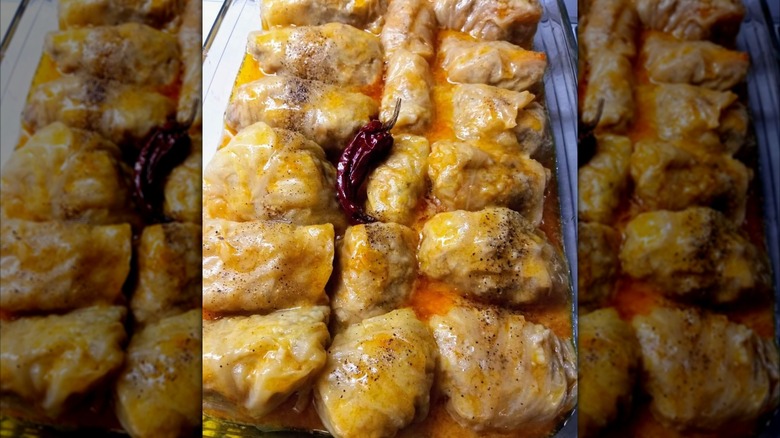
In Bulgaria, cabbage rolls, known as sarmi, are also a staple. They're very similar to Ukrainian holubtsi, only sarmi tends to be stuffed with ingredients like minced meat, sometimes veal and pork, as well as rice, vegetables, and yogurt. In the summer, sometimes the cabbage leaves are swapped out for vine leaves, like in neighboring Greece.
Sarmi doesn't have to be made with meat at all, however. During the festive period, the cabbage rolls are usually made totally vegetarian, and some opt to fill them with rice, dried fruits, and walnuts. Others serve them on Christmas Eve with chopped portobello or chestnut mushrooms and plenty of paprika. One of the key seasonings is dried savory, which is an aromatic herb that tastes like a combination of marjoram, mint, and thyme.
Just like most of the dishes on this list, sarmi is incredibly versatile. Some Bulgarians choose to make it with pickled cabbage leaves, while others opt for canned or fresh.
Repollo guisado - Dominican Republic and Colombia
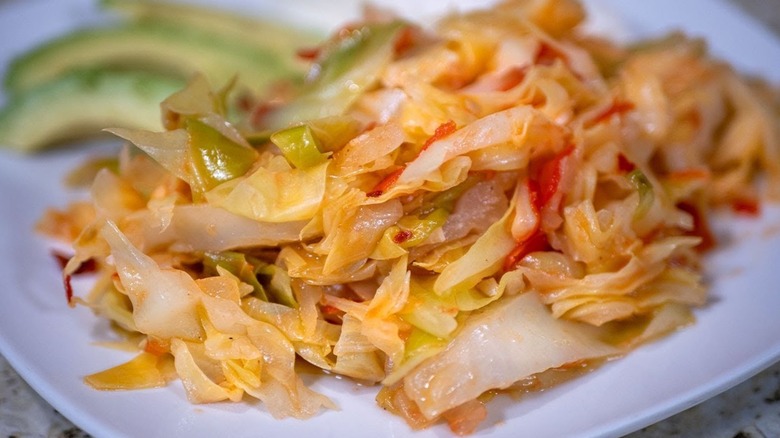
Cabbage was brought to Latin America by the Spanish and Portuguese during colonization, and since then, it has become a feature of many different dishes. In the Dominican Republic and Colombia, for example, the vegetable is the star of repollo guisado, a simple, yet flavorful dish of stewed green cabbage.
Recipes vary from region to region and from household to household, but generally, repollo guisado is made with sautéed vegetables, cabbage, olives, and vinegar, which are combined and served alongside arroz blanco and tostones. Some choose to make the dish spicier by mixing in some hot sauce, while others change up the texture and flavor by combining the green cabbage with purple cabbage, too.
Depending on your preference, you can also jazz up repollo guisado by mixing in some tomatoes. Some also choose to make the dish, which is traditionally vegetarian, with their favorite meat.
Balandeliai - Lithuania
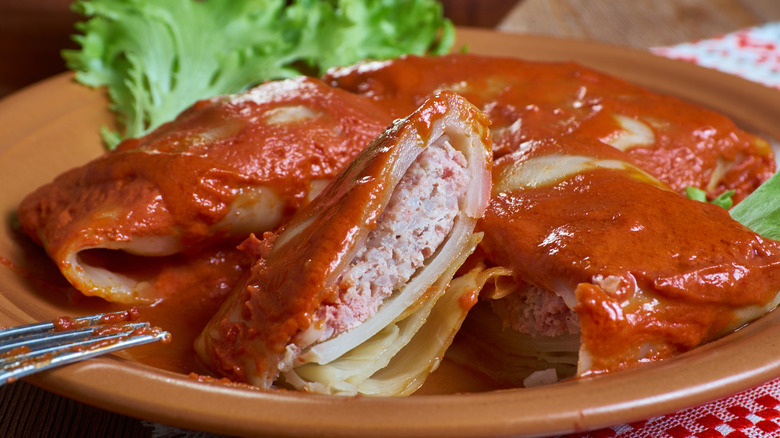
Lithuania is known for its hearty, nourishing food. One of the most common ingredients you'll find in Lithuanian cuisine is potatoes, but vegetables like beetroot, mushrooms, and, you guessed it, cabbage are also popular. Lithuania's answer to the cabbage roll is balandeliai, and similar to holubtsi, the cabbage leaves are typically stuffed with ground meat and rice, before being baked in a hearty tomato sauce and served with boiled potatoes. The type of meat varies from recipe to recipe, some opt for beef, while others prefer pork. Some even choose to modernize the recipe with plant-based ground beef.
Balandeliai, which also translates to "little pigeons," is usually made with white cabbage, which has a mild and sweet flavor when cooked. However some prefer to mix things up with Savoy or green cabbage instead. Again, each Lithuanian household has its own twist on balandeliai. Many modern recipes make the tomato sauce with ketchup and sour cream, for example.
Gołąbki - Poland
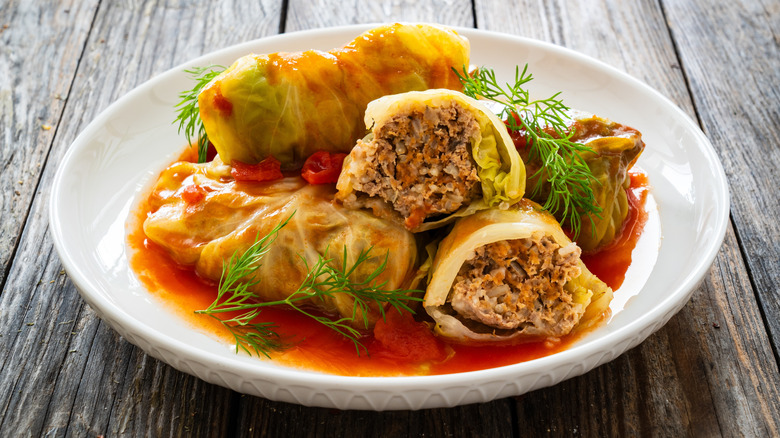
Yep, it's another stuffed cabbage roll. This time, it's the Polish gołąbki, which actually likely descended from the Ukrainian holubtsi. In fact, it's likely that most European cabbage rolls are probably a spin off of holubtsi's predecessor, holishkes, which are a 2,000-year-old Jewish style of cabbage roll.
In Poland, Gołąbki is also cooked in tomato sauce (although some prefer mushroom). It was first eaten by communities on the eastern border with Ukraine in the 1800s, and it was loved so much, the recipe spread across the country.
Over the generations, gołąbki has evolved. It used to be made with buckwheat and potatoes, but now the cabbage is often stuffed with everything from ground pork to mutton. Some households also prefer to use pickled cabbage for their gołąbki, while others stick to fresh. Gołąbki is a common sight on Christmas tables, but it's also eaten as a hearty meal all-year-round.
Yamitsuki Cabbage - Japan
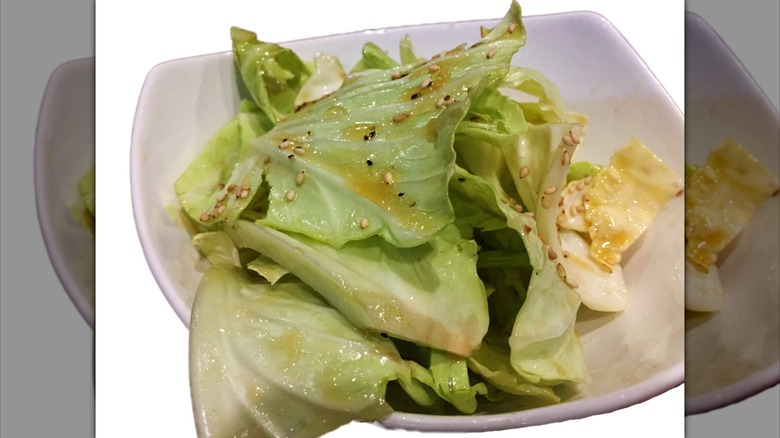
In Japanese, yamitsuki means "addictive," which gives you a good idea of how tasty this cabbage dish is going to be. Usually served in izakayas, which is basically a Japanese tavern, yamitsuki cabbage is simple, yet full of flavor. The crunchy texture comes from torn up green cabbage, while ingredients like toasted sesame oil, white sesame seeds, garlic, salt, and a range of seasonings (like MSG and miso) bring the flavor.
You don't have to stop by an izakaya to enjoy the flavors of yamitsuki cabbage. It's easy to whip up from home in just a few minutes, because everything is served raw. If you're not a fan of green cabbage, you can swap in any variety of the crunchy vegetable you like. Some prefer to use purple cabbage, for example, which is usually crispier and more peppery than green cabbage. For an authentic izakaya-inspired feast, serve up yamitsuki cabbage with other small dishes, like edamame, gyozas, and tempura.
Kiseli Kupus - Croatia
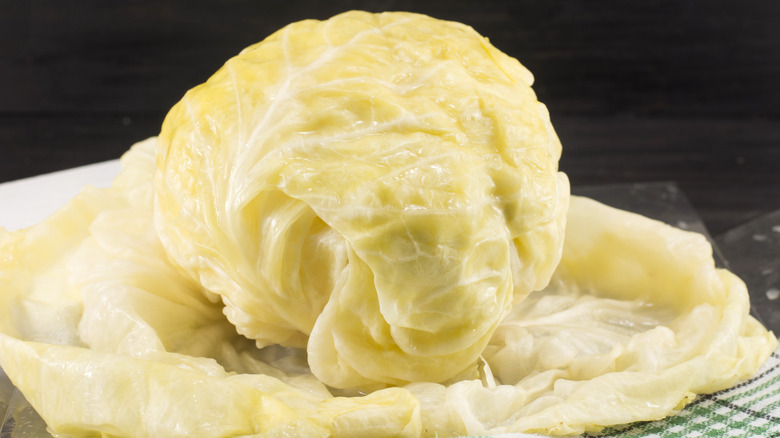
Germany is far from the only country that has a love affair with sauerkraut. It's loved everywhere from the U.S. to Poland to Russia. In Croatia, an almost identical dish called kiseli kupus is a favorite. While sauerkraut is often finely shredded, kiseli kupus is often served with the entire cabbage head intact.
The process of making the tangy, crunchy, salty dish is simple, but time-consuming. Make sure you plan way, way ahead, because this is not something you can whip up quickly. In fact, fresh green cabbage heads are usually placed in a bucket of salty water and left for up to six weeks. That's it. If you want to add flavor, you can also add in extra ingredients like mustard seeds and peppercorns. After it has fermented, kiseli kupus can be eaten as it is with other dishes, like smoked meat, for example. It can be combined with spices and chopped into a salad like sauerkraut, or even used as the base for cabbage rolls.
Kåldolmar - Sweden
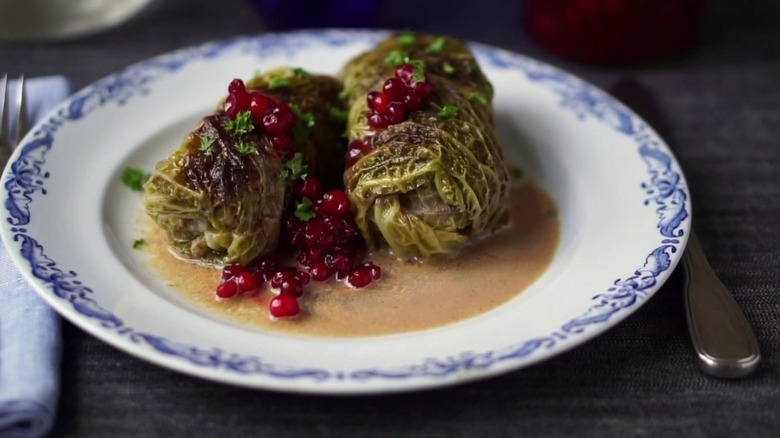
Sweden's version of the cabbage roll, kåldolmar, was likely inspired not by holubtsi, but by Turkish dolma (which, like Greek dolmades, is usually made with stuffed vine leaves). If you're thinking: "But isn't Sweden closer to Ukraine than Turkey?" You are correct. But proximity isn't the reason why the Swedes developed a love for stuffed cabbage rolls.
The dish actually stems back three centuries ago, when the Swedish King Charles XII was in Turkey. He began eating dolmas, and loved it so much, he brought it back to Sweden. The vine leaves were replaced with cabbage leaves, the name was changed to kåldolmar, and the recipe boomed in popularity.
Kåldolmar is very similar to other European stuffed cabbage roll dishes, as it's usually made with white or Savoy cabbage, rice, and minced meat. But the thing that makes this dish distinctly Swedish? It's often served with tart, sweet, lingonberries.
Cabbage Piroshki - Russia

Cabbage has a long history in Russia, where it has been eaten since around the 12th century, by both peasants and tsars alike. The vegetable appears in many different Russian dishes, from cabbage rolls to shchi (which is a kind of sauerkraut soup). But another way Russians love to eat cabbage is in piroshki.
Piroshki is a type of small, hand pie, made with yeasted dough. It can be baked or fried, and filled with either savory or sweet ingredients. While meat is a popular choice for savory piroshki, plenty also choose to fill them with cabbage, which is often combined with hard-boiled eggs and onions.
Again, recipes vary from region to region and from family to family. Some opt to fill their cabbage piroshki with carrots, mushrooms, onions, and peppers, for example, while others add some tomato paste and lots of butter into the mix. To make vegan piroshki, just omit the meat, eggs, and butter, and add in plant-based alternatives instead. Some opt to swap in vegan cheese, for example.