

Swapping For Oven-Ready Lasagna Noodles? You'll Need To Make A Few Adjustments First

Using no-boil noodles is a great tip for baking lasagna that can really make things easier, but don't make the mistake of thinking it's as simple as swapping them in for standard lasagna noodles. Lasagna is always going to be a project — you're shredding cheese, prepping other fillings, and ideally making a homemade sauce. Boiling and handling these flat, slippery wet noodles is usually the frustrating end to a long process. In this way no-boil noodles are a small godsend, as taking any task off your plate during a multi-part recipe like lasagna makes everything flow smoother. And thinner oven-ready lasagna noodles also do a good job of replicating the thin layers of fresh-made lasagna, as opposed to the thick, starchy boiled kind. The problem is that boiled noodles are still considered the standard, so if you are using a lasagna recipe, it's probably calibrated to the moisture levels of noodles that have already been hydrated.
That means making some adjustments to your lasagna, starting with the sauce. Oven-ready no-boil noodles work by being pre-cooked and then dehydrated to preserve them, so once in the oven they will absorb a lot of moisture. They can absorb as much as 50% more liquid than boiled noodles, so you'll need to add extra sauce to compensate. Or if you are making your own sauce it can help to leave it a little more watery then you normally would, as it will thicken more in the oven as the noodles absorb water.
Make sure no-boil lasagna sheets have extra liquid they can absorb
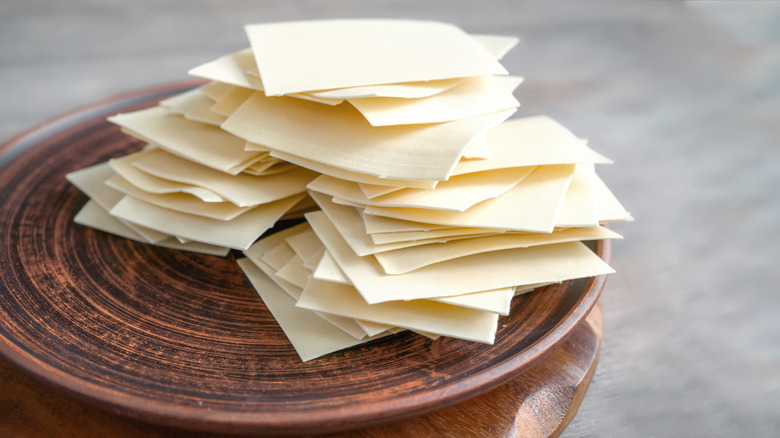
In addition to having more liquid available for oven-ready noodles to absorb, you also need to build your lasagna to make sure the surface of both noodle sides are in direct contact with moist ingredients. This means every surface of your noodles should be covered in either sauce, or wetter cheese mixtures using ricotta or a bechamel. Avoid putting a layer of meat or dryer melting cheeses like low-moisture mozzarella in direct contact with no-boil lasagna noodles, and be especially careful of having your noodles directly overlapping. Even within the moist environment of your lasagna, this can create uncooked, hard sections of noodle that you won't notice until you bite into it.
Finally it helps to trap more moisture in your lasagna while you cook when using no-boil sheets. This is best done by covering the dish with aluminum foil for most of the baking time, and only removing it to get a little browning at the end. Once your lasagna is done cooking, you'll also want to let it rest to ensure everything sets properly. This is a step you should be taking with lasagna anyway, and letting it sit at least 15 minutes before slicing is a good idea. With each of these adjustments you'll make it less likely your oven-ready noodles end up dry, and you'll save yourself plenty of time and effort on your favorite lasagna recipes.