

This Kitchen Staple Can Help Flowers Bloom In Your Garden
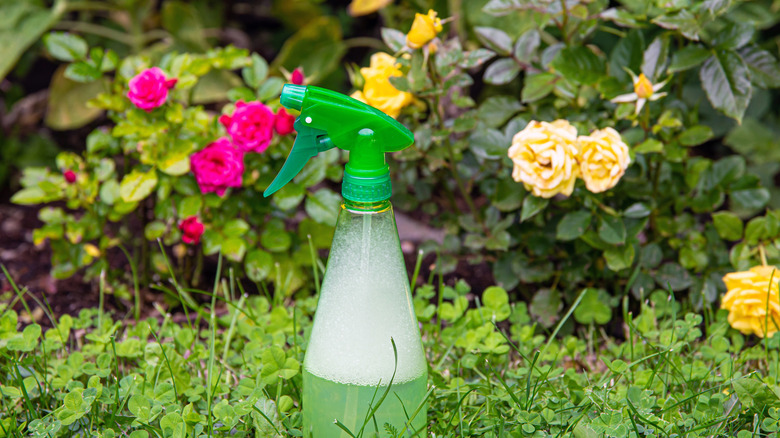
If you're looking to supplement your garden naturally for the best yield, one common kitchen staple can help flowers bloom flawlessly: baking soda. When applied in small quantities, baking soda (sodium bicarbonate) can promote flowering — specifically for alkaline soil-loving ornamental blossoms grown for beauty and biodiversity. This includes flowers like vibrant geraniums, fragrant lavender, perennial peonies, and durable daylilies.
Depending on factors like regional growing environments, you may already have chalky soil with a basic pH, apt for growing these ornamentals. However, in many cases, the soil may be too acidic and could benefit from some help. By adding the multi-use household ingredient to acidic or neutral soils, baking soda can raise the pH, aid in nutrient absorption, and create healthy growth for flowers that prefer more basic conditions.
If you choose to use baking soda to enhance a garden of burgeoning flowers, first check your soil to gauge the pH you're working with. You can tell an alkaline soil by visual cues like if it contains limestone or calcium carbonate bits, or with DIY tests to see if bubbles form when the soil is mixed with a combination of equal parts distilled water and vinegar. For more exact results, though, a pH monitor or testing kit can help you assess the relative acidity or alkalinity. Then, for more acidic soils, apply baking soda lightly via sprinkling or spraying in a solution mixed with water until the soil reaches an alkaline pH ranging from 7.1 to 8.0.
More considerations for a thriving garden
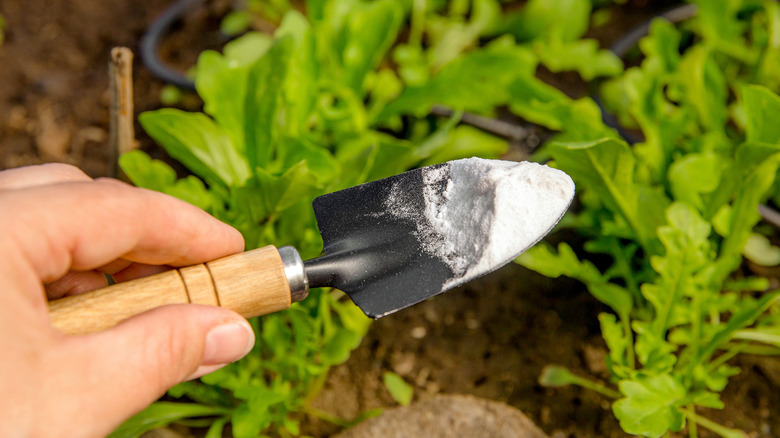
Among baking soda's unexpected uses and solutions, applying it to improve flower blossoms is similar to using the ingredient to increase soil pH to grow sweeter tomatoes. But in addition to making soil more alkaline for plants and flowers which thrive in basic conditions, a small amount of baking soda can also go a long way to prevent harmful plant fungus and pests. Just like you may spray a solution of baking soda to prevent algae in your birdbath, you can add one to three teaspoons, along with a bit of soap or gardening oil to a quart of water and apply it to your flowers as a defensive measure. Then, spray it on the base of your ornamental flowers and other garden plants every week or two to prevent mildew, as well as fungal spots on flower leaves and stems.
However, it's important to note that baking soda also raises salinity, which can block the growth of beneficial soil bacteria and insects. So, you'll want to double check the ideal growing conditions and optimal pH of your garden's specific flowers, and apply it lightly with a diluted spray. Since gardening requires a fine mix of growing parameters, it also helps to consider other factors that will help your flowers bloom properly, such as optimal sunlight exposure, water, soil drainage, and seasonal bloom time, then experiment with baking soda spray and other gardening methods.