

Greek Yogurt Vs. Regular Yogurt: Which Is Better For Smoothies?

A yogurt smoothie packed with fresh fruit makes a refreshing and healthy summer drink. But add in a creamy banana, a drizzle of honey, and a dollop of peanut butter, and you have a decadent, drinkable dessert on your hands. Regular yogurt is great for making both these varieties of smoothie, but if you're after a richer and thicker-textured beverage that has a higher protein content, go for the Greek stuff.
To understand why this is the case, let's take a deep dive into how both of these dairy products are made. Regular yogurt is made when bacterial culture is combined with heated milk and fermented. The bacteria converts the sugar in the milk into lactic acid, which causes it to coagulate and thicken, lending it a distinctive consistency and tang. At this point, sweeteners and fruit can be added to the natural yogurt to create different flavors. Greek yogurt is simply regular yogurt that has been strained of whey. As the extra liquid is removed, Greek yogurt is more concentrated and has a thicker and creamier texture by nature. This also means it contains more protein per gram than regular yogurt, making it an excellent addition to a high-protein smoothie prepped after a post-gym workout. The result? A slurpable smoothie with heaps of satisfying body and richness that's counterbalanced with a touch of tang.
How to improve your yogurt smoothie
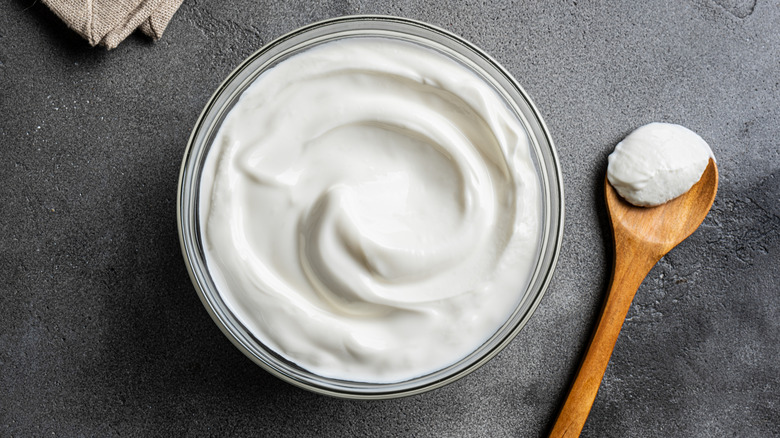
Greek yogurt smoothies made with fruits like banana will be relatively thick, making them a great base for a smoothie bowl topped with nuts and fruit that's eaten with a spoon. However, add in a fruit with a higher water content, such as strawberries or raspberries, and you'll easily thin the consistency for easy drinking. Alternatively, you can add a dash of milk or apple juice to your blender if your smoothie is too thick to suck through a straw.
You may prefer using regular yogurt in your smoothie if you like lighter, thinner-textured drinks. Since there are plenty of flavored yogurts available in supermarkets, you'll be spoiled for choice. Opt for vanilla yogurt to lend your smoothie a sweet aroma, or select mango and papaya for a tropical vibe. Just be wary that these flavored yogurts can contain extra sugar and sweeteners; a plain yogurt might be a better choice if you're after a blank canvas to flavor up with your own fruity additions.
A simple way to make your yogurt smoothies thicker is to use yogurt that you've pre-frozen in ice cube trays. Chilling the yogurt creates a smoothie with a richer texture that's almost like soft serve ice cream. To make a smoothie that's good for the gut, swap your yogurt for kefir. This fermented dairy product is packed with probiotics, and its consistency sits somewhere between milk and yogurt.