

You Should Never Store These Common Items On Granite Countertops
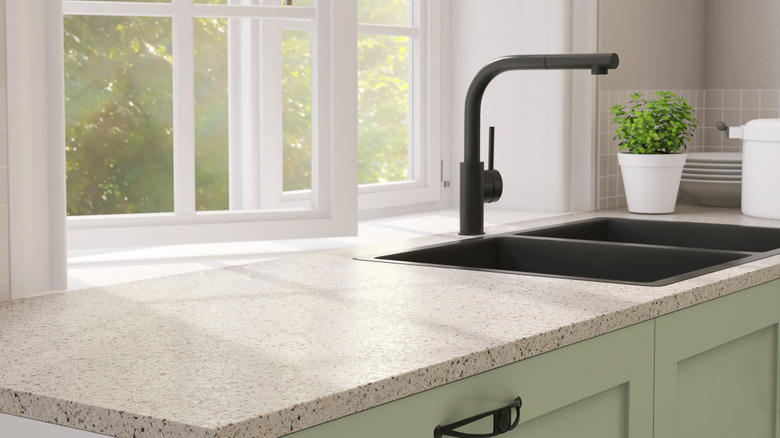
Granite countertops are a favorite in kitchens for good reason. They're durable, easy to clean, and provide a timeless elegance. Unlike many other materials, granite can also handle hot pans and daily wear-and-tear. For all of its strengths, however, granite has one major vulnerability that often goes overlooked: acidic foods. Everyday ingredients like juicy lemons or leaky bottles of vinegar can leave unsightly stains and cause lasting damage, which is why you should think twice before storing these items on your countertop.
Acid affects stone in two ways: etching and erosion. Etching is the dull and discolored spot you see on the stone in the shape of an acid spill, whereas erosion is the wearing away of the stone due to continued exposure to acids. Both happen due to the presence of a mineral called calcite, which react with acid and cause it to dissolve. The stones most susceptible to etching and erosion are marble and limestone due to their naturally high levels of calcite. Granite is more resilient in comparison, but it isn't immune, which means it can still be damaged with prolonged or repeated exposure.
Evidently, this is why it's best to keep highly acidic ingredients like vinegar, lemons — or any other citrus like oranges — pineapples, and even soft drinks away from your kitchen countertop. Instead, keep them in cabinets or in baskets, and use cutting boards to avoid the risk of etching or erosion.
Avoid placing these items on your granite countertop
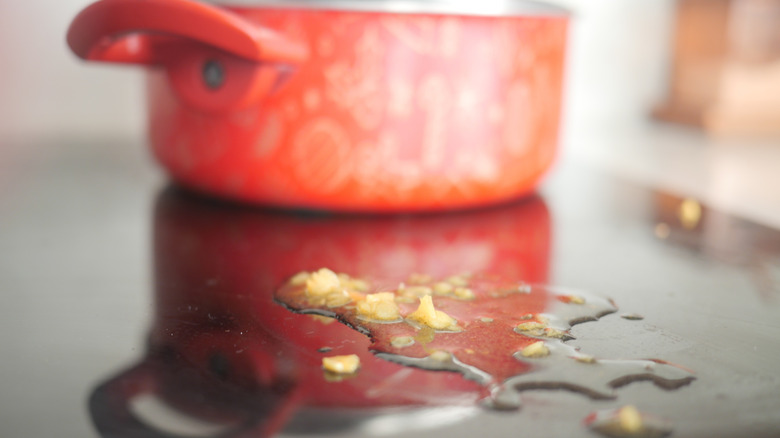
Even though the stone is known for being strong and resilient, there are some mistakes to avoid at all costs when it comes to granite countertops. To limit degradation, it's never okay to put a hot pan directly on a cool granite counter. While the material can tolerate high heat — up to 480 degrees Fahrenheit, in theory — sudden changes in temperature can result in hairline cracks. Instead, it's always best to use a potholder as a barrier.
Another risk? Impact and abrasion. Dropping heavy pots, pans, or dishes onto granite (especially near the sink or edges) can lead to visible chips or cracks. Similarly, using the countertop as a cutting surface can dull your knives and gradually wear down the sealant, even if the stone itself holds up. Always use a cutting board, and take extra care during dishwashing or while moving heavy cookware.
Finally, there's the risk of improper cleaning. Common household soaps and multi-surface cleaners may not be formulated for natural stone — some may even contain acids. Likewise, avoid melamine-based cleaning pads as they could leave scratches on your glossy countertops. For daily cleaning, stick to a pH-neutral cleaner made specifically for granite or natural stone to maintain both the look and the longevity of your granite countertop.
In any case, damaged granite can often be repaired
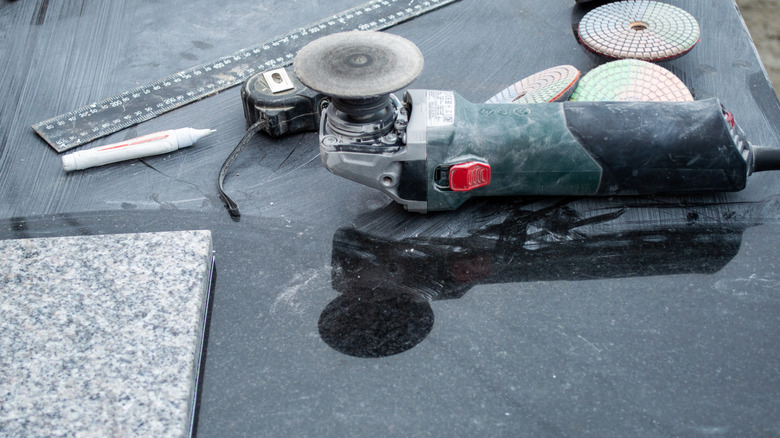
If you've already placed something acidic on your granite countertop, don't panic just yet. Certain stains can actually be removed. In fact, mild staining and etching can often be fixed with a DIY approach, by using poultices and stain-removal powders. If that doesn't work, you can use stone polishing pads, available at most hardware stores or online. These can help buff out surface-level damage and restore some of the stone's original shine by gently grinding down the topmost layer of the granite to smooth out the etched surface, which can also help with chips and scratches caused by hot or heavy pans. Typically, the polishing pads are made with fine abrasives (often diamond-infused) that remove minor imperfections and bring back the stone's natural sheen.
If the damage is deeper, then it's best to consult a trained professional to restore the granite and prevent further deterioration. Professionals use specialized tools and techniques to resurface the stone, removing layers that have been worn or etched away. Additionally, they'll likely apply a high-quality sealant to protect the stone from future acid exposure, which can also help to restore the granite countertop's original finish.