

It's Not Just Apples And Oranges — You Can Make Tea With Just About Any Fruit Peel, And Here's Why

If you love fruit, you may want to learn new ways to utilize every bit of it. Different parts promise various flavors, nutrients, and uses, from pies to jams. It's key to be able to use fruit peels in particular, as they're the element most of us toss. The Food and Agriculture Organization of the United Nations found that humans generate about 1.3 billion tons of food waste each year; 3.8 million tons are citrus peels alone. The good news is you never have to toss your peels again, because they make for healthful, delicious teas — and you can do this with any fruit.
Fruit peels are rich in essential oils and flavor compounds. Lime has limonene with fresh, green, sweet-yet-sour earthiness and tartness. Oranges have limonene as well as linalool, which has floral, woody notes, and lemony, floral geraniol. Apple peels contain farnesene, which is earthy yet sweet and bright like kiwi, and bananas are infused with phenolic compounds in their peels, which taste like more bitter bananas. Additionally, pineapple peels are nutrient-dense forms of the fruit's tropical flavors. Think beyond the more common apples and oranges to make any kind of fruit-peel tea.
When the flavor compounds in fruit peels meet the heat of boiling water, chemical reactions take place and create new flavors while also sending existing, volatile compounds to the surface for big, beautiful bursts of floral, fruity aromas. Through our orthonasal and retronasal olfaction systems (how we taste things), these aromas make these teas taste complex and quintessentially fruity.
Fruit peel teas have health benefits too
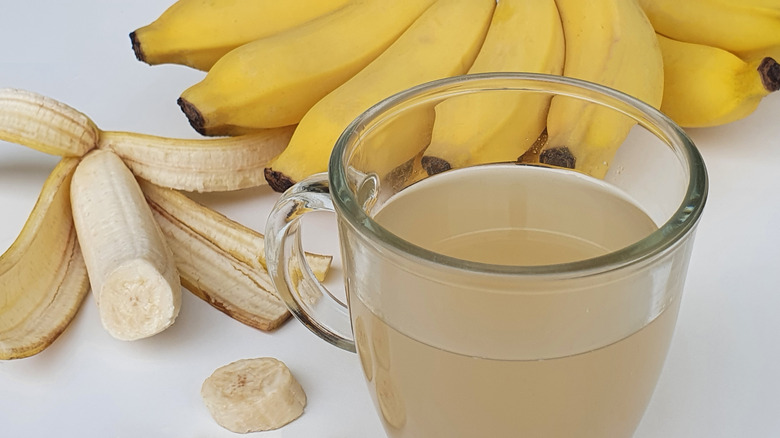
The peels of any fruit are one of the best instant ways to elevate tea. Working with pineapple peels, passion fruit peels, pomegranate peels, and others, you'll find nutrients like bromelain, which reduces inflammation; manganese and vitamin C, important for bone and gum health; skin-healthy beta carotene; and immune system-strengthening antioxidants. Banana peels in particular boast vitamins B6 and B12; grapefruit peels have antioxidants, fiber, and cholesterol-lowering pectin; and pear peels feature phenolic compounds that also fight inflammation. With a fruit peel tea, you're getting lots of nutrition in each sip, while the peels' essential oils and volatile flavor compounds sing.
Dry your fruit peels with a long, slow heat in your oven or with a dehydrator, and think about doubling or tripling down on both flavor and nutrients by combining various fruit peels with different herbs. The possibilities are endless. Dried tangerine peels give herbal teas a flavor upgrade, as tangerine peels work wonders with lavender, cinnamon, or lemongrass. One of the creative ways to use pomegranate peelings is to combine them with rosemary, sage, or thyme and a hint of vanilla for sweetness. Lemon peels harmonize with cardamom, fennel, and basil, while lime peels are dreamy with rose or turmeric. Once you see how easy these teas are to make and how any fruit can work, you'll enjoy fragrant, eco-friendly, healthy teas all year.