

What Are Tonka Beans And Why Are They Illegal In The US?

At a distance, tonka beans look a bit like elongated raisins, or shrunken prunes. In many countries around the world, they are prized for the flavor and aroma boost that they can add to dishes. The taste and scent of the beans are reminiscent of vanilla and almond mixed together, though there are other warm notes, as well. But you won't find them in the spice aisle of your favorite American supermarket because the FDA banned them in 1954.
The reason? A chemical called coumarin found in the beans was shown to cause liver damage in animals, per the Journal of Pharmacology and Experimental Therapeutics. Coumarin is incredibly common and is found in things like strawberries, cherries, licorice, and even fresh cut grass, which is what makes your lawn smell that way.
Grown in Central and South America, tonka beans are seeds of the kumaru tree. Also known as Brazilian teak, the seeds were traditionally used medicinally, but today the wood is used in flooring, on boats, and to make tool handles. Its versatility in flavoring both sweet and savory dishes is what makes it desirable to chefs everywhere. You can find it in everything from Caribbean black cake to even one of Tasting Table's 13 bucket list beers from overseas.
Chefs still love tonka beans
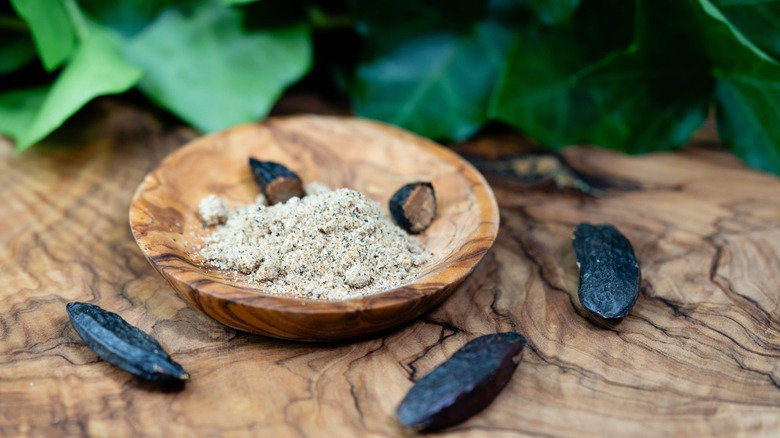
The flavor imparted by tonka beans is much more complex than you might think. It's described in such lofty terms that you'd be forgiven for thinking everyone who writes about it is being poetic. Terms like "the most versatile," "hypnotic," and "transcendent" are tossed around by journalists and chefs. It's included in dishes that range from ice cream to mashed potatoes, and braised chicken.
Despite the restrictions, tonka beans have shown up on United States menus, like in the porcini mushroom brulee served at New York's Timna. Apparently, the restrictions against using it aren't very strictly enforced. But also, the regulation may be unreasonable. A single tonka bean can flavor as many as 80 dishes. A human would need to eat 30 whole beans to start experiencing toxic effects. Therefore, it seems the ban took place out of an abundance of caution.
If you know where to look, you can find chefs all across the U.S. adding tonka to their menus. Whether it's grated over tres leches cake in New Orleans or a panna cotta in New York, it's adding unique notes and pushing some dishes over the top with flavor. Will it ever become commonplace in stores? That's tough to say, given the reputation.