

Why You Should Think Twice Before Asking For A Menu At A European Restaurant

A delicious parmigiana, dripping in cheese and bursting with basil-tainted red sauce — when in Rome, right? Yet dining at a European restaurant brings nuances that are best not overlooked. For one, don't make the mistake of asking for "a menu."
Though your mouth may be watering over the mere mention of quintessential European meals, pay attention for just a bit longer. No, we're not talking about brushing up on Duolingo (although this might be wise). East of the Atlantic, how you order is as important as what you order, and without dropping the phrase "carte," there's a risk of accidentally requesting the fixed-price menu. What a faux pax!
The translation of "à la carte" is "on the card." Every dish that the restaurant offers is listed individually and available to order separately, a type of dining popularized by Auguste Escoffier. Conversely, a "menu" includes a fixed number of courses, often with limited choices. Muddying the two is the quickest way to eliminate a panic-worthy percentage of the dishes available — and potentially miss out on that cheesy parmigiana. It's a question of semantics, but one that can cause chaos at mealtime.
Why 'carte' is top-tier European lingo to remember
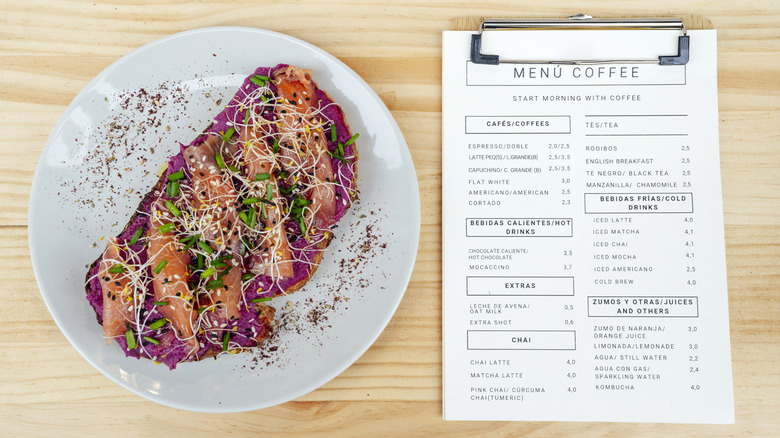
To be pedantic, "à la carte" is a French term. Yet, fortunately for us all, the phrase has been adopted across mainland Europe. For those planning trips to countries in the region, "carte" is top-tier lingo to remember and holds value across multiple countries.
Pronunciation might differ (think "carta" in Spain versus "carte" in French). However, it's similar enough that a server will generally have no difficulty understanding what you're attempting to convey. Besides, now that you know the common hiccup with fixed-rate menus, it should be simple to identify and rectify the mistake.
Understanding how to order in a culturally appropriate way is undoubtedly one of the international dining etiquette rules we should all be following. There's a shared language when it comes to more flexible ways of enjoying cuisine — so, keep this tip in your back pocket when traveling around Europe to sample all your favorite, must-try dishes.