

Making Milk Powder At Home Only Takes 2 Ingredients And Is Way Easier Than You Think

Whether it's giving ice cream an even creamier finish, sprucing up baked goods with a richer taste, or simply providing coffee with more body, there are an abundance of uses for milk powder. Despite its obvious pantry staple capabilities, it is often passed over in our kitchens for liquid milk instead. If you do want to make the powdered version, that liquid milk, along with some sugar, will come in handy.
For the times when powdered milk would work better in a recipe than what's currently in your fridge, there's no need to run over to the grocery store to pick up a container of the stuff. Taking the liquid and transforming it into a powder may seem difficult, but it starts with simmering your choice of milk over medium heat. You can use any kind, including plant milk, but each variety will have their own benefits. While fattier milk works best with cooking and baking, milk powder with a lower fat content lasts longer. Stir the milk constantly, until it takes on a thicker consistency. If you do not want to hover over it, dry it out in the oven or dehydrator at around 135 degrees Fahrenheit. When it turns into a paste, spread it out on parchment paper and allow it to cool completely before breaking it into several pieces so they can dry further. Once the pieces are dry enough to snap apart easily, blend it with sugar until it reaches a fine, powdery consistency.
How long does homemade milk powder last?
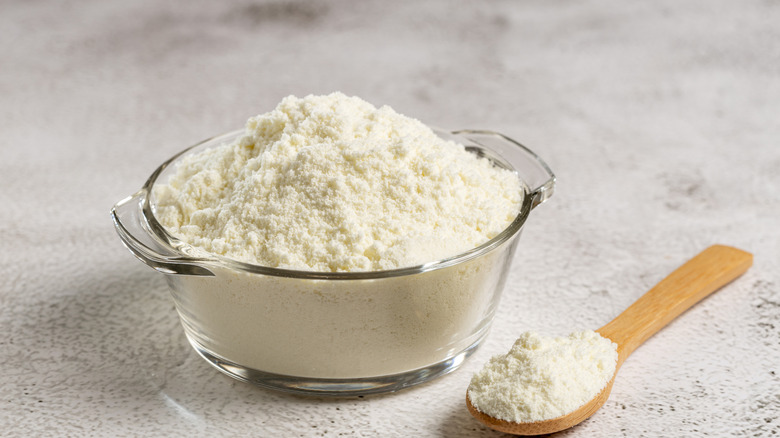
If kept correctly, powdered milk should be able to stay for up to five years. However, factors like the fat content and temperature it is kept at will have an impact on this. A cold, dark place is key for properly storing dry powdered milk, so make sure you are keeping it away from light, heat, moisture, and oxygen. Milk powder should be white and virtually odorless, so if it takes on a yellow hue or sour smell, it is time to toss it.
Although it does have a lengthy lifespan, there are plenty of ways to use up the powder before it has a chance of going bad. Powdered milk thickens mashed potatoes, sauces, and gravies like a dream, balancing out savory, earthy flavors with its sweet taste. You can also add a dash of the pantry staple into cookie batter to give the finished product a denser, chewier finish. Milk powder also amps up the taste of any desserts, especially when it is toasted beforehand for a nuttier flavor. To heighten the taste of your desserts even more, flavor the milk as you're simmering it when making the powder. A dash of vanilla extract, cocoa powder, or spices like cinnamon and nutmeg give milk powder a bolder taste that will take your treats to the next level.