

The Differences Between Mirin And Rice Vinegar

Rice is a staple carbohydrate in Japanese cuisine, but the grain goes much deeper than that. It's offered at shrines and on family altars, eaten plain, pressed into onigiri, brewed into sake, and celebrated during autumn harvest festivals. The word for cooked rice, "gohan," means "meal." It's a crop, a symbol of national identity, and the center of the table. It's also the source of some of the pantry's most essential seasonings: Through the process of fermentation, rice becomes both mirin and rice vinegar, two bottles found side by side in nearly every Japanese kitchen.
Mirin pours out golden and viscous, with a gentle sweetness and a subtle warmth that hints at sake. Its aroma blooms into a faintly floral, softly alcoholic note, deepening over heat into caramel and toasted grain. Rice vinegar, on the other hand, is clear, light, and sharp. Its acidity snaps, pulling flavors into focus and cutting through rich, umami flavors. In a bowl of pickled Japanese veggies, rice vinegar preserves and intensifies the vegetables' crispness and fresh aroma.
Both mirin and rice vinegar are fixtures in Japanese kitchens, and while they are distinct in character and use, together they reflect a broader culinary philosophy. Japanese cooking values subtlety and precision, with a focus on bringing out the best in each ingredient. Seasonings are carefully chosen and applied to amplify the natural character of vegetables, fish, or meat — never to bury or overwhelm them. Used with restraint, these two seasonings center the ingredients they dress, reflecting the kokoro, the care and intention at the heart of Japanese cooking. The bottles live side by side not just for their differences, but for how they work together, each supporting the values of clarity, balance, and depth that define Japanese cuisine.
Depth, balance, and the sweet craft of mirin
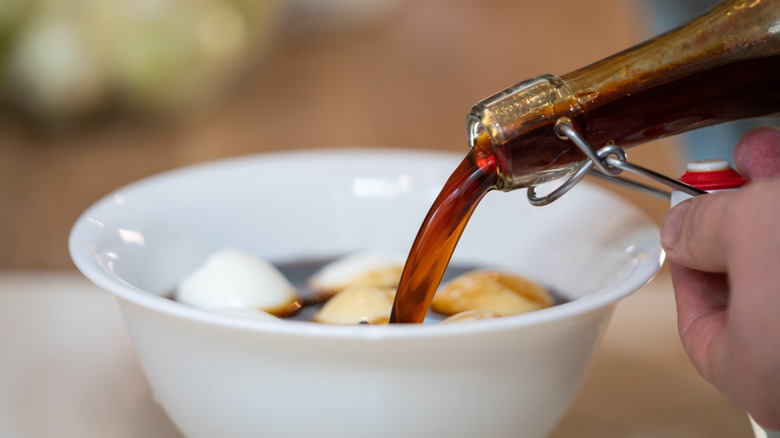
Traditional mirin is produced by fermenting steamed mochi rice with koji and distilled spirit, yielding a satisfyingly malty liquid with about 14% alcohol. This high-quality product is usually slightly dark in color and known as hon mirin. It's harder to find, and is what older recipes and professional kitchens rely on for its ability to balance and deepen flavors. The flavor profile is more floral than boozy, with a restrained, tangy acidity that persists beyond the initial sweetness. It imparts a subtle warmth and depth, even after the alcohol has cooked off.
Most bottles labeled "mirin" in American stores, however, are aji-mirin or "mirin-style seasoning." These are cheaply made with corn syrup and flavoring additives, lacking the layered complexity of the real thing, like artificial pancake syrup versus grade A maple syrup. While aji-mirin provides sweetness and some of the thickening power, it can make sauces cloying and blunt, missing the nuanced lift and faint savoriness that hon mirin brings. To develop complex, traditional flavors, using genuine hon mirin makes a big difference, even if it's harder to find or costs more.
Mirin shows up in sauces, glazes, and braising liquids. There's really no Western counterpart, and it's key to the sweet complexity of an at-home teriyaki reduction sauce. It's also part of tare (the all-purpose dipping sauce for grilled meat), the base of sukiyaki hot pot, and the subtle sweetness in broths for dishes like oden or certain kinds of ramen. Mirin turns up in dipping sauces for tempura, adds depth to some tsuyu (a noodle soup base and dipping sauce), and can even be found in the classic, custardy tamagoyaki (Japanese rolled omelet). Properly employed, mirin's use reflects a sense of takumi (craft and care) in seasoning.
The fermented making and uses of rice vinegar
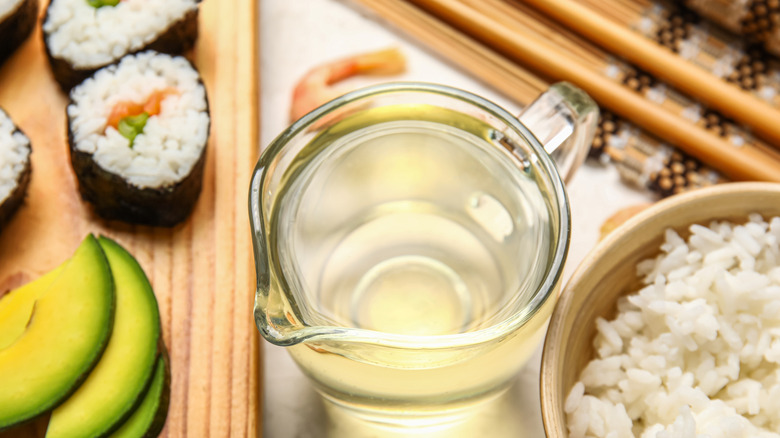
Junmai-su, or white rice vinegar, starts with polished rice grains that are steamed and then inoculated with koji mold. This mold breaks down the rice's starches into fermentable sugars, laying the groundwork for the next stage: alcoholic fermentation. Yeast is introduced, converting these sugars into a mild rice wine, a process similar to sake brewing. Once the alcohol has developed, acetic acid bacteria are added. Over time, these bacteria convert the alcohol to slowly build the gentle tartness that defines Japanese rice vinegar. The result is a vinegar that's clear or faintly straw-colored, with a soft, clean acidity.
Most Japanese cooking relies on unseasoned rice vinegar, which contains no added sugar or salt. Its flavor is direct but balanced, enhancing without overwhelming. A spoonful in sushi rice, sunomono (vinegared salads), or a tsukemono brine is enough to lift flavors and cut through richness. Dipping sauces and marinades gain subtle sharpness and clarity, making other components stand out. Seasoned rice vinegar, widely available and sometimes labeled as "sushi vinegar," includes sugar and salt. While convenient, it limits control over a dish's balance and can tip recipes toward sweetness, especially if used in place of unseasoned vinegar. For cooks seeking a lighter hand and maximum flexibility, unseasoned rice vinegar is the best.
Rice vinegar stands apart from Western vinegars; its acidity is softer and lighter than distilled white or apple cider vinegar, and it lacks the sweetness or robust character of balsamic or sherry vinegar. If rice vinegar isn't available, a mild white wine vinegar can work in a pinch, ideally diluted with a splash of water to soften its edge. Apple cider vinegar is sharper and more pronounced; using it as a substitute means starting with less and tasting as you go.