

Once A Tiki Party Essential, This 1960s Appetizer Has All But Vanished
Rumaki, a vintage snack no one remembers anymore, appeared on silver trays at cocktail parties and luau-themed dinners in the 1950s and '60s, gleaming under foil domes or broiler-blistered and stacked high on floral toothpicks. The core ingredients were chicken livers, canned water chestnuts, and strips of bacon. Some recipes added pineapple, others drenched the livers in a salty-sweet teriyaki-esque marinade before wrapping and broiling them into lacquered bundles that dripped over napkins and wildly-patterned shirt collars.
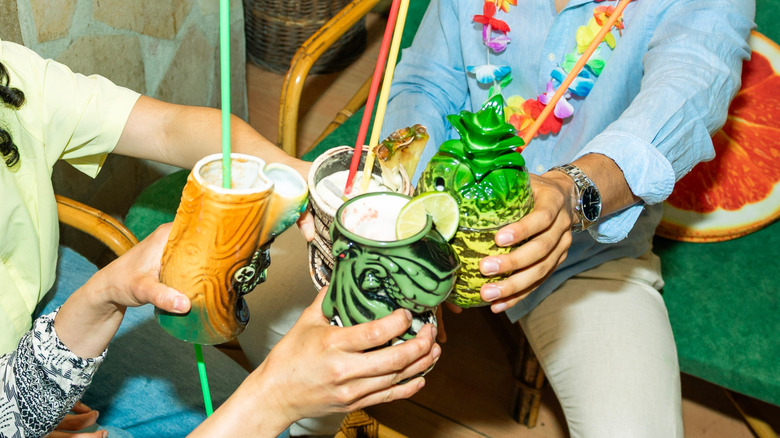
The structure was architectural: A coin of water chestnut anchored the stack, topped with a piece of liver and encased in a tight bacon spiral, pierced dead center to hold it all together. The water chestnut provided crunch and neutrality, the liver a creamy, mineral weight, and the bacon contributed a familiar smokiness. The marinade leaned vaguely East Asian without committing to any specific region. Visually, the dish walked the thin line between festive and alarming. Hosts probably served rumaki alongside wild fishbowl-sized cocktails with names like "Shark Bite" or "Dr. Funk," hoping guests would enjoy, or at least overlook the offal, as they shimmied to the exotica spinning on the record player.
Midcentury escapism's hot app: rumaki
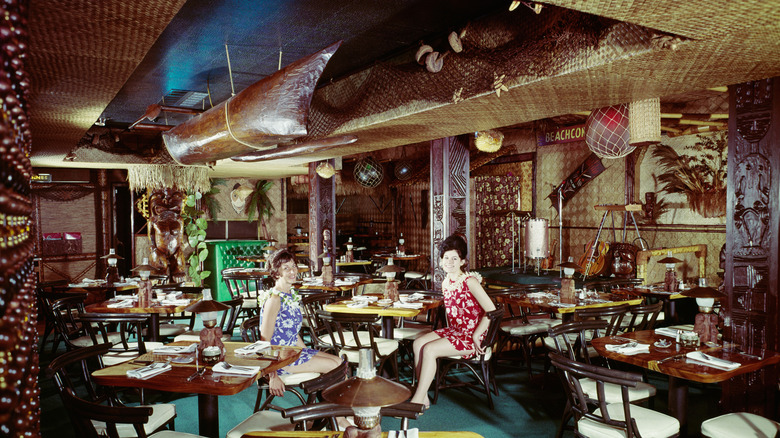
Rumaki first appeared on the menu at one of the original tiki restaurants in Berkeley, Hinky Dinks, in the 1940s. It was a period when postwar escapism collided with an American desire for both convenience and theatrical flair, and GIs missing the flavor profiles they had sampled abroad while on duty. Though it masqueraded as part of a Polynesian culinary lineage, the dish reflected more of a collage than a tradition. Frenchy ingredients met canned goods: the chicken liver suggested a kind of sophistication, the crunchy water chestnut stood in for something sort of Asian. The bacon could be seen as a gesture toward something-something Kalua-style roast pig, but it might be that Americans have always loved bacon on everything.
Tiki culture in the United States drew from a murky blend of Hawaiian, Cantonese, Tahitian, and Hollywood sources, remixed them into an aesthetic of bamboo bars, torch-lit patios, and syrupy cocktails. The food followed suit. Menus leaned on fried bites, glossy sauces, and improbable hybrids that complemented rum. Along with rumaki, appetizers like crab rangoon and meatballs in pineapple-soy glaze shared the same invented genealogy. At its peak, rumaki symbolized a kind of domestic daring. You served it when you wanted to appear worldly, but also on trend with Americana-crazes. It said: I subscribe to Bon Appétit, but I also own a hibachi. Eventually, rumaki slipped from rotation, too fiddly for modern entertaining and too specific to revive without irony.
In case you still want to try this at home
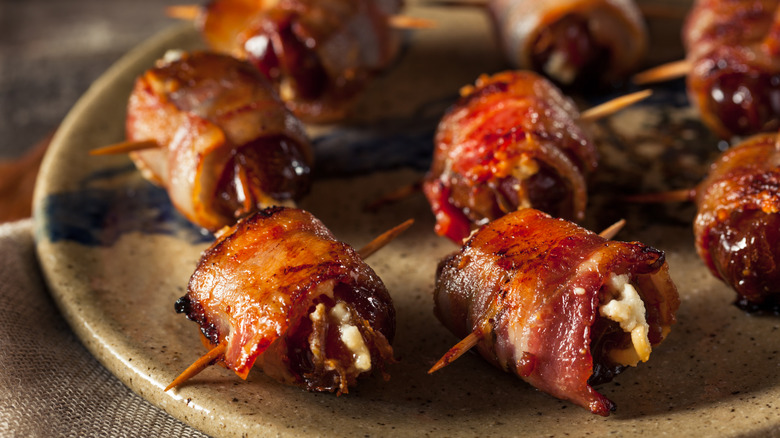
If you've got tiki-revival fever or a hankering for a texturally surprising amuse-bouche, a rumaki recipe might be just the tropical organ meat experiment for you. Start with fresh chicken livers and rinse them under cold water. Trim off connective tissue and cut into bite-sized pieces. Create the marinade by combining soy sauce, brown sugar, garlic, grated ginger, and a splash of rice vinegar. Marinate the livers for at least an hour. Drain before assembly, and reserve the liquid.
Slice canned water chestnuts in half if they're too large. You can also search for and use fresh water chestnuts if you're feeling ambitious (or if you come across them in an Asian grocery store's produce section). Cut bacon strips in half crosswise. Place a piece of liver and a chestnut together, wrap tightly with bacon, and secure with a toothpick. Pineapple can be involved if you like that kind of thing. Set the little meat bites on a foil-lined baking sheet with a rack.
Bake at 350°F for 15 to 20 minutes, rotating once to ensure even browning, and brush with the leftover marinade once or twice during cooking. The bacon should be edge-curling and crisp. The liver should reach an internal temperature of 165°F without drying out. Serve the rumaki warm with strong, sweet tiki cocktails, in a garish shirt and dim lighting.