

Setting Your Oven To This Temperature Will Keep Your Food Warm Before Serving It

If you've ever pulled off a perfectly timed dinner only to realize your guests are running late, you know the delicate dance of keeping food warm without drying it out or overcooking it. That's where your oven's "keep warm" setting comes in. This might be one of those oven functions you're not using, but you definitely should be. Unlike baking or roasting modes, which crank the temperature to 350°F or higher, the keep warm setting typically hovers between 160°F and 200°F. Just enough heat to prevent food from cooling off, but not so much that it keeps cooking.
At this gentle temperature, your dishes stay safe and warm without toughening up or losing moisture. It's especially handy for casseroles, roasted vegetables (overcooking is one of the biggest mistakes you can make when cooking roasted vegetables), or baked goods that need to hold their texture without getting soggy or dry. Even meats like chicken or roast beef can rest in this low heat for short periods—just make sure they were fully cooked beforehand. It's a simple tool, but one that can save your meal from lukewarm disappointment or overdone regret. Just don't confuse it with "low and slow" cooking — that's a different technique entirely.
The key to keeping food warm without ruining it
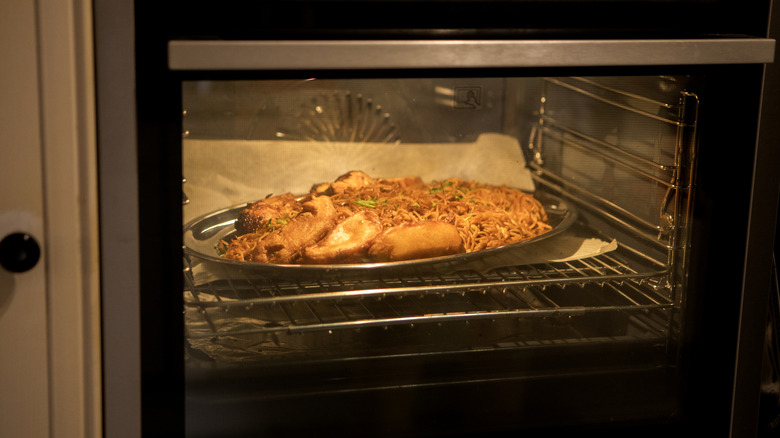
The trick to using the keep warm setting well is knowing what it's not for. It won't cook your food, reheat leftovers, or act like a holding oven in a restaurant kitchen. What it will do is keep your finished dishes at a safe serving temperature until you're ready to plate. To make the most of it, cover your dishes with foil or a lid to trap moisture. This is especially important for foods like pasta, rice, or thick cuts of roasted meats that tend to dry out. If you're warming multiple dishes, use oven-safe containers and space them evenly to allow good airflow.
And while it might be tempting to leave things warming indefinitely, try to keep the window under one to two hours. Even at low temperatures, food can slowly lose texture or flavor. For longer holds, consider switching to a slow cooker on warm or an insulated food carrier. Bottom line: the keep warm setting is your secret weapon for serving dinner at the perfect temp, even if life throws you a delay.