

The Key To Perfectly Cooked Stuffed Pork Chops Is This One Tool
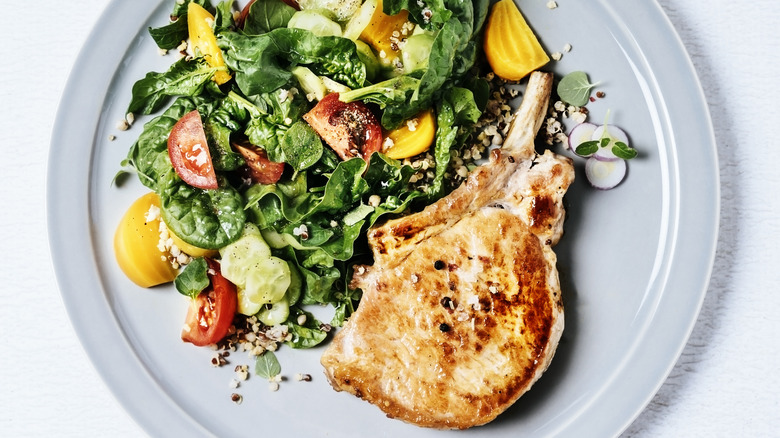
Ever tried painting with a toothbrush? Or playing a round of golf with a baseball bat? Hopefully not. Sure, you might get the job done (eventually), but the whole process is going to be messy, frustrating, and nowhere near as good as it could be. Stuffed pork chops are the same. You can skip the meat mallet. You can even skip the thermometer. But try cooking them without an oven-safe skillet? You're giving yourself a disadvantage for no reason.
Done right, your pork chops will be juicy and full of flavor; done wrong, they turn out dry and forgettable. Stuffing the chops helps tilt the odds of success in your favor, adding moisture and extra flavor into every bite. Using a single oven-safe pan is what keeps all that flavor within the dish. Most stuffed pork chop recipes follow three key steps: sear the stuffed chop in a skillet to seal it, transfer it to the oven to cook through, and make a gravy with all those flavorful drippings.
To add more flavor to your pork chops, all three steps should be completed in the same oven-safe skillet. The first reason is efficiency: sure, you could sear the chop in one pan, move it to a baking tray to finish in the oven, then scrape all the drippings back into a pan to make the gravy — but that's a lot of unnecessary juggling. The second reason is flavor. Using an oven-safe skillet allows you to do it all in one place so that none of the flavor from the stuffing and dripping gets left behind. Consider giving this technique a try with our very own apple chutney-stuffed pork chops recipe.
How to tell if my skillet is oven proof
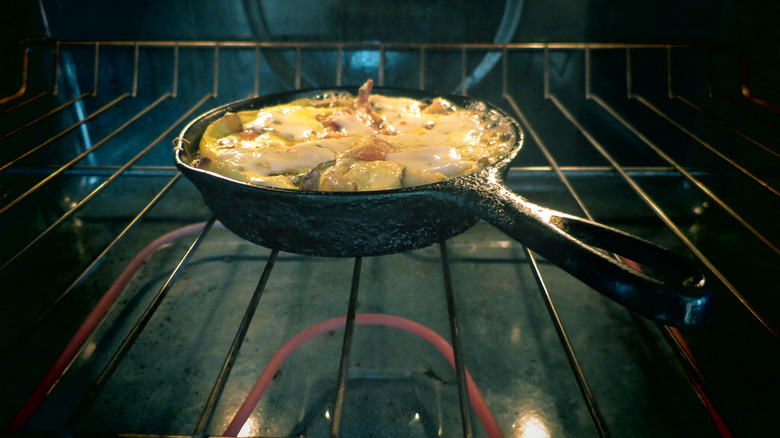
Not all skillets are built to handle the super-high temperatures, and knowing which ones can be used to finish dishes off in the oven is crucial. One of the first things to check is the material. Cast iron and stainless steel skillets are both solid choices, as they're designed to withstand the high heat of your conventional oven. Just be sure the entire skillet, including the handle, is made of the same oven-safe material. A skillet may be made of oven-safe metal, but if it has a plastic, wooden, or rubber handle, it's almost sure to burn or melt in the oven.
Additionally, watch out for cookware with non-stick coatings like Teflon as well. There's no simple answer to whether or not nonstick pans can go into an oven, but it's best to play it safe. While non-stick pans are great for eggs and delicate foods, many are not safe for high oven temperatures. Some coatings can start to degrade at around 500 degrees Fahrenheit. Lastly, if you're in any kind of doubt at all, double-check the manufacturer's guidelines to see if the handle is rated for oven use.