

Want A Moister Cake? Don't Just Use Butter
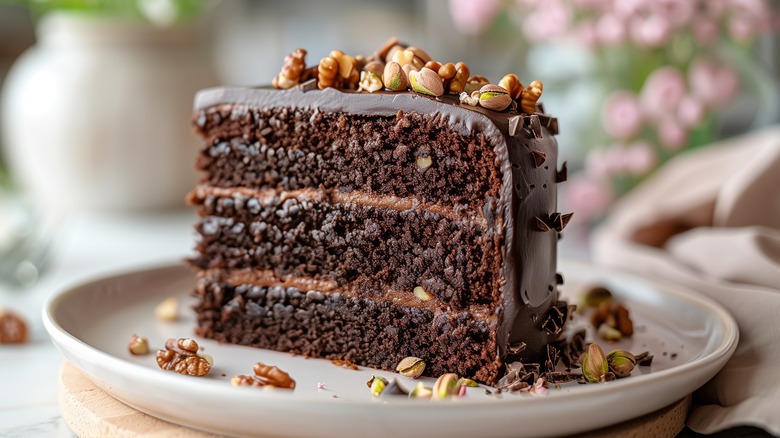
With its luxuriously rich flavor and texture, butter is considered to be the king of fats, especially in baked goods like cake. However, sometimes butter needs a little support in your layered and frosted creations. That's where oil comes in — while it's less flavorful than butter, using a mix of both makes for a cake that's super moist and tastes amazing.
One big advantage of oil is that it's 100% fat, and fat equals more moisture and softness in baked goods. Meanwhile, butter is at least 80% fat, with the rest being mostly water. In the oven, this water evaporates out of the cake batter, giving the final dessert less fat and moisture overall. This isn't always an issue, especially if your recipe has plenty of extra liquid or other ingredients that keep your cake moist. However, cakes that come out dry and crumbly would likely benefit from an extra dose of pure fat from oil.
Secondly, unsaturated oils that are liquid at room temperature — such as vegetable or canola — produce a cake that feels more moist on the tongue. Butter is a saturated fat that is solid at room temperature, so it generally produces a denser crumb that can feel dry after cooling. Cakes made with oil also stay soft and moist for longer than their all-butter counterparts, since their fat content won't solidify over time. Best of all, it's relatively easy to tweak your favorite decadent cake recipes to accommodate some oil.
How to replace some of the butter in cakes with oil
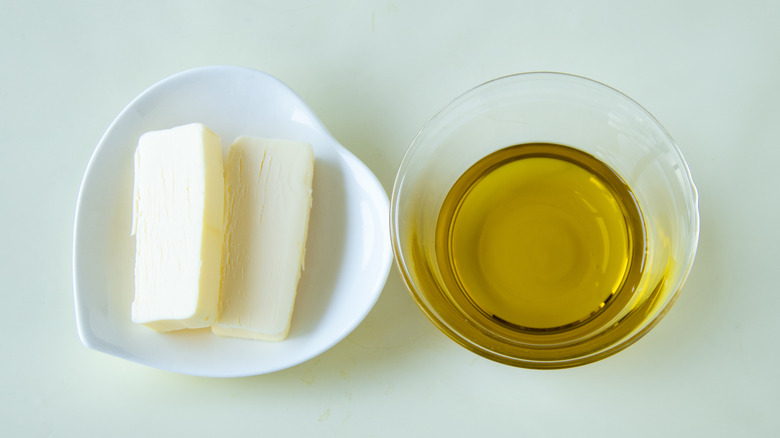
When deciding when to use oil instead of butter for baking, strongly flavored recipes like red velvet, carrot, or chocolate mocha cake are better candidates for doctoring with oil. Butter can actually dampen the taste of ingredients like fruit, cocoa, and coffee, so reducing it helps them shine. In contrast, simple cakes like white or plain vanilla need a full boost of buttery flavor to avoid blandness. And while extra tenderness from oil is usually welcome, some cakes are meant to be denser — think classic pound cake or a rich torte. In this case, all butter is best.
Once you decide that your cake could use some oil, replace 20% to 25% of the butter to start with. Use volume instead of weight to calculate the measurements, since oils are lighter than butter. If your cake still turns out dry, you can replace up to 50% of the butter with oil. Just don't be tempted to add it on top of the full amount of butter, or your cake could end up being a greasy mess.