

The Store-Brand Soy Sauce You Shouldn't Even Think About Buying
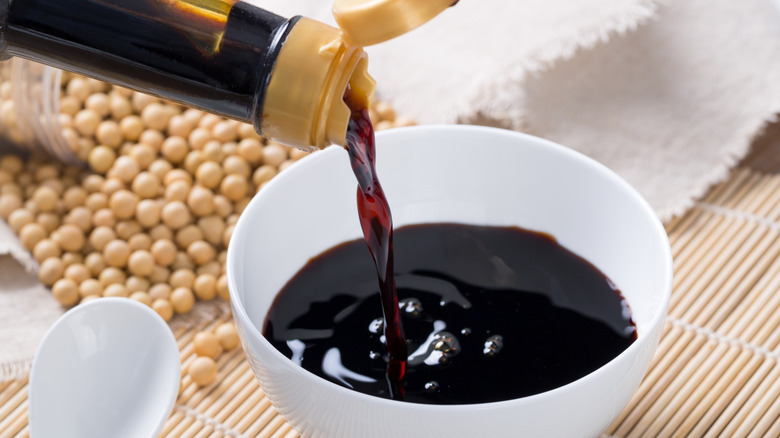
Soy sauce pretty much tastes the same across all brands, right? Wrong, on so many levels. It's not just the taste; the quality can vary significantly based on ingredients, and even more so on the brewing process, or lack thereof. Tasting Table did a deep dive into the world of soy sauce, compiling 13 popular soy sauce brands and ranking them from worst to best. One store-brand soy sauce emerged as the clear loser. Kroger soy sauce is the product you shouldn't even think about buying, for several reasons.
Our methodology focused primarily on taste testing, observing differences in flavor, aroma, and color. We also took into account things like packaging, history, versatility, and the company's available selections. However, flavor is undoubtedly paramount. Why ruin a good meal by using an inferior-tasting condiment? This is precisely what to avoid in soy sauce.
Our taste tester considered the basic Kroger soy sauce "a very unpleasant experience," first calling out its excessive saltiness. At 1,340 milligrams of sodium per tablespoon, it has more than most other brands in the ranking. It also carries bitter chemical-like undertones, and there's a very good reason for that. Instead of being brewed and fermented in the traditional soy sauce method, this brand uses chemically hydrolyzed soy proteins to speed things up. Here's a look at that process, not only for what it takes away in terms of flavor, color, and aroma but for what it adds back as compensation for that loss.
Brewed versus non-brewed soy sauces
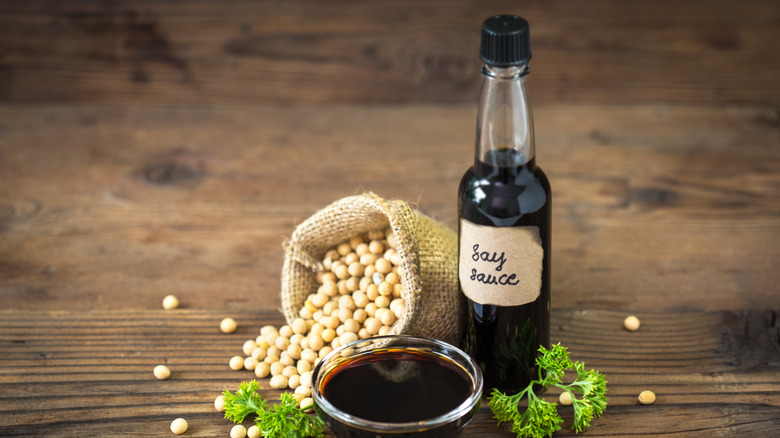
One of the facts about soy sauce is that its traditional production follows ancient brewing methods involving soybean soaking, roasting, and crushing, followed by tank fermentation for up to eight months or longer. During that time, the magic happens, involving intricate interactions between amino acids, enzymes, starches, simple sugars, lactic acid, alcohol, and more. In other words, a lot occurs before that delicious dark elixir lands in bottles. Some modern soy sauces skip to the front of the line, using chemicals to get there.
The quick-finish method of making soy sauce is called chemical or acid hydrolysis, which mixes soybeans and wheat with hydrochloric acid, creating a stripped-down version of naturally fermented soy sauce. Rather than taking months to develop the rich, tangy soy sauce taste from fermentation, this process gets liquid into bottles in mere days or even hours. To compensate for the severely compromised flavor, inferior brands may toss in other components to pump up taste, color, and aromas, including excessive salt. Unfortunately, it's not just flavor at stake; some toxic compounds from chemical hydrolysis can be carcinogenic.
But many types of soy sauce exist, so there's no need to settle for chemically altered versions of a tasty cooking sauce. To identify ones using chemical processing, check labels for ingredients such as hydrolyzed soy protein, dextrose, and caramel color, all three of which appear in basic Kroger soy sauce. It's worth noting that Kroger also offers a brewed soy sauce as well as its Simple Organic version.
What to do with salty soy sauce

While Kroger's soy sauce is marred by excess salt, that's not the only element you should be concerned about when purchasing the condiment, regardless of the brand. As soy sauce is produced en masse, sodium benzoate is often added to prevent the growth of bacteria (those lacking the preservative should be refrigerated). Though the preservative is generally considered safe, it is worth taking note of if you're consciously avoiding chemicals in your foods. Moreover, allergens like wheat, gluten, and (as the name obviously implies) soy are usually present, so check the ingredients beforehand. Tamari works as a gluten-free substitute for those looking for an umami kick without the potential side effects.
With the addition of umami, soy sauce provides an extra dimension of flavor some foods may lack, depending on which type you use. Darker soy sauces are traditionally used for cooking, while lighter ones are used for dipping and dressing your food. Regardless of the type, it's important to use the sauce sparingly — not only to avoid excess sodium, but also to avoid messing up your entire meal.
If you're stuck with Kroger's soy sauce, the important thing to address is, as noted, its excessive saltiness. You can easily temper salty soy sauce with the addition of water; simply add a few droplets of water until the taste meets your standards. You could also add sugar instead to thicken the sauce and temper its saltiness, or go for lemon and/or lime to amp up the condiment's acidity.