

Corn Silk Is Actually Loaded With Fascinating Insights Into The Quality Of The Cob

For many, corn silk is an annoyance that gets in the way and makes a mess when you're trying to shuck and cook fresh corn on the cob. However, there's a lot to be learned about corn silk and how it relates to the quality of an ear of corn, so don't ignore it — especially when you're trying to pick out the best ear for your favorite corn recipes. The silk is not just a means to get corn pollinated, though it does play a vital role in that process. Whether you're hand pollinating or letting nature do its thing, each one of those corn silks is connected to where a kernel will grow.
They are the sticky stigmas of the corn plant's female flowers, which receive pollen from the male tassel flowers as it blows in the wind and drops down into the silks. That alone helps determine the quality of the cob because if all the silks are not pollinated, there will be kernels missing from the ear of corn. But after they do their job, the corn silks can also indicate whether the corn within the husk is fresh and healthy or if you should pass it by. That is why examining the residual silk when purchasing corn from a grocery store or farmer's market can save you from husking a very disappointing ear when it's too late.
Using corn silk and other features to pick the best ears
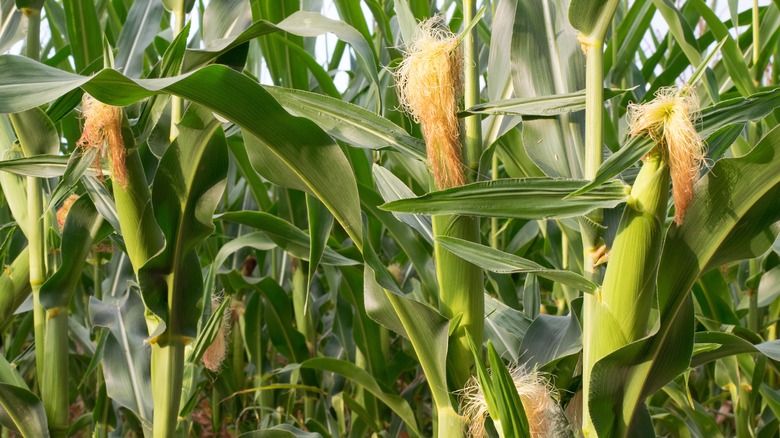
First things first, it is bad corn-purchasing etiquette to peel back the husk or poke a kernel of the corn to determine if it's a good piece or not. If you put it back like that, it probably won't get sold at all. Instead, it is recommended to use what you can see on the corn's exterior to determine the quality of the corn within by examining the corn cobs for signs of freshness. Start by looking for silk that is tan or gold and still looks fluffy. It should still be a little sticky, but if you're buying your produce from a grocery store, it may feel wet, and that's okay because the corn is usually shipped with ice to keep it fresh.
You want to avoid a cob with black or slimy corn silk, which indicates that the corn may be going bad. Then, check the ear itself to ensure the husk is still bright green, while the bottom of the ear should be white, and that it's still snug against the cob with no soft spots. That indicates a mature but not too-mature ear of corn. Feel for the kernels through the husk without pulling it back. They should feel firm and plump to the tip of the cob, and should smell sweet and grassy. You should also pay attention to the weight of the cob. Choose the heaviest ones, as they're still juicy, and as they age and turn to starch, the cob will become lighter.