

This Chef-Approved Herb Belongs In Every Beginner's Garden

There's nothing more satisfying as a cook than picking fresh ingredients from a garden and using them in your favorite recipe. That might be a daunting idea for someone who has never grown a vegetable before, but the best way to learn a new skill is to just do it.
When it comes to what a beginner gardener should grow, the best advice is to keep it easy at first, choosing hearty plants that are easy to grow and that will fit in the space you have. For those looking to start with an herb, Dan Pelosi, author of cookbooks "Let's Eat" and "Let's Party" suggests growing basil. "It's an easy countertop/windowsill plant," Pelosi told Tasting Table. "Just keep an eye on it, and keep pinching off any flower buds you see to keep it tasting good."
Basil isn't just simple — Pelosi also explained that it is practical. After all, what's the point of growing something that you won't often use? And basil has several uses in everyday cooking. "Basil is such a great herb to eat fresh and use to finish dishes with a garnish," Pelosi continued. "Tear it up and put in your salad, over pasta, in pesto ... I could go on!"
What to know about growing basil and how to use it
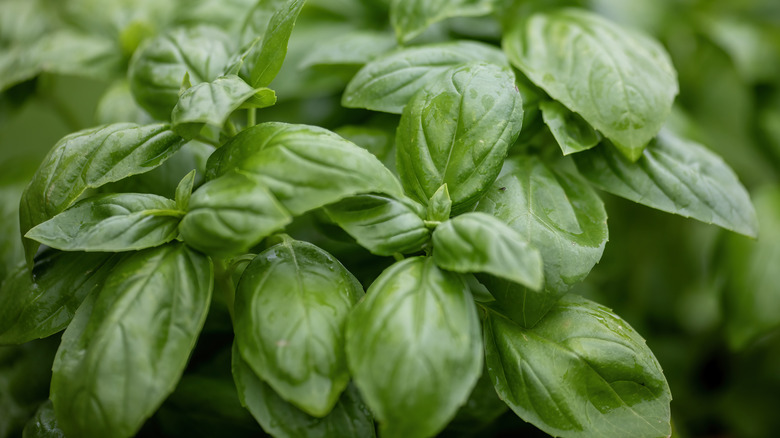
There are over 60 known varieties of basil (we covered 15 of them here), but if you're looking to grow some in your home garden and use it to cook, it's best to choose sweet basil, better known as Genovese. Italian large leaf, Thai, or lemon basil are also interesting choices, but their flavor will vary slightly compared to what you typically get from a grocery store.
Key things to know about growing basil are that it needs 6-8 hours of sunlight per day, so if you're growing the herb inside, make sure it's sitting in a sunny window. Basil grows best in moist, well-draining soil that is rich in organic matter. Plants should be spaced at least 12 inches apart for good air circulation, and it's important to allow for air circulation and water under the leaves rather than on them to avoid fungus.
Basil can be harvested fresh from the garden and will continue to grow as long as you take cuttings from above the leaf node, which is the point where a pair of leaves attaches to the stem. Once harvested, basil can be used fresh, refrigerated, or dried and used later. Basil is easy to grow and an excellent choice for a beginner's garden because of its many uses. In addition to soups, sauces, and garnishes, basil can also be used to infuse oils and vinegars, muddled in cocktails, and even made into tea. If your garden explodes with too much basil, here are 24 recipes to help you use it all up.