

Barbecued Spam Kebabs Are A Retro Cookout Hit Worth Revisiting
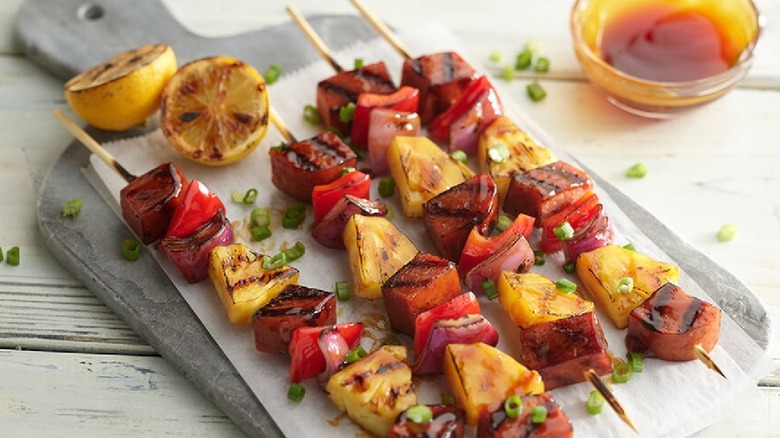
Salty, savory, weirdly addictive, and surprisingly fun to pop out of the can, Spam is an absolute icon of the American culinary scene. Love it or hate it, Spam has endured for over 80 years and carries a fascinating legacy. One thing that has fallen by the wayside over the last few decades is the barbecued Spam kebab, which had its heyday during the meat rationing period of World War Two. It was a playful and unexpected way to enjoy the canned spiced ham while incorporating the exotic flavors and excitement associated with kebabs.
Kebabs, sometimes spelled kabobs, date back thousands of years, as small pieces of meat cooked on a skewer. Shish kebab, specifically, is Turkish; shish comes from sis meaning skewer or sword, while kebap refers to roasted meat. Legend has it that Turkish soldiers used to marinate and grill meat on their swords, and that was where the practice started. Meat on flaming swords became a trendy dining spectacle in places like Chicago's Pump Room in the 1940s. It's no wonder that the home version, a barbecued shish kebab, would soon follow.
Spam was introduced to the market in 1937, and Word War II meat rationing provided a major boost for the product. Not only was it big in the United States, but it became part of the war effort, with soldiers around the globe eating it in the field. Spam lent itself well to kebabs, which at the time featured what were considered exotic flavors, including pineapple, which had also become available throughout America around the same time.
Put another Spam on the barbie
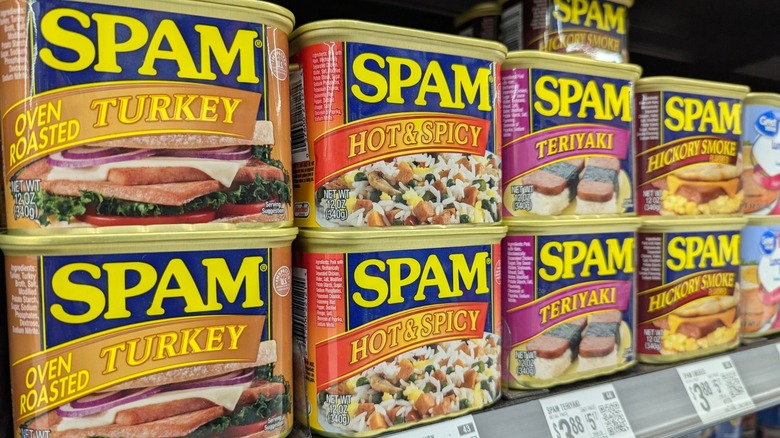
Kebabs became a retro culinary trend, much like savory gelatin molds or fondue. We have plenty of kebab tips for making them if they're new to you. Spam's official website leans heavily into the retro vibe of Spam kebabs and offers a few recipes. These feature staples like pineapple chunks, onion pieces, and a pineapple glaze. If you're a fan of the fried pink meat with your breakfast, a particular one of Spam's many flavors, or just want to experiment with cooking Spam, this is a great way to do it. Just remember that Spam is a very salty meat, so a bright sweet contrast really helps. That's why pineapple is so prominent in older recipes. However, sharp ingredients like onion and pepper also work, which are kebab staples.
Other good pairings for Spam include tangy sweet sauces. Think teriyaki, sweet chili, or mango chutney. Fresh elements like cherry tomato, squash, or even poblano peppers contrast the canned meat's rich fattiness. For more bite, you could try cubes of halloumi, sweet red onion, and a spicy, sriracha-based sauce. Anything that pairs well with pork can also be used in Spam kebabs.
Whether you call them kabobs, kebabs, or kebaps, making them with Spam can be a fun way to recapture a long-forgotten backyard barbecue atmosphere. It's also an easy way to experiment with flavors without breaking the bank.