

The Gluten-Free Pizza Crust Alternative With The Highest Amount Of Protein
We may receive a commission on purchases made from links.
There are two ways of looking at gluten-free substitutes. You could complain about the downsides, like added cost, or the way that your favorite foods don't taste exactly the same as the regular version. On the other hand, you can look at the benefits. By swapping wheat with pulses, nuts, or other grains, you can often boost the nutritional content — even when it comes to pizza.
Thanks to the rise in popularity of the gluten-free diet, there are a whole host of brands making gluten-free pizzas made from cauliflower, almond meal, or tapioca flour. But when it comes to upping your protein, chickpeas (garbanzos) are the way to go. Chickpeas are high in both protein and fiber, with a cup of chickpea flour containing 20 grams of protein, and canned chickpeas yielding 14.5 grams of protein per cup.
Even before you add toppings, a chickpea pizza base can give you between 16 to 30 grams of protein, depending on how it's made. Compare this with an almond flour crust that contains around 14 grams of protein, or a cauliflower pizza crust with around 6 grams of protein. If you want the convenience of ready-made, you can get both chickpea bases and pizzas from Banza (the name a riff on the word garbanzo). Their plain 9-inch pizza base contains 16 grams of protein, or 4 grams per slice.
How to make chickpea pizza bases at home
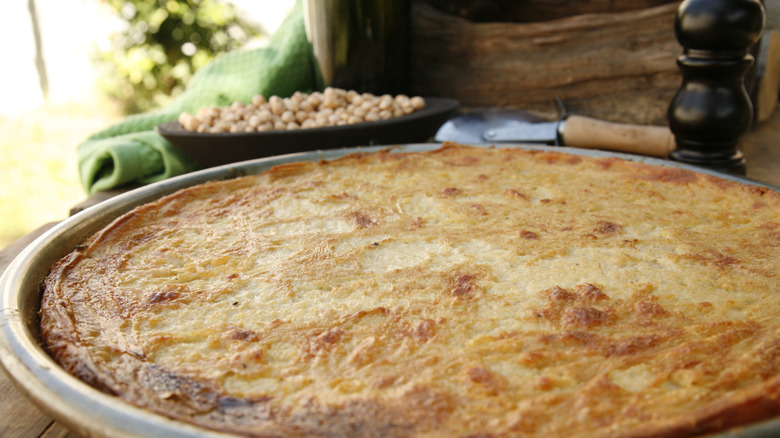
If you want to keep an eye on both cost and nutrition, it's simple enough to make your own chickpea pizza, using one of two methods. The first is to use chickpea flour much as you would wheat flour. It's whisked together with oil and water, with a small amount of tapioca flour added to give the crust some pliability. It will be more like a thick batter than a dough, but when baked in a cast-iron pan, it will firm up nicely. A pizza crust made with 1 cup of flour will give you around 20 grams of protein.
The second method creates more of a dough by using canned chickpeas as well as chickpea flour, and a binding agent such as arrowroot flour. The ingredients are blended in the food processor along with any seasonings, then rolled out. This is the best option if you want to use a pizza stone or traditional pizza pan. This will give you an 11-inch crust with about 30 grams of protein.
Both of these crusts will require pre-baking for 10 to 15 minutes before you can add toppings, but after that, you can treat them like regular pizza bases. Add some homemade sauce, grated cheese, and your favorite high-protein pizza toppings like chicken, sausage, or shrimp.