

15 Australian Dishes You Need To Try At Least Once
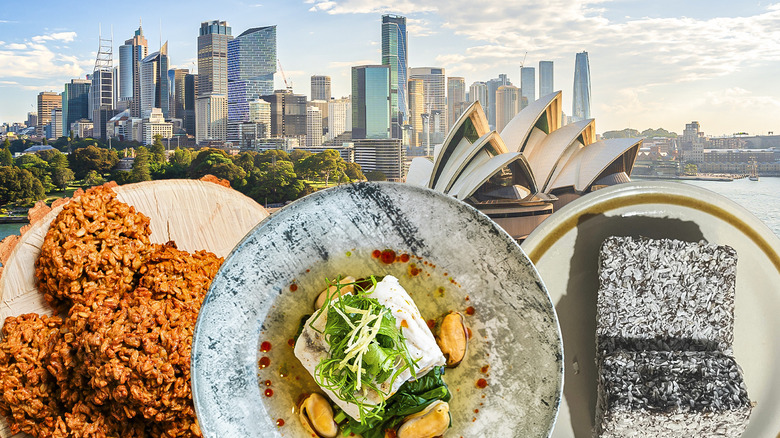
When you think of Australia, you probably think of things like sun, sand, and surf, or perhaps the Sydney Opera House. Maybe your mind goes to koalas, dolphins, quokkas, and the Great Barrier Reef. Or perhaps a trek in the bush is on your bucket list. For many people, food is way down on the list of reasons to travel to the country. And that's not because Australian food is bad, but simply because there are just so many other exciting Australian attractions.
But we're here to put Australian cuisine closer to the top of your list. Below, we've compiled some of the best Australian dishes that you really should try at least once in your life. From pavlova to vanilla slice, to prawns and grilled bugs, there is something for everyone Down Under. If a vacation is not on the cards right now, many of these dishes are easy to rustle up from home, too.
Pavlova
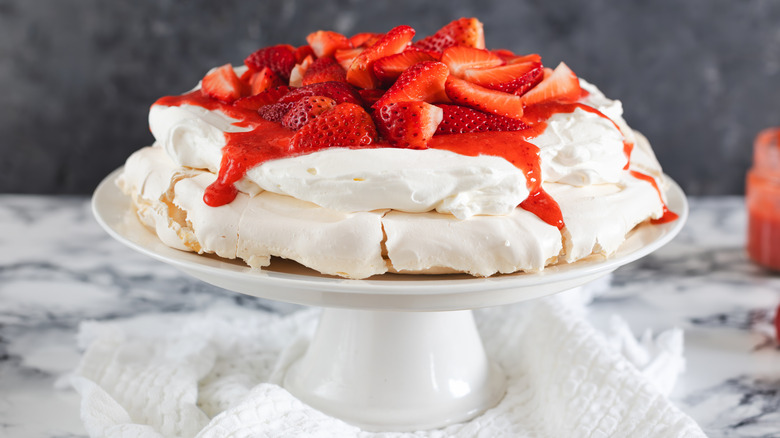
Be it Christmas or a birthday barbecue, pavlova is a staple at many Australian gatherings. In fact, in 2020, a poll by Nine.com.au confirmed that pavlova is Australia's favorite festive dessert. It's not surprising; the meringue-based dish, which is similar to Eton mess (but less, well, messy in its presentation), is the perfect combination of light and airy on the inside and crisp on the outside. Usually topped with fresh berries and whipped cream, it's pure decadent indulgence.
Pavlova is on this list because over the years it has become synonymous with Australia, but it turns out, the dessert's roots might not actually be Australian after all. New Zealanders also adore pavlova, and have also laid claim to its invention. Both countries can agree on one thing: It was named after the Russian dancer, Anna Pavlova, in honor of her Australasian tour. However, while New Zealanders claim it was created for the ballerina at the Wellington Hotel in 1929, Australians believe it was invented at a hotel in Perth and named after Pavlova because it was so light.
Either way, the fact remains that pavlova is a unique and popular dessert, enjoyed across Australasia. Aside from the classic recipe with fruit, there are a few ways to make it. If you're feeling experimental, you can make a chocolate version for example, or maybe matcha berry.
Lamington
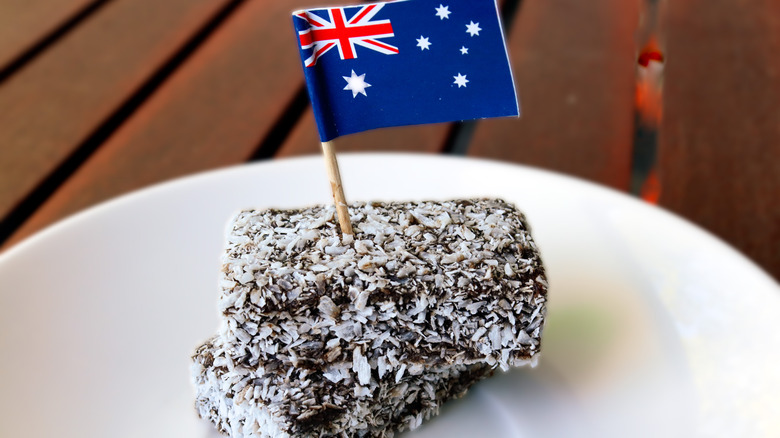
Another dessert, another argument between Australia and New Zealand. But first, let's talk about why lamingtons deserve your attention. Lamingtons consist of a soft, moist, vanilla sponge cake, which is covered with chocolate icing and lots and lots of desiccated coconut. It's basically a coconut lover's dream. But of course, there are variations on this classic recipe. If you love the sound of the cake and the chocolate, but not the coconut, you can opt to cover your lamingtons in sprinkles instead. If you prefer a fruity cake, some recipes opt to fill them with raspberry or strawberry jam. Now, on to the feud and the disputed origins of this Australian favorite.
Australian fans of this sweet treat maintain that it was created in Brisbane, when a servant working for the governor of Queensland, Lord Lamington, dropped his favorite cake into some melted chocolate. Instead of scolding the servant, Lord Lamington suggested that they dip the cake into some coconut. And so, the lamington was born. Or was it?
According to research from the University of Auckland in New Zealand, a dessert very similar to the lamington was actually first eaten in Wellington. The proof? A painting from the 1880s distinctly shows a half-eaten cake, which looks a lot like a lamington, in the corner. So which country is correct? You can mull it over while you enjoy all that chocolatey coconutty goodness.
Poached barramundi
Before Europe colonized Australia, the country was occupied by Aboriginal clans. In fact, in the 1700s, there were likely more than 750,000 Aboriginal people living in Australia, each of whom belonged to one of around 500 different clans. Today, the First Peoples of Australia make up just under 4% of the population. Their influence on the country is profound, from music to sport to food.
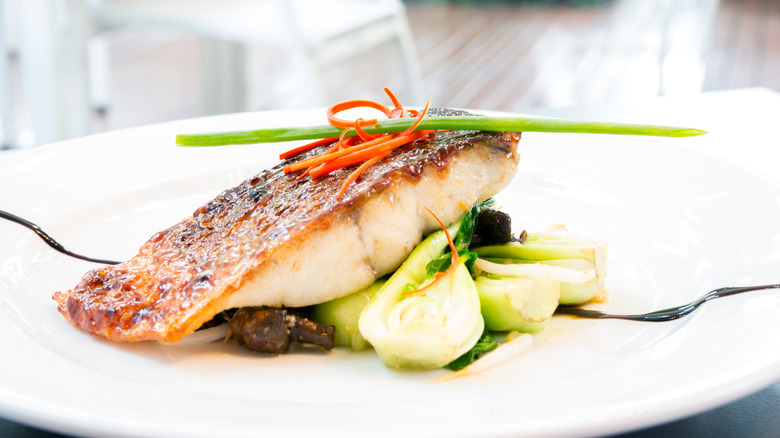
Aboriginal populations have long eaten barramundi, for example. It makes sense: The fish is native to the ocean that surrounds Australia. Its name reportedly means "river fish with large scales," in one Aboriginal Queensland language. Today, this fish is eaten across Australia in many different ways, be it grilled with olive oil, salt, and herbs or roasted. One Aboriginal way of preparing the fish is poached and seasoned with other native ingredients, like anise myrtle and ground white kunzea flower.
Another good thing about barramundi? It's more sustainable than many other types of fish, especially if you buy varieties that have been locally farmed across Australia. This means that it does not come with many of the issues associated with the industrialized fishing industry, like bycatch.
Fairy bread
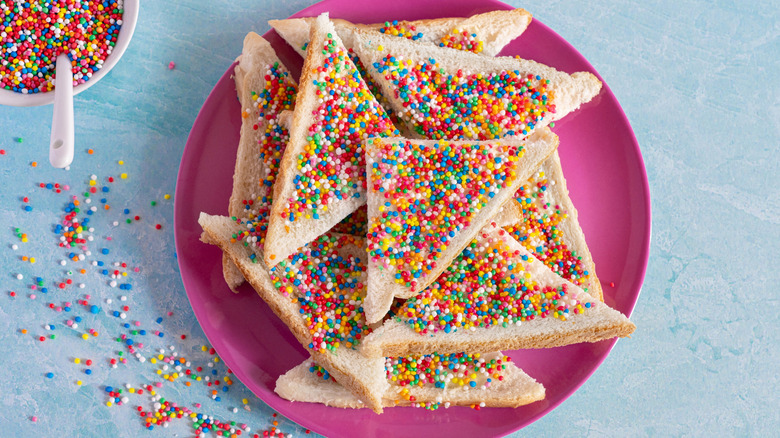
Many children in Australia and New Zealand grew up munching on fairy bread at parties. The treat is simple, yet satisfyingly sweet and crunchy. It's just buttered white bread, smothered with colorful sprinkles. Yes, that's it. We told you it was simple.
Fairy bread has been eaten in Australia for nearly a century, at least. One of the earliest mentions of the classic sweet treat was in a Tasmanian newspaper in 1929. According to the article, alongside cakes, jelly, and ice cream, fairy bread had been handed out to sick children at a party at a hospital in Hobart, the capital of Tasmania. Fairy bread has been a children's party must-have ever since.
Many Australians stick to the traditional, incredibly straightforward way of making fairy bread. But there are ways to jazz it up even more. You could add peanut butter and turn it into a sandwich, for example, or maybe mix in some chocolate with your sprinkles. Let your imagination run wild.
Sydney rock oysters
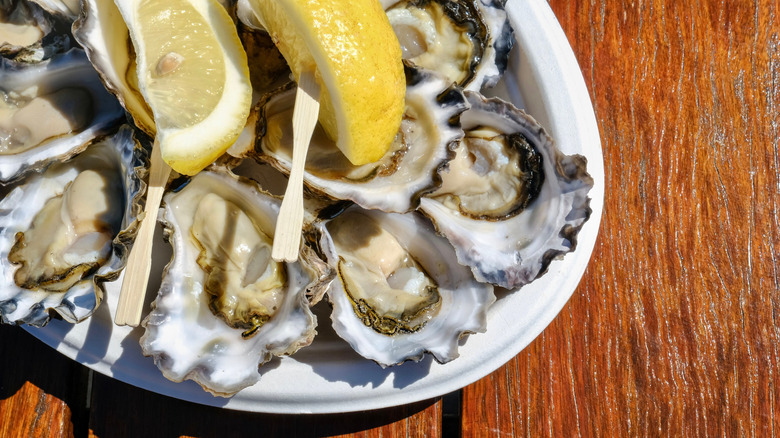
Aboriginal populations have sustainably harvested and eaten oysters from the coast of Australia for thousands of years. This is why their knowledge is now being drawn on to save the country's oyster beds, which are currently under threat from things like habitat destruction, climate change, and overfishing.
The iconic Sydney rock oyster, which is known for its sweet flavor and creamy texture, is one of those native Australian species that is, unfortunately, in decline. But it's not all bad news: Indigenous scientists are currently working to help the species adapt to the changing climate. By doing so, they will help to future-proof the Australian oyster industry, and preserve a shellfish that is important to many Aboriginal communities.
If you want to try Sydney rock oysters, the best place to do it is where they are indigenous. This means traveling to the east coast of Australia, but it's worth it. There, many locals run oyster tours, which allow you to sample the oysters and learn more about sustainable aquaculture, the local environment, and farming.
Meat pies
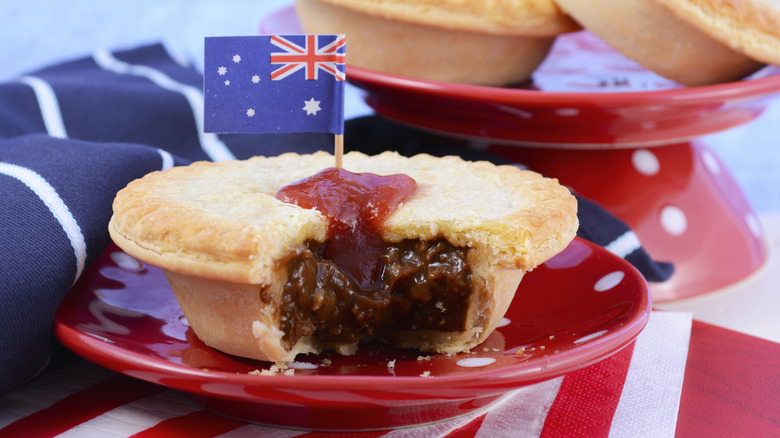
If you're thinking, don't many countries eat some form of meat pie? You'd be correct. Many Americans love chicken pot pies, for example, while French Canadians are known for tourtière, a type of spiced meat pie. Filled yeast hand pies, known as piroshky, are a staple in the Baltics, while many Brits love pork pies. It's true: Meat pies are everywhere. But here, we're talking about Australian meat pies, which, despite their generic name, are distinct from the many other types of meat pie around the world.
Australian meat pies are usually small, hand pies made with puff pastry and short crust pastry (for the base). The meat in question is usually beef, which, in its simplest form, is often combined with onions. Often, these pies are served with ketchup, but the condiment isn't just drizzled on the top. One popular technique is to fill the pie with the ketchup and then make a hole in the top for the sauce to ooze out. The Australian love for meat pies likely started in the 1700s, when British colonizers (and their beloved meat pies) started to arrive in the country.
While traditional Australian meat pies are usually made with beef, many different variations exist. Some choose to fill them with chicken satay, for example, or even bison. It's also easy to make a plant-based version, either by swapping in a vegan beef alternative, tofu, or mushrooms (or a combination of all three).
Kangaroo steak
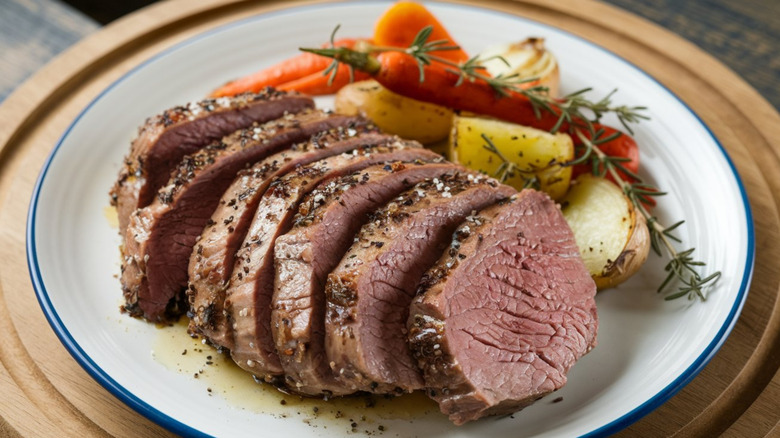
Kangaroo is one of the most widely-recognizable symbols of Australia. The animal is only indigenous to this country, so if you want to see one, you need to head Down Under. It's also where you need to go if you want to eat one.
Consuming kangaroo is controversial, and it's a practice that many Australians do not agree with on moral and ethical grounds. However, kangaroo is actually one of Australia's oldest types of meat, as the species has been hunted and eaten by some Aboriginal clans for thousands of years. One kangaroo used to go a very long way, with just one animal feeding multiple families. In fact, kangaroo is considered to be one of the most sustainable types of meat in the world. This is why some Australians identify as "kangatarians," which means they eat a predominantly vegetarian diet, with kangaroo as the only source of meat. The lifestyle is similar to flexitarian, which is also a predominantly plant-based diet, with only small amounts of meat.
If you choose to sample kangaroo, it is usually served as a medium-rare steak in Australia. The taste has been described as bold and earthy, and the texture is lean, with very little fat. If you are intrigued by kangaroo steak but don't want to eat this native animal, keep an eye out for developments in the cultivated meat industry. In 2021, Australian cultivated meat startup Vow raised $6 million to work on lab-grown meats like kangaroo and buffalo.
Barbecued prawns
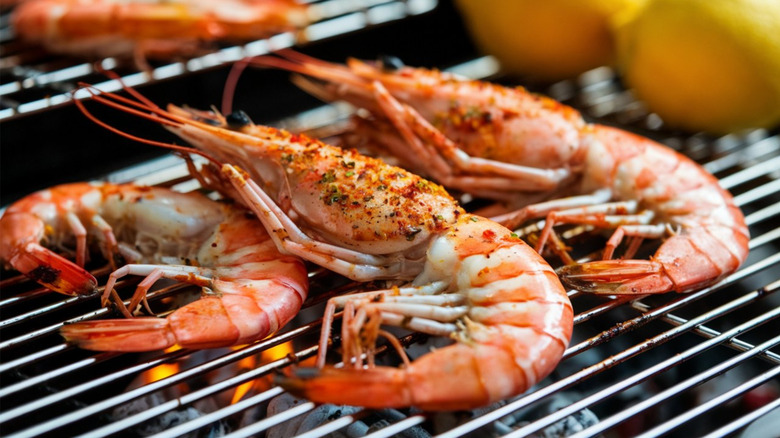
Before we begin, let's get one thing straight: Most Australians don't actually say "shrimp on the barbie." What might they say? "Prawn on the barbie." That's because while the term "shrimp" is used much more frequently in the U.S. to describe both shrimp and prawns (two different species), in the U.K. and Australia, the term "prawn" is more common. Barbie, however, is accurate Australian slang for barbecue.
So where did "shrimp on the barbie" come from? It was actually used for the first time in a 1980s commercial featuring Paul Hogan (now famous for the "Crocodile Dundee" movies). The commercials aimed to boost tourism in Australia, and were targeted at Americans, hence why the more Americanized "shrimp" was used.
Anyway, trivia over. Let's talk about the prawns. These shellfish are regularly enjoyed at gatherings across Australia, particularly at Christmas time, and are usually de-shelled and marinated in herbs, olive oil, and lemon, before being barbecued until crispy and tender. They're a must-try Australian delicacy, but if you prefer to eat plant-based, you don't have to miss out, because store-bought vegan prawns can be cooked in much the same way.
Emu meat
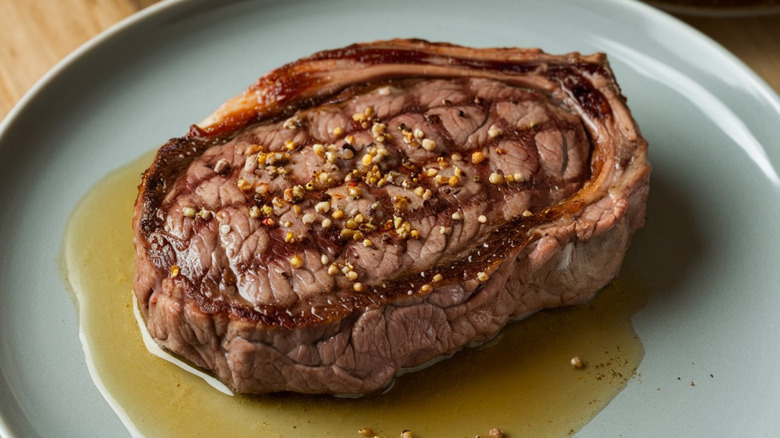
Just like kangaroos, emus are native to Australia. And once again, the birds have been eaten for thousands of years within Aboriginal communities.
Today, they are considered to be a more sustainable form of protein than many other types of meat. This is because, unlike industrialized beef or chicken, they can be raised in their natural habitat, with minimal intervention. In some cases, the emus don't even need to be fed by farmers, but instead forage just like they would in the wild. That said, emu farming is still controversial, and many believe the Australian species should be left alone to live in the wild.
However, for those who do choose to eat meat, emu is considered to be a more nutritious and healthier option than many other types of red meat, as it is low in fat and cholesterol. Despite this, those who have tried emu meat (which can be baked or fried, depending on your preference) say it still has a juicy and tender texture, just like beef.
Sausage sizzle
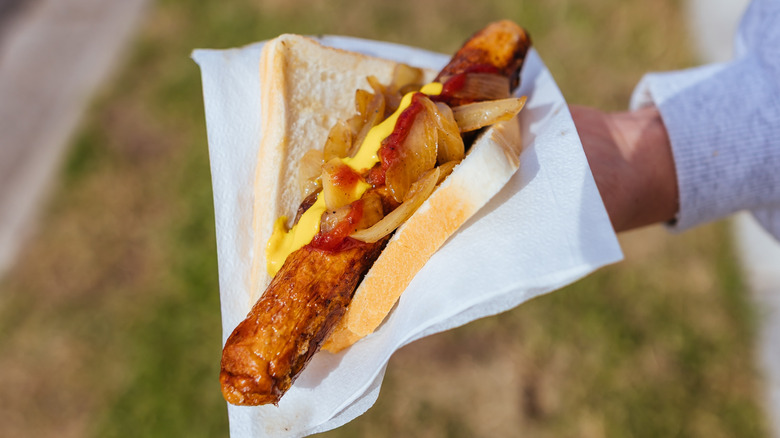
Just like fairy bread, the sausage sizzle is incredibly simple. In its most basic form, it is just a slice of white bread folded around a sausage. So, basically an even simpler version of a hot dog. Of course, as with the American classic, many Australians choose to jazz up their sausage sizzles with toppings like ketchup, onions, and mustard.
Sausage sizzle also refers to the events at which this simple sandwich is eaten. At community fundraisers, family gatherings, and even election day parties, multiple sausages (which are known as "snags" in this setting, and can be pork, beef, or plant-based) are thrown on the grill, before being doled out to guests with the white bread slices.
It's not known exactly when people started eating sausage sizzles, but the term was first used in a newspaper in the 1940s. By the 1980s, it had become a national favorite.
Grilled bugs
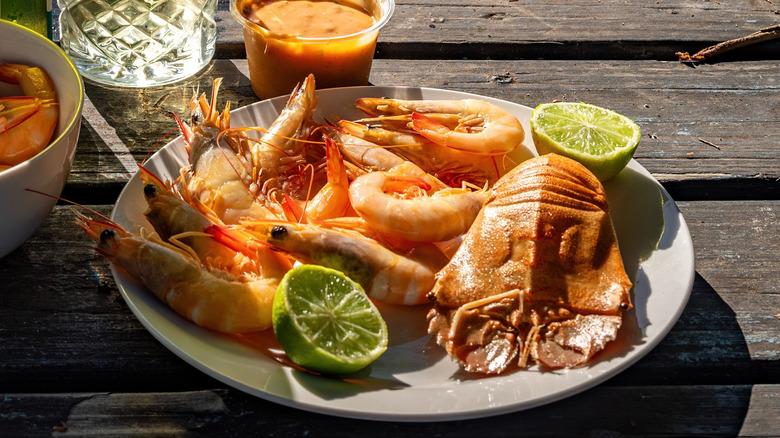
In this instance, grilled bugs doesn't mean grilled insects (although fun fact: Australia has recently approved multiple insect species for consumption). No, grilled bugs actually refers to types of crustacean, specifically, Moreton Bay bugs and Balmain bugs. Just like prawns, the bugs (which, technically speaking, are a type of lobster) are usually de-shelled before being marinated with herbs, garlic, limes, and butter, and then barbecued. Fans of these bugs say the meat is sweet, tender, and delicate.
If you want to try grilled bugs, you may want to consider being mindful about which type you choose. Per the sustainable seafood guide GoodFish, wild-caught Queensland Moreton Bay bugs and Balmain bugs are linked with some significant environmental issues, including high levels of shark and ray bycatch. However, even though wild-caught Moreton Bay bugs from the Commonwealth Waters are associated with some bycatch problems, overall, the guide notes there are fewer environmental issues linked with these bugs.
Roast lamb
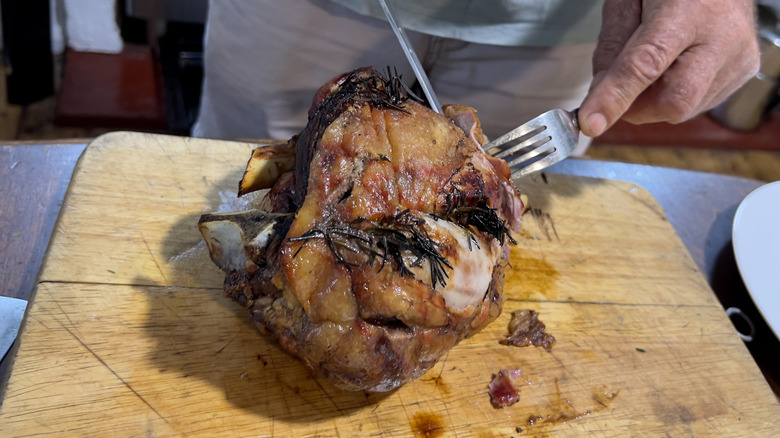
Lamb has been eaten across the U.K. for thousands for years. In fact, sheep were likely first introduced to the country by the Romans, and their meat has been consumed ever since. What does this have to do with Australian lamb? Everything. Without the British love for lamb, there would be no Australian love for lamb. That's because meat was first brought to the country by British colonizers.
Ultimately, the British passed their love of the meat onto Australians, which is why, today, British and Australian recipes for roast lamb are very similar. Both usually involve a leg of lamb, which is roasted with oil and herbs like rosemary and garlic, before being served with potatoes and gravy. That said, there is a little bit of a difference in the taste. Many say that Australian lamb tastes gamey, for example, which means it is stronger and earthier in flavor.
For those who love the taste of lamb, but not the meat, it is possible to recreate this Australian recipe with plant-based ingredients, like seitan and tofu. The key to most of the flavor is all in the other traditional elements of the roast lamb recipe, like plenty of herbs and olive oil.
Anzac biscuits
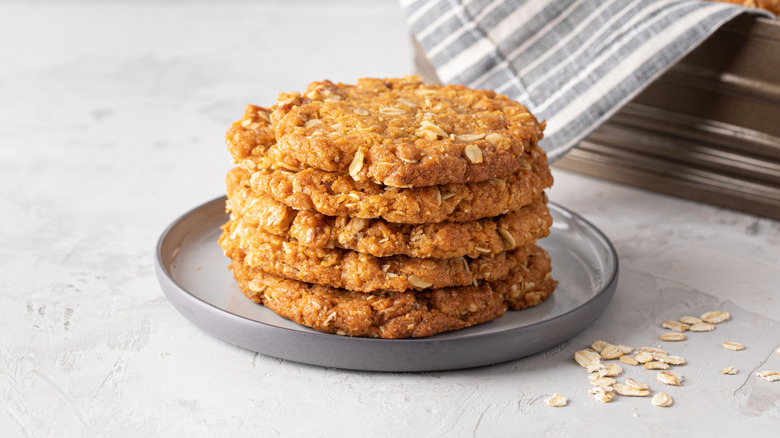
Anzac biscuits are actually not just Australian, they belong to New Zealanders, too. The clue is in the name: Anzac actually stands for the Australian and New Zealand Army Corps. In 1915, during World War I, Anzac soldiers were stationed in Gallipoli in Turkey, as they fought against the Ottoman Empire for eight long months. Their wives at home wanted to send them treats, but needed a recipe that would stand the long journey, and so the hardy Anzac biscuits were created.
Anzac biscuits are still enjoyed today, but now, it's more about the flavor than the durability of this oaty cookie. Made with coconut, oats, golden syrup, and butter, they're the perfect mix of crunchy, caramelly, and sweet. For obvious reasons, they're usually enjoyed on Anzac day, which falls on April 25 every year and aims to honor and remember everyone who served in Gallipoli during the war.
Damper bread
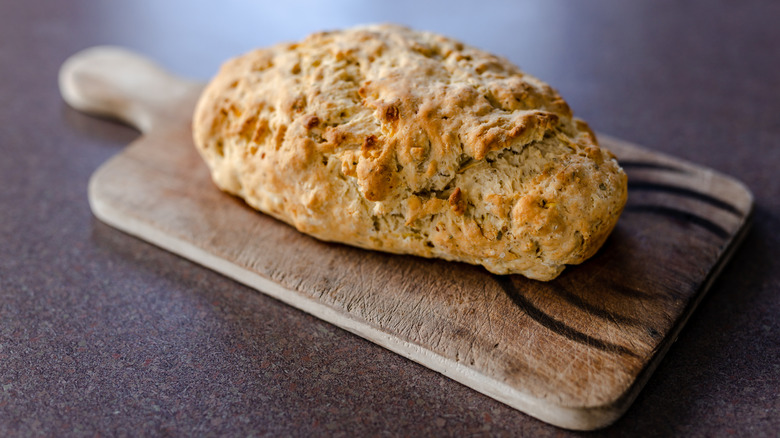
If you're looking for a light and fluffy bread, damper is probably not for you. This bread, made with just flour, water, butter, milk, and salt, is dense and hearty, like Irish soda bread. It's especially tasty when still warm and spread with a generous dollop of butter.
Australians have been eating damper bread for a very long time. In fact, one of the earliest references to the bread was in a 1817 memoir. The bread was born out of necessity. It could be cooked outside in the ashes of fire, which made it the perfect sustenance for many of the earliest Australian swagmen and drovers, many of whom would lead nomadic lives and therefore spend a lot of time cooking outside.
Today, damper bread is eaten across Australia simply because people enjoy it. Many still choose to drizzle golden syrup on top, just as people would have done in the late 1800s and early 1900s.
Vanilla slice

As with a number of Australian culinary favorites, the vanilla slice didn't start out its life in the country. Instead, it was likely brought there by European settlers, although exactly which ones influenced the vanilla slice specifically is unknown. Regardless, the vanilla slice has become one of Australia's favorite sweet treats. Filled with thick, velvety custard, it is sweet and indulgent, yet still light, thanks to the thin crispy pastry and powdered icing sugar on top.
If you need proof of just how loved this dessert is in Australia, you need only look to Merbein in Victoria. Every year, the town hosts The Great Australian Vanilla Slice Triumph. The festival was first started in the town of Ouyen in 1998 by a local called Jeff Kennet, who had declared it his mission to find the best-tasting vanilla slice in the country. To this day, bakers all over Australia compete to take home the gold for their take on the iconic sweet treat.