

Why Small Appliances Should Be Unplugged When A Storm Is On The Way

The weather can be unpredictable, especially in the summer when storms start to roll in. Lightning ranks among the top three deadliest storm-related hazards in the U.S., according to the National Weather Service. A single strike can cause a power surge that can jolt through your home and damage your kitchen appliances and electrical system. Your kitchen might not be the first thing on your mind, but protecting your appliances is a factor in staying safe and avoiding damage. For peace of mind, you should unplug small countertop essentials like your toaster, blender, coffee maker, and microwave whenever you receive a severe weather alert.
If left plugged in, a power surge — which is a quick rise in the electrical current — caused by lightning or power outages, can at best fuse your appliances, and at worst, damage them beyond repair or affect your whole electrical system. And while we're on the warnings, if you have any small appliances plugged into an extension cord, now is the time to change that.
Larger appliances like your dishwasher and oven are typically fine plugged in as they're built to withstand power surges. But if you're evacuating due to heavy storms or potential flooding, it's important to turn off larger appliances, including your fridge and freezer, too. If this is all news to you and you usually don't unplug large kitchen appliances, don't stress, most of the time they don't pose a risk. And don't forget to keep your fridge and freezer closed to maintain the cold temperature inside in case of a power cut. Once a storm is over, it's important to check if the food is safe to consume.
What to check before plugging in kitchen appliances after a storm
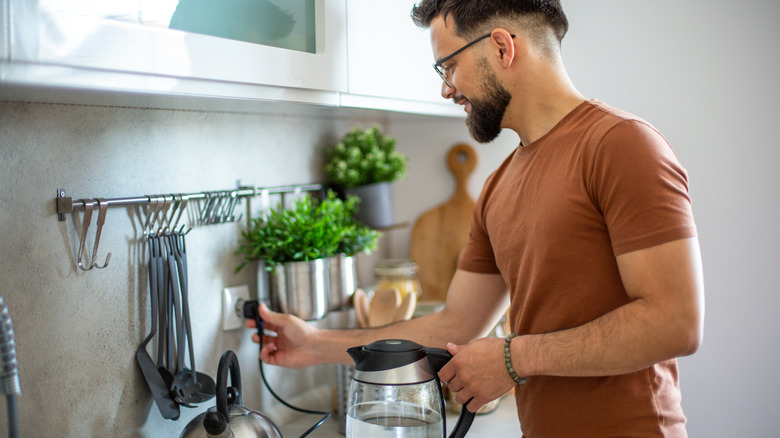
So once the storm is over, what do you check before plugging appliances back in? Basically, you need to give them a once over to see if there is anything out of the ordinary before turning them on. If you notice buzzing or humming near your outlets, wiring, or breaker box, do not ignore it, likewise anything that smells burnt. These subtle sounds and signifiers can indicate electrical problems and are often a sign that your electrical system needs to be checked by a professional.
Storm-related lightning, water damage, and power surges can cause damage that is difficult to detect. But if everything seems normal, the first step is to wait about 10 to 15 minutes before plugging in your large appliances. Once you follow safety guidelines, you'll be all clear to get back to doing the good stuff in the kitchen: Brewing coffee, blending smoothies, or whipping up your favorite meal.