

The Best Pan To Use For Smash Burgers Isn't Nonstick
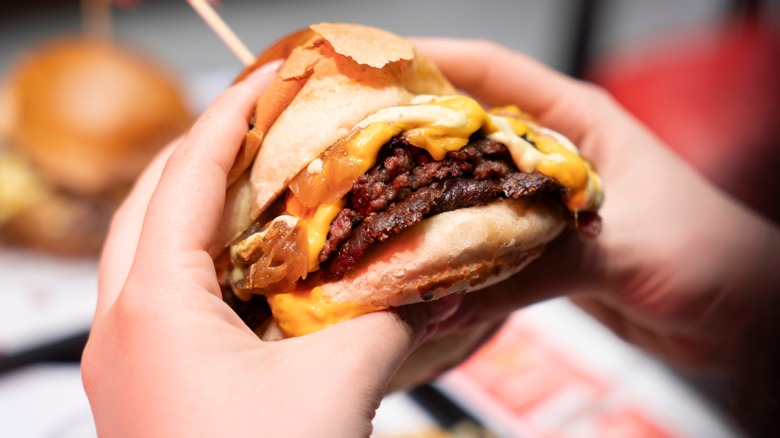
You're making smash burgers for the first time. You know the drill: hot pan, loosely packed meat, press down hard with a grill press. But the "smash" part of making a smash burger is stressing you out. You're worried it's not going to come off clean when cooked, leaving that one stubborn layer stuck to the pan. So you reach for the non-stick. Better safe than sorry, right? Wrong. The best pan to use for smash burgers is your trusty cast-iron skillet.
What sets the best smash burgers apart from regular ones is the borderline-crunchy sear on the patty, which provides a delicious textural contrast to the soft bun. This golden, crispy crust forms because of two factors: the thinness of the smashed patty, and the intense heat on which it's cooked. The second point is where cast iron comes in. Cast-iron skillets and pans retain and radiate heat exceptionally well, which is the key to getting that crunchy, caramelized crust on a smash burger. Once preheated, cast iron's ability to hold onto heat gives an even, consistent searing. It also gives off intense radiant heat, which helps brown the crust and cook the inside of the patty more efficiently than non-stick ever could.
Three tips to ensure meat never sticks to cast iron
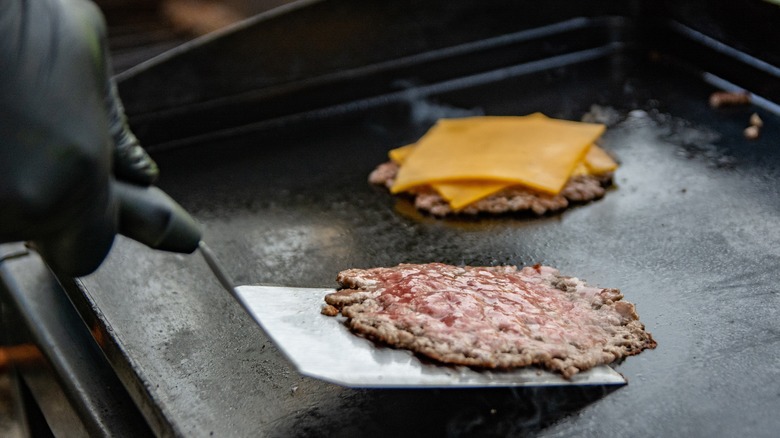
Cooking on cast iron can be intimidating at first, but things are relatively stress-free once you get a handle on these three processes: seasoning, cleaning, and heating. When it comes to your cast-iron cookware, seasoning refers to the thin layer of polymerized oil baked onto the surface. It's what gives cast iron its natural non-stick quality and protects it from moisture. Reapplying oil after each use helps maintain this coating over time. This is why cast iron should never be scrubbed or left to soak in water, as this can strip its seasoning and cause rust; instead, use warm water and a stiff brush to remove stuck-on bits. Wipe clean and dry thoroughly.
In terms of temperature, you want to get the pan up to about 400 to 425 degrees Fahrenheit (204 to 218 degrees Celsius). There's one important point to remember when heating up your pan: Cast iron might retain and radiate heat very well, but contrary to popular opinion, it doesn't heat evenly. On a stove, the center of the pan gets hot first, but the outer edges take much longer to come up to temperature. This is why some chefs recommend preheating cast-iron pans in the oven before use.