

How To Choose The Absolute Best Rug For Your Kitchen
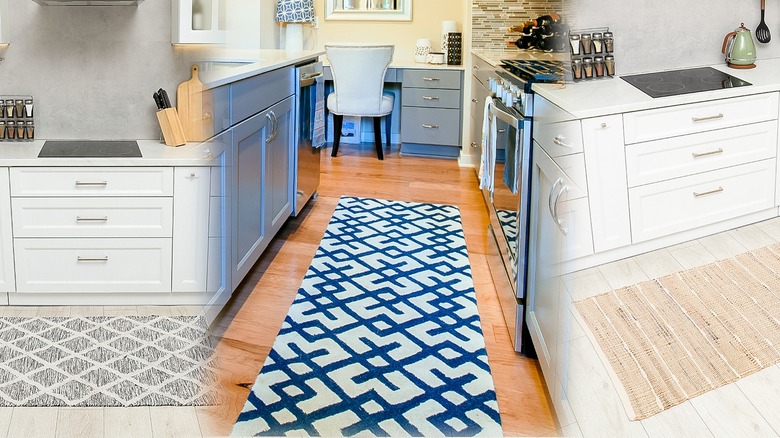
Thinking about going rug shopping soon? A rug can be handy in the kitchen for all sorts of reasons. For one, you might be looking to decorate your kitchen space or prevent loud noises from echoing off of your hardwood or tile floors. A rug can be much more pleasant to stand on for long periods of time than some kinds of kitchen floors, and it can also help define the boundaries of your kitchen when faced with an open-concept floor plan. It could even help your kitchen look larger.
But how, exactly, are you supposed to choose a good kitchen rug to begin with? Unlike picking a rug for the rest of your home, there are some extra considerations you'll need to make in order to pick the right one for your kitchen. More than just understanding its size and look (although those are important to think about, too), you also need to make sure you're making a comfortable and safe choice that can stand up to spills, stains, and regular kitchen traffic. There are also a few things you'll need to know about kitchen rugs before you even set foot in a rug store.
To make the decision a whole lot easier, we've rounded up all the different considerations you should take into account before you buy a brand new kitchen rug. These tips will help you choose the perfect rug for your kitchen, whether you're shopping in stores or online.
Pick a stain-friendly color and pattern

One of the first things to consider when choosing a new kitchen rug is, of course, what you want it to look like. For the rest of the home, this can be relatively easy — all you need to do is choose a pattern you like in a color that matches the rest of the room, and you're ready to go. In the kitchen, however, it's essential to consider how your rug's color and pattern will hide stains.
A plain white or cream rug will show dirt and spills instantly and can be difficult to fully clean. But a dark-colored one, a rug with a busy pattern, or one that is distressed makes it a lot harder to spot dirt and stains. The easiest solution here is simply to opt for a dark rug that will naturally help to hide stains — you'll probably have a hard time spotting a coffee spill on a dark brown rug, for example.
If you have your heart set on a light-colored rug, you should opt for a decorative pattern or distressed finish that will help you conceal the occasional stain. While stains on these kinds of rugs will likely still be somewhat visible, they won't be quite as distracting as they would be on a plain, light-colored rug.
Choose a washable rug
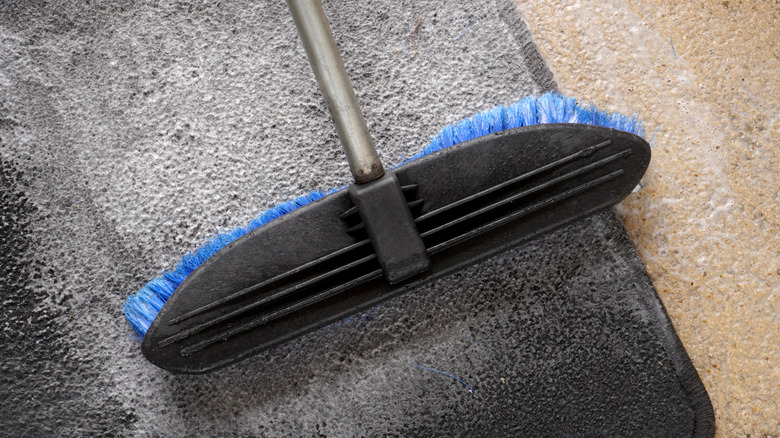
Still worried about spills on your new rug? That's where the material of your kitchen rug comes in. It's not just about finding one that can stand up to a little spot-cleaning, either — you should actually look for a rug that can be machine-laundered. Washable rugs can make the occasional kitchen mishap a whole lot easier to manage. Spot-treating a rug is great for low-traffic areas, and pre-treating stains is still a good idea, but a machine-washable rug makes cleaning your kitchen a lot easier. Otherwise, you'll be left trying to manage washing a hefty indoor rug in the bathtub.
Look for a rug specifically labeled machine-washable. Many machine-washable rugs will need a delicate cycle with cold water, but that's still a lot better than having to spot-clean your rug yourself. Don't forget to consider the size and capabilities of your washing machine at this point, too — this can help you determine what size of rug might be too much for your machine to handle.
You might also try looking for a rug that can withstand some time in the dryer. This will make it much faster to clean your rug in between meals and return it to the kitchen before it's missed. Many rugs that can be machine-dried are synthetic and made of fabrics like polyester, which can withstand heat.
Opt for a comfortable material

Since you'll be spending a lot of time standing on the rug in your kitchen, you should choose something that's comfortable on your feet for long periods. That doesn't just mean going for the thickest, fluffiest rug in the store — a fabric that feels nice to stand on for a few minutes might not actually be all that supportive. Instead, look for rugs that are designed to help cushion your feet. For example, a foam standing mat (or anti-fatigue mat) can be great for keeping by the kitchen sink, as it will support your feet while you stand in place cleaning or doing the dishes. A kitchen mat has even helped Ina Garten beat cooking fatigue.
Some rugs may also come with cushioned or layered bases designed to make them more comfortable to stand on. This can give you more flexibility in terms of materials, without sacrificing long-term comfort. These types of rugs are best for when you want to decorate more floor space than a small mat can cover.
In some cases, thinner kitchen rugs are fine, such as if they're in a spot where you're not standing still much. Some rugs, like runners, are easier to find (and cheaper) when they aren't fully cushioned. For example, you might want a standing mat in front of the sink but a regular ol' rug next to your kitchen island.
Choose a non-slip rug or rug mat
It's no secret that kitchens are high-traffic areas. They're also spaces where falls can be extremely dangerous — you don't want to be slipping on your kitchen rug while carrying a hot pan, knife, or pot full of boiling water. This means you need to find a non-slip rug, or at least look for one that is compatible with a slip-proof mat for underneath.
Most non-slip rugs will have a grippy rubber or mesh backing on their undersides that allows them to stick to the floor without moving, even when you walk on them heavily. Any kind of mat or material that creates friction between your rug and the floor will help it stay in place. For tricky surfaces, you might even consider using rug tape to ensure that your rug doesn't move no matter what. Always test out your rug on your specific flooring when you buy it. Hold onto a steady surface, plant one foot on the floor off the rug, and use the other to try to slide the rug around. If it moves easily, you need a new rug (or at least a non-slip mat).
Also, check that the type of mat or rug tape you're using is safe for your kitchen floors. Some types of non-slip mats can discolor or damage floors like hardwood, so make sure the rug or anti-slip solution is compatible before buying.
Pick the right rug material for your kitchen
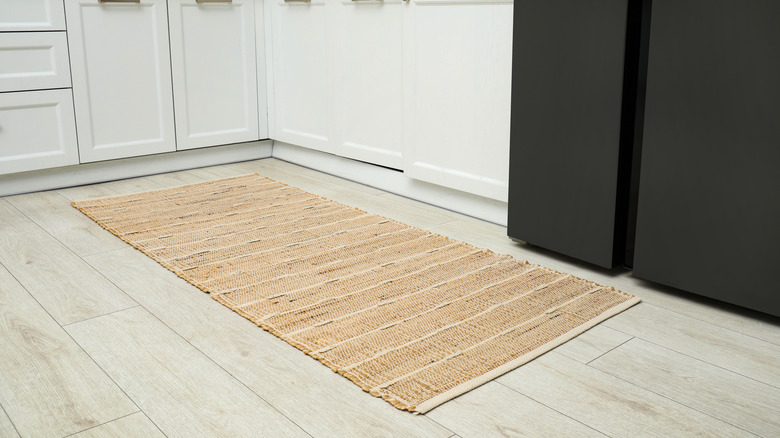
In addition to being machine-washable, a kitchen rug should also be easy to spot-clean and made from a material that's resistant to stains. High-end materials or super thick, fluffy rugs can soak up stains easily, whereas thin woven rugs, mats, or rubber standing mats will be more resistant to spills. For example, materials like nylon, polypropylene, and polyester will be naturally resistant to stains; this doesn't mean they can't be stained at all, but rather that liquids will take more time to soak into the rug's fabric, giving you ample opportunity to clean up a spill before it leaves a permanent mark.
Also, a stain-resistant coating on the surface of your rug can be really helpful, and might be something you want to look for specifically when rug shopping. These types of coatings will force liquids to bead on top of your rug rather than soaking into it; this not only makes cleaning easier, but also gives you a lot of extra time to take care of spills before they soak into the rug's fabric. If you want a really light-colored rug without a pattern, then a spill-proof fabric is a must-have. Generally, you can just look for a rug that is labeled as being stain- or spill-resistant.
Decide on a rug size ahead of time
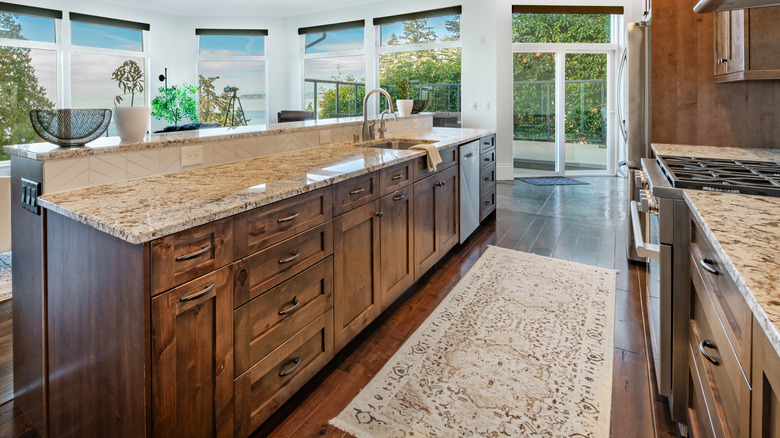
Rugs in kitchens are more commonly long and thin or small and slight (like a tiny rug in front of the kitchen sink). Most longer rugs will need to fit between a counter and kitchen island, for example, without looking too short. In this case, a runner would be the best option rather than a standard-size rug.
First, decide where you want your rug to go, and then measure the space carefully. A small rug in front of the sink should be slightly longer than your sink is wide, helping to visually define a workspace for washing dishes and cleaning. A runner in the middle of your kitchen should be a little narrower and shorter than your kitchen floors, leaving some room on all sides for your floor to show through — sort of like you're designing a path through the kitchen.
Want to test out how the size of your rug will look in your space? You can use painter's tape to outline the perimeter of the rug. This will allow you to visualize how it will look in the space, and could also help you get ahead of any potential problems the size might bring — like if the rug could become tangled up in the dishwasher when it opens or get caught on the bottom of the fridge door.
Always consider sound absorption when rug shopping
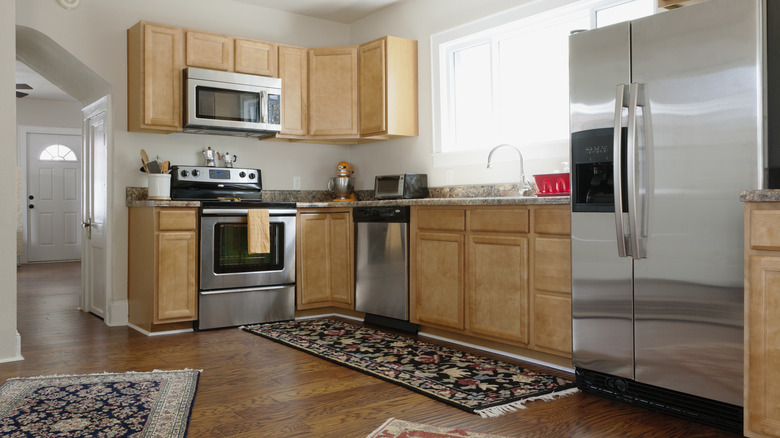
Another reason you might be considering a rug for your kitchen is to help absorb sound. In an apartment, a kitchen rug can help to decrease the level of noise you hear from floors below you (and can also help soundproof your apartment for the sake of your neighbors). In a house, you might opt for a rug to help keep the noise of an open floor plan to a minimum. It can be especially useful when used on surfaces that naturally echo sound, such as tile floors — a common component in many kitchens.
A rug that takes up a lot of surface area will naturally absorb more sound than a smaller one, but you should also consider the material of your rug. A thicker rug will be better at absorbing sound than a very thin one. Some rugs might be specifically designed to help deaden sound, potentially using layers of multiple fabrics or a sound-absorbent base.
We'll be honest: You'll probably have to find some compromise between a machine-washable, stain-resistant rug and one that's designed to be as sound-absorbing as possible. Fortunately, all rugs will naturally absorb some sound, so you may want to start out with a basic thin rug that can be easily cleaned and see how much it changes the space. Additionally, the size of your rug is most important here; even a large but thin rug can block more noise than a small, soundproof one.
Outdoor rugs can be a good option for the kitchen, too
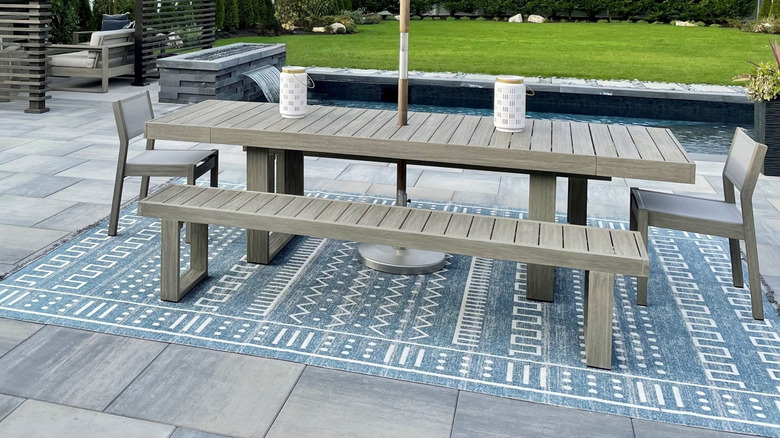
If you're worried about finding a rug with spill-proof material that will last a long time, you might want to consider an outdoor rug rather than an indoor one. Generally, outdoor rugs are made with much more durable, weatherproof materials. They're usually designed to be easier to clean, can withstand dirt and debris, and might even be waterproof or water-resistant. Though they often feel a little more plastic-y than indoor rugs (since they need to survive outdoor weather), they're still comfortable to walk on. You might even be able to find an outdoor rug that provides similar foot support to a cushioned indoor rug.
Because kitchens are such high-traffic — and are high-risk areas for wear and tear — a rug that's designed for the outdoors will hold up a lot longer than an indoor one. This could mean that you won't have to worry about the cost of replacing it as often. Depending on the material, some types of outdoor rugs won't be machine-washable, but weatherproof or water-resistant. This means that you can simply rinse it off outside when it needs to be cleaned and shake it dry or pat it down with a towel.
Ensure the material of your kitchen rug will be safe
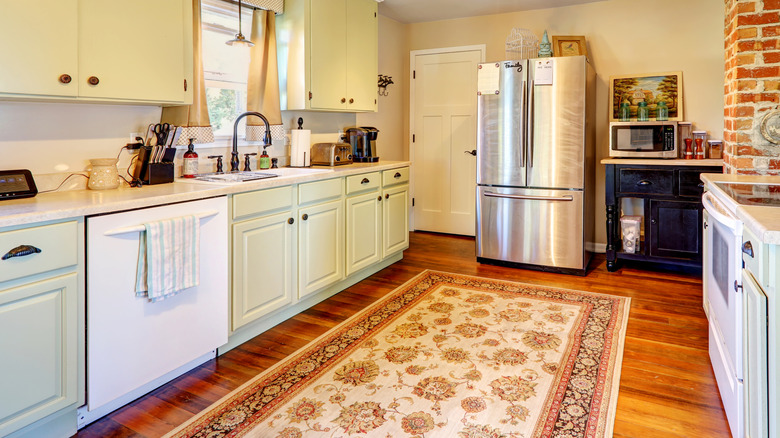
When you're picking a rug, you need to choose one that's going to put your safety first in the kitchen. Don't stop at purchasing a non-slip mat for your rug; you should also check to make sure that the material of the rug itself isn't slippery to walk on, both in socks and with bare feet. You should also make sure that the material doesn't naturally roll up, potentially creating a tripping hazard, and that there's no space for your clothing to snag on the rug. Any kind of rug that accidentally creates an obstacle in the kitchen for you has to go.
Additionally, some rugs will be more fire-resistant than others. While it may be unlikely that your kitchen rug becomes a genuine fire hazard, it's always wise to take precautions, especially when you have a large rug next to an area with open flames (such as a gas stove). Choosing a fire-resistant mat will be less about the fabric and more about making sure it's treated with a fire-resistant coating. Keep in mind that this doesn't mean your rug will be fireproof, but rather that it will withstand fire for some time, making it safer to keep in the kitchen.
Smaller, synthetic rugs can be more budget-friendly
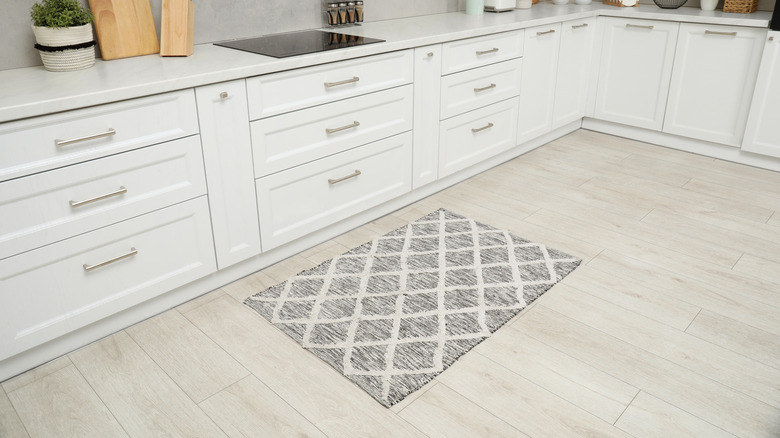
If you're looking for a kitchen rug on a budget, there are a few things to consider. Some outdoor rugs will be cheaper to manufacture due to their synthetic materials, which can make them more cost-effective. Rugs made of high-end materials (like wool, for example) will be more expensive, so avoiding these rugs can also help you save on costs — just keep in mind that synthetic options tend to be a lot less sustainable than organic materials. In some cases, you can opt for a rug that's made of a blend of materials to get a nice fabric without a high price tag.
Naturally, smaller-sized rugs and runners will be cheaper than large rugs. This can make getting a small foam mat for in front of the kitchen sink or thin runner to cover the kitchen very cost-effective. Choosing a smaller or a thinner rug is also a good option for someone who wants to save on their rug, but not sacrifice quality.
Small anti-fatigue mats are also generally very cheap, giving you a comfortable kitchen option that isn't too costly. If you're looking for a floor mat, keep in mind that some types of foam — like natural latex, for example — are more sustainable than others. You might also want to consider this kind of budget- and environmentally-friendly compromise when shopping for non-slip rug mats, which are often made of foam or rubber.