

Why You Should Treat Your Fruit Salad Like A Chopped Salad
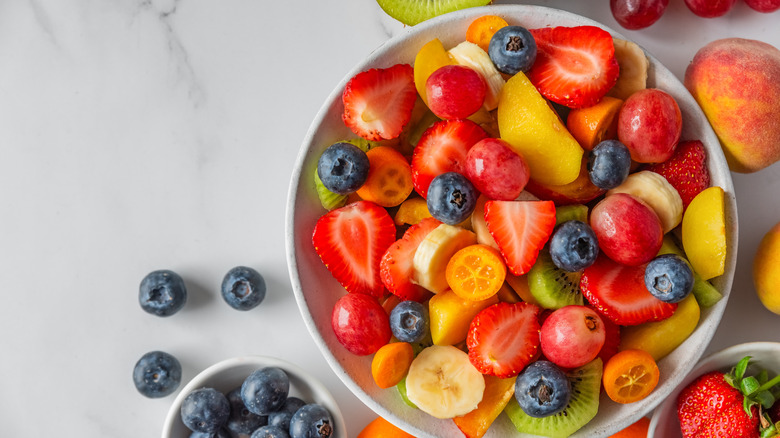
A fruit salad may seem like a casual, thrown-together combination of your favorite produce, but it's so much more than that. Everything from the dressing used to the type of fruit included matters, but size is the most important component, in our opinion. To get the best bite out of your fruit salad every time, approach it like a chopped salad.
Fruit salads are arguably one of the best-tasting salads around, but they're not always the most enjoyable to eat. Spearing strawberries, grapes, kiwi, and mango onto the fork at once can prove quite difficult, and even when you resign yourself to a spoon, it's easier to just eat one fruit at a time. The struggle to eat fruit salad often stems from the size of the ingredients. When large chunks of honeydew take up more space than sliced grapes, it's hard to get the perfect assortment of fruit in each forkful.
To counteract this, you'll need to cut up each fruit as if it's a chopped salad. Sure, it may add a few extra minutes onto your prep time, but it'll create the most incredible bite every time. The key is to get the ingredients down to the size of the smallest fruit, almost like how our mint and melon fruit salad does. The melons are sphered to mimic the shape and size of the blueberries, allowing for the perfect variety with every bite.
Pick the right mix of fruit for your chopped salad
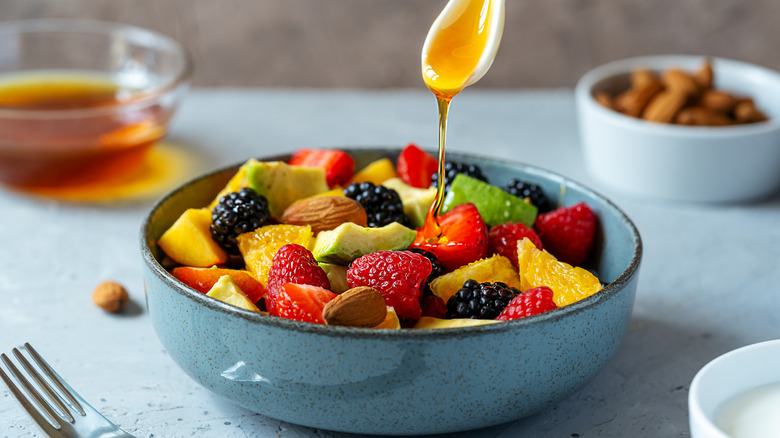
Not cutting the ingredients down into similar sizes is one of the most important mistakes to avoid when making a fruit salad, but before you get to that point, you'll need to choose the proper combination of fruits. It's easy to just go with your favorite mix, but if you're looking for something to serve a crowd or really make an impression with, make sure the fruits include a balance of flavors. Our simple fruit salad features sweet, juicy mangoes and strawberries, tart green grapes and blueberries, as well as kiwi and red grapes.
The mix offers a range of light, zesty flavors and richer tastes, making for a well-blended fruit salad. You can go down the tropical route by pairing bananas and pineapple with the mango and kiwi, or spring for a winter fruit salad with apples, oranges, and pears — either way, don't be afraid to include out-of-season fruits that will help balance out the ingredients.
On top of slicing the fruits into the proper size, use tiny pieces of produce to work as the salad toppings. Similarly to how chunks of feta or pumpkin seeds may finish off a regular salad, adding coconut flakes, dried berries, or pomegranate seeds as a fruit salad topping makes the additional ingredients stand out amongst the similarly-sized ingredients while adding a textural contrast.