

Spode's Blue Italian Dishware Line Is Still A Kitchen Classic — Here's How To Find It
We may receive a commission on purchases made from links.
One of our favorite current kitchen design trends is weaving in vintage touches. Things you inherit that have been passed down through generations, others you find at thrift stores or flea markets, or antiques you save for — these items personalize your kitchen, add depth and uniqueness, and create a cozy aesthetic rich with colors, patterns, and textures. There are certain product lines that are especially desirable when you're mixing vintage styles with modern in your kitchen. Libbey glasses, Pyrex cookware and bakeware, and Revere Ware pots and pans are just some of the old-school kitchen brands that make the ultimate thrift-store finds. Another name you should definitely have on your list: Spode.
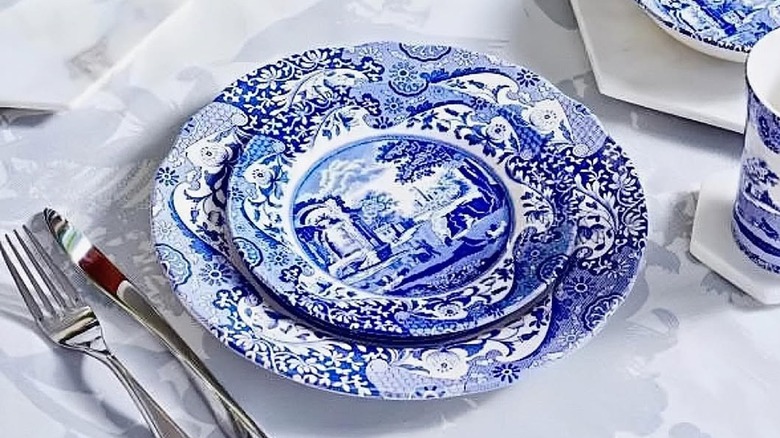
Spode is world-renowned for its beautiful dishware. Its Blue Italian line has been one of its most popular designs for decades. With its charming, imagined bucolic Italian countryside scene done in regal blue, this line is easy to spot in secondhand and antique shops, and promises an instant style boost for your kitchen. Spode has produced many dishes over its years — and continues to do so today — distributing its crockery far and wide, so the good news is that if you'd rather have new Blue Italian Spode dishes, you can easily buy them. But sometimes it's more fun to hunt for older examples. Simply familiarize yourself with the pattern and look for Spode's name on the base of the dishes and plates. If it's especially old, this dishware may also be labeled Copeland, Garrett, or Copeland & Garrett — from 1833 to 1966, Spode was under the ownership of one or both of these names.
Spode's history and other cherished patterns
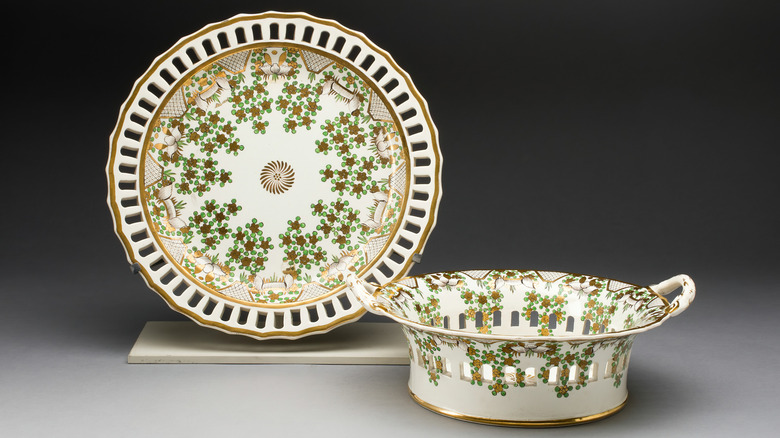
Josiah Spode started his pottery business in England's Stoke-upon-Trent in 1767, now known either as simply Stoke, or Stoke-on-Trent and still famous for pottery. It's said he developed a superior formula for bone china, but didn't stop with the material itself — the company quickly became known and loved for its beautiful and intricate patterns. Spode was commissioned to create the banquet service for the coronation of George IV in 1821 and became a royal favorite. Other famous fans included Charles Dickens, who wrote a short book about Spode in 1852 called "A Plated Article".
While the Blue Italian pattern — first unveiled in 1816 — is a classic and is easy to find second-hand, there are plenty of other patterns to fall in love with from Spode. The Chinese Rose motif, for example, has been treasured since the early 20th century. Also from the early 1900s is the Fleur de Lys Gold, a stunning design embellished with radiant gold. The slightly harder-to-find brightly colored Stafford Flowers pattern is older, having debuted earlier in the 19th century. And from 1938, there's a Christmas Tree motif that would really make your holiday table shine, and which is still produced today. If you're looking for ideas on creating an English-style kitchen, love hints of elegant antique style, or want to accumulate a collection of dishes to cherish and pass on through future generations, start hunting at markets and secondhand stores. In a pinch, you can flesh out your own inventory with contemporary spode available at stores like Williams Sonoma and Bed Bath & Beyond. The company continually produces the Blue Italian line, and you can even source it at Amazon; for example this small Spode Blue Italian serving dish costs under $30, and this full 12-piece Blue Italian dinnerware set is just under $180.