

The Tortilla Swap That Gives Tacos A Tasty Umami Punch
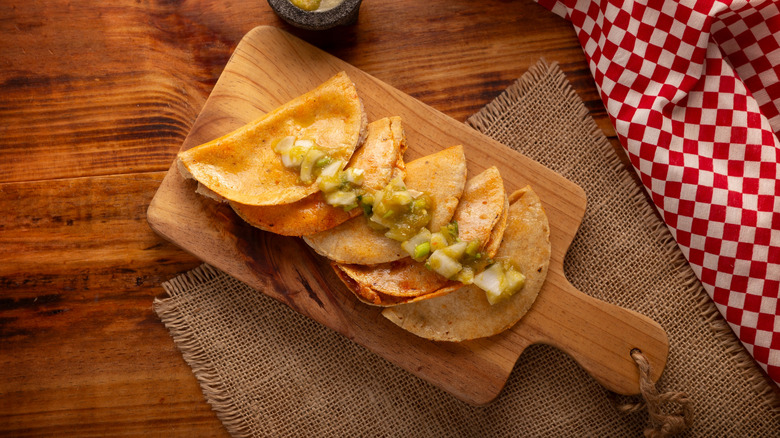
Tacos come in tortillas — that's how it's always been. That wheaty soft taste is as familiar as it gets; the slightly chewy bite pulls a welcoming sensation in your mouth every time. It's almost unfathomable to disrupt that pattern with anything else, at least until you've got a package of nori seaweed on hand and the tantalizing promise of something new on the horizon. Revamping your tacos doesn't always have to be about the filling. You can get creative with the exterior, too, and whether kept as they are or deep-fried to a crisp, those seaweed sheets can do wonders.
Transforming nori sheets into taco shells means cutting them into tortilla-sized circles. From there, you can jump straight to adding the fillings. Or, if the sheets are too flimsy for your liking, consider deep-frying them tempura style. While they're still hot off the pan, fold them into taco shell shapes by gently bending them in half and hanging them on wire racks or taco holders.
For anyone who's been looking for tortilla alternatives to switch up their wraps and tacos, nori is the perfect choice. In place of the usual tortilla's thickness is the seaweed's thinner, more brittle texture that crumbles onto your taste buds rather than pulling apart with each bite. Nori seaweed is salty and faintly savory with a lingering hint of marine umami, yet still light enough to keep things fresh. You wouldn't typically attribute any of these things to tacos, but perhaps that's what makes this switch-up so exciting.
Your gateway to making Asian-style tacos
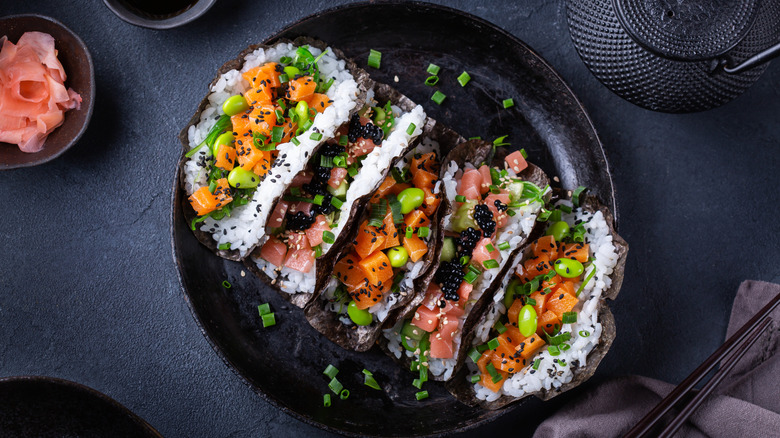
This twist is unique and versatile enough to put a spin on all kinds of taco recipes, but you'll like it best when paired with ingredients that typically accompany nori, and more specifically, sushi rolls. Inspired by popular, beloved dishes like California and Alaska rolls, ahi tuna, salmon, imitation crab, eels, and shrimp are preferred protein choices. It only makes sense that they are then joined by veggies such as cucumber and carrots, as well as avocados. Shredded into thin ribbons and lightly pickled, daikon radish adds a fresh crisp that lightens up each bite. Beni shoga, also known as Japanese pickled red ginger, on the other hand, is excellent if you want something subtly spicy to liven up all those soft flavors.
Can't forget about the sauce, either. Sriracha, mayonnaise, and sesame oil make a foolproof base, but don't hesitate to tap further into Japanese cuisine staples. There's no better match than furikake — a seasoning blend made from dried seaweed flakes, dried fish, soy sauce, and sesame seeds. A splash of Japanese soy sauce amps up the umami factor, with a bit of sweetness chiming in the back. Yuzu lemon juice is another top-notch choice if you like a zingy spark, and mirin (or rice wine vinegar) is simply marvelous when it comes to infusing sweetness. Teriyaki sauce, while typically reserved for the grill, can also blow you away with a few sweeps onto seared salmon or marinated into beef slices.