

Ignore The 'Just 3 Knives' Rule If You Eat A Lot Of Fish
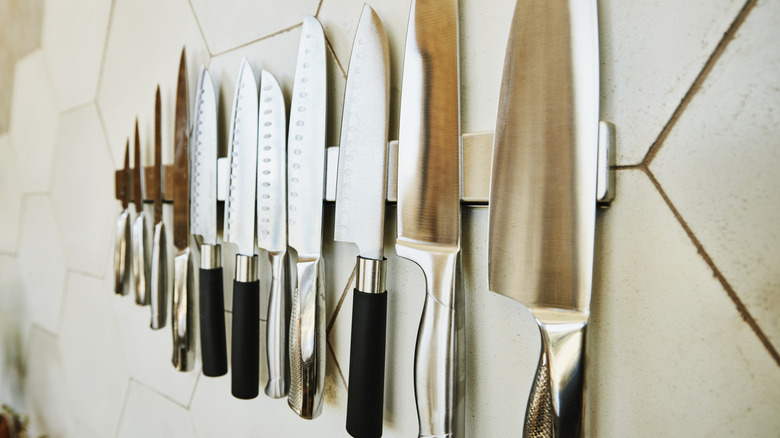
For home cooking, there is really no need for an extensive set of knives. Most of us really do not need an expensive eight-knife set with a matching block — and you probably know that from experience. Whether you grew up in a house with one of these sets or have only seen them when visiting others, you've probably noticed that it's really just two or three knives that get 99% of the use. A chef's knife takes the brunt of it, but there are some tasks for which only a serrated blade will do. And then every once in a while there comes a fiddly small task for which you want a paring knife. But that's about it — unless you like cooking fish, that is. Passionate pescatarians know that there is a fourth blade that you need to have in that set: a fillet knife.
A fillet knife stands out from the rest of the knives in your collection primarily in how the blade is crafted. Those other three knives all have stiff, straight blades, which make them perfect for chopping, slicing, and crushing ingredients. But for the delicate work of breaking down a fish — separating the fillets from the body and removing the skin from those fillets — you need flexibility. Fillet knives (not to be confused with a fish knife or a butter knife) feature a thin blade that is easily flexed, ensuring a close cut and perfect fillet every time.
Why you need a fillet knife for preparing fish
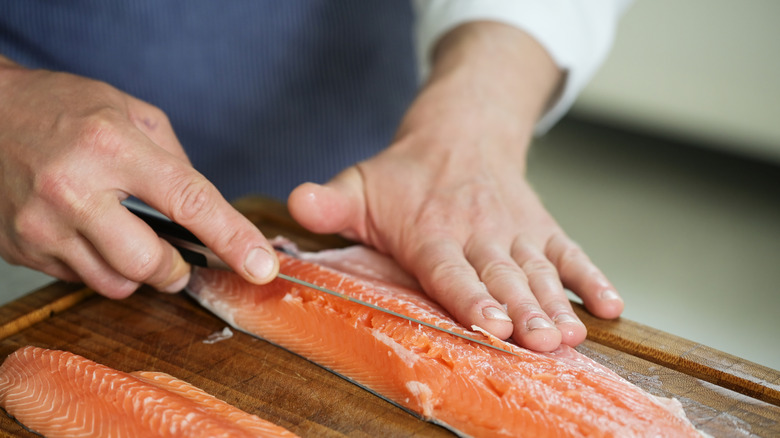
Home butchery is not something that even the most dedicated culinarians take on themselves — aside from something like breaking down a chicken. But this is not the case when it comes to fish. It is much easier to purchase and transport, for example, a whole salmon, than it is a whole pig — not to mention that it is a much more reasonable amount of food. With a fillet knife you are prepared to bring home whole fish and not only fillet them to your own specifications, but also to explore more cuts of fish that might not be available at your local market.
There are many different ways to cook fish beyond those baked cod fillets that have become far too routine. With a fillet knife in hand you have the creative freedom to try roasting a salmon tail cut or steaming a whole fish with soy sauce in the Cantonese style, stuffed with aromatics like shallots and ginger. You can even try some of the more unique recipes, like fish head soup, from a part that might be thrown away, or salmon "wings," a cut that includes the pectoral fin and a delicious little nugget of meat. Breaking down your own fish instead of buying pre-cut fillets at the store opens up a whole new world of creativity in your kitchen, and it all comes down to having the right tool.
Fillet knives for every budget and need
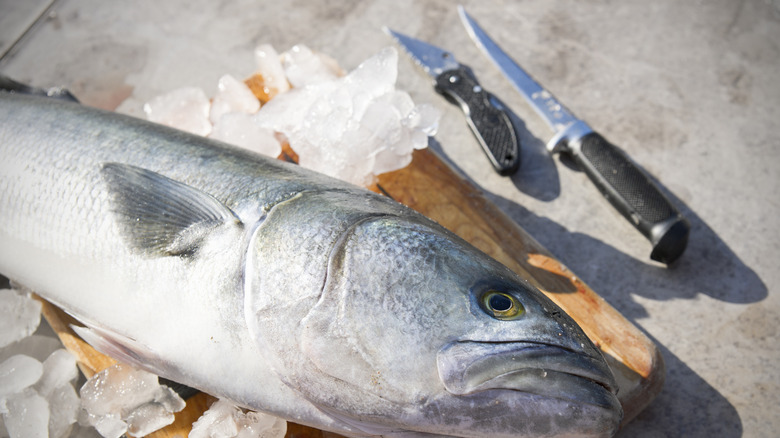
You will see plenty of variation in handle, shape, and even the metal used, but to be a fillet knife it must have a thin, narrow blade that flexes easily. Despite the variety out there, there are good options to suit every use and budget.
Simple, reliable, and inexpensive, this 8-inch Fillet Knife from Victorinox offers a solid blade with a useful handle. Home cooks love expensive knives with flashy looks, but a well-made blade with a non-slip handle like this fits the bill. But if you do enjoy the finer things, and the look of your blades really matters, you can't go wrong with the Classic IKON 7-inch Fillet Knife from Wüsthof. It carries a heftier price tag, but it is a quality blade with a simple, elegant look, from a much-respected brand.
Of course, we'd be remiss not to list one knife on the outdoorsy side. One of the great joys of knowing how to clean a fish is crafting a meal from sea to table, after all. For the fisherpeople out there, the Speed Demon Pro Fillet Knife from KastKing features a non-slip handle and a high-visibility color that ensures you'll be able to find it when you need it.