

Why Your Coconut Milk Keeps Curdling In Dishes And How To Fix It
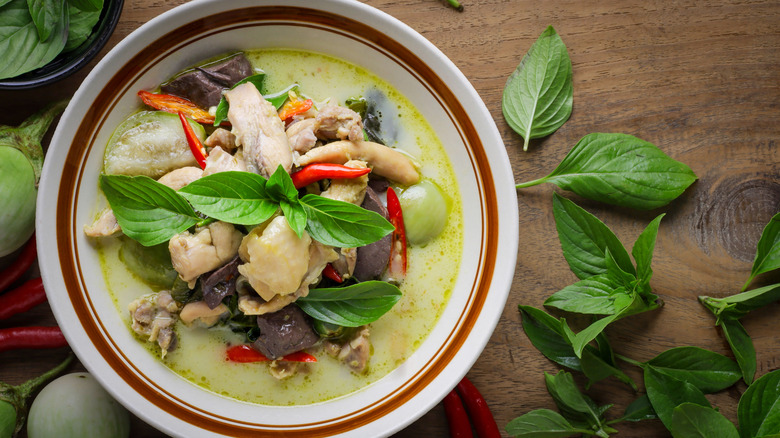
When it comes to elevating a dish from decent to memorable, few ingredients can hold a candle to coconut milk. From a fresh and vibrant fish curry to braised coconut beef ribs, a can of coconut milk doesn't just enhance a dish, it transforms it. Which is why it's so frustrating when it suddenly curdles, forcing you to ditch the sauce and go back to the chopping board.
Coconut milk can start splitting if it's exposed to high heat for too long. It's composed of protein and oil from the flesh of the coconut which is about 60–70% water. When heated, the proteins change structure and separate from the oil and water, which is what leads to curdling. This usually happens at temperatures over 176 degrees Fahrenheit (or 80 degrees Celsius).
There are many common mistakes people make when cooking with coconut milk. One is pouring cold coconut milk straight from the fridge into a hot pan. This sudden change in temperature, also known as temperature shock, can cause the coconut milk to separate. So let the coconut milk reach room temperature first. Once it's in the pot, keep the heat low to moderate and stir consistently to distribute heat evenly and prevent scorching on the bottom. The second reason coconut milk curdles in the middle of cooking a meal is the introduction of acids. So it's important to wait until the very end to add that squeeze of lime to your dish to stop it from separating.
Don't cry over split coconut milk. Fix it.

No matter how bad it looks, and regardless of what you're cooking, you should be able to fix curdled coconut milk with some tapioca starch (or cornstarch) and a little bit of patience.
Here's what you do: If, despite your best efforts, you notice that your coconut milk is starting to separate, quickly turn off the heat to stop it from forming more curds, and take out any vegetables or proteins from the split sauce. Take 2 tablespoons of water and 1 tablespoon of tapioca or corn starch to make a slurry. Add this into the curdled mixture a little bit at a time, stirring constantly, and your sauce should stabilize in a few minutes.
When mixed with liquid and heated, corn starch goes through a process called gelatinization that causes it to form a gel. This gel helps give the mixture structure and prevents liquid from separating, plus it gives sauces a smooth, glossy finish.