

Scrape The Sides Of Your Pot Repeatedly For The Best-Tasting Pasta Sauce
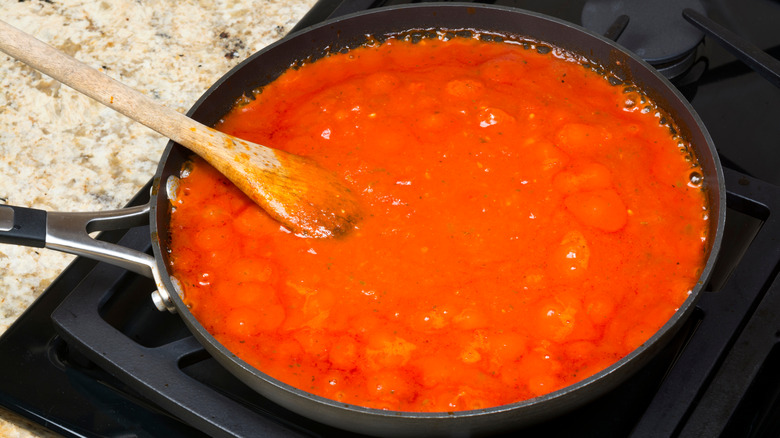
Rich, flavorful, Italian Sunday dinner worthy pasta sauce isn't something you can fake, and there's no secret, shortcut ingredient to make it that way. Just time and love. That's according to Chef Stefano Secchi of Michelin-starred restaurant Rezdôra and Massara on Park in New York City. When asked by Tasting Table whether there are any secret ingredients he'd recommend to deepen the flavor of homemade pasta sauce, he said, "Nope, time makes it richer ... there's no cheat for that." What he does say will do the trick, however, is something you can only achieve with patience, attention, and some scraping of the sides of your pot while your sauce is cooking.
"Slow cooking the sauce and literally scraping the sides of the sauce pot back into the sauce with a rubber spatula ... you have intense 'dried' sauce on the outside of that pot that will intensify your homemade sauce and enrich the flavor. There was a reason the nonne (Italian for grandparents) had salsa pomodoro simmering slowly all day," says Secchi. It certainly makes sense, seeing as, when you're cooking anything — be that earthy mushrooms or juicy tomatoes — you're essentially shrinking and concentrating flavor. The more cooked, the more concentrated, making the sides of your saucepan the place where all of the deep, rich flavor your sauce needs lies.
So, while the importance of letting your sauce simmer is common knowledge that cannot be replicated, the way you stir, and how often, is equally so. Chef Secchi has the stars to prove it.
Pasta sauce as a practice in patience and stirring

Simmering is how your sauce develops its flavors. The more time it gets to do so, the more pronounced its flavors will be. But you can't just leave your sauce and forget about it. Deep, rich, flavorful homemade pasta sauce requires time; however, it also requires attention. That much is true whether you're letting it simmer for 30 minutes or five hours, and no matter how long you're letting your pasta sauce go for, you're going to need to stir it. The first, cohesive stir is going to occur once your sauce ingredients have been cooked down and the liquid is added, to ensure everything gets combined and cooked evenly. Brought to a boil, cut to medium-low, and then left to simmer, you're then going to want to come back to stir your sauce regularly throughout the total time it's left to cook.
Next time you're cooking homemade pasta sauce, set a timer for every 20 to 30 minutes or so. This will serve as your reminder to give it the attention it deserves, and allow it just enough time to simmer up all of those deep, rich, concentrated flavors that develop along the sides of the pan without burning them. Stirred and combined with the rest of your sauce, all of those flavors will build and combine over time, eventually distributing evenly throughout your sauce until, finally, they can be ladled over your favorite type of pasta.