

Chocolate Wasn't Originally Used For Eating: Here's Its First Purpose
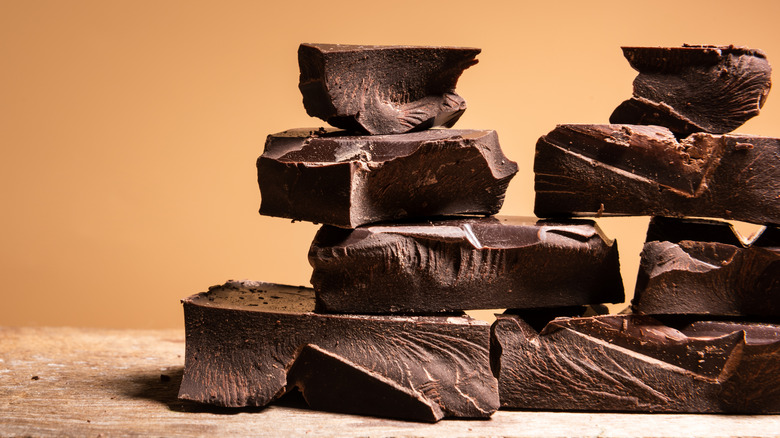
Chocolate is a massive player in today's modern food culture, with the global chocolate confectionery market valued at $140 billion, per Statista. There's milk, dark, flavored, holiday-themed, and even 100% dark chocolate to enjoy all year round, in different flavors, sizes, and shapes — hearts, bunnies, Santas, you name it. But historically speaking, this solid type of chocolate is a fairly new thing, as it only came about in the 19th century. Although humanity has been obsessed with the fruit of the cacao tree for thousands of years, for most of that time chocolate was consumed as a drink.
The first people to drink chocolate were ancient Mesoamerican cultures, including the Maya and Aztec civilizations. The cacao tree had an immense spiritual significance for them because they believed the origin of humanity was connected to the tree. Drinking the chocolate was therefore primarily ritualistic and ceremonial, similar to how wine was enjoyed by the early Christians. It was also frequently used as medicine for a diverse range of ailments. Fever? Here's some chocolate. Digestive issues? A cup of chocolate might fix it. Despite that (or perhaps because of it), chocolate stood as a symbol of exclusivity and wealth, mostly accessible to those of higher social standing.
The Early Modern Era marked the worldwide spread of drinking chocolate
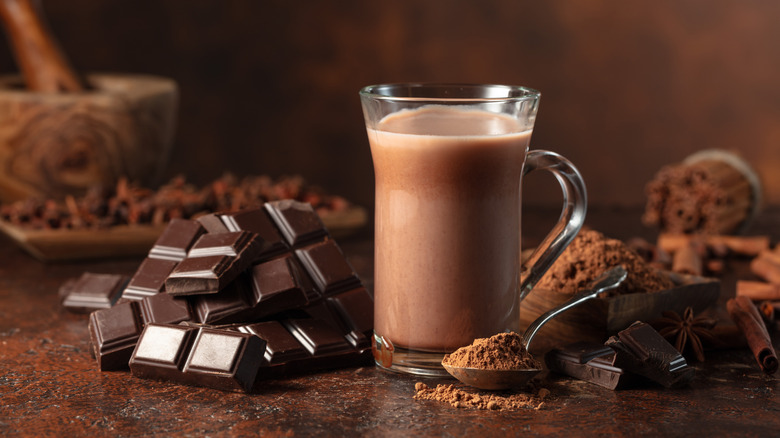
Mesoamerican cultures started drinking chocolate at least 3,000 BC, but the rest of the world didn't catch on until the 16th century; that's when the sweet tradition of drinking chocolate spread around the world. It first became popular in Spain and then very slowly spread throughout Europe. It did remain an aristocratic drink, though, so the rich history of drinking chocolate was mainly written by the materially rich. One infamously wealthy historical figure who loved a good cup of chocolate was none other than Marie Antoinette.
Speaking of recipes, the drinking chocolate of history looked slightly different from our modern hot chocolate. It was made with water, not milk — the latter didn't come into the picture until the 1700s. Before then, the most common way of making the drink creamy and frothy was by adding egg yolks. Other mix-ins included cinnamon, nuts, chili, vanilla, and various other spices that are pretty similar to our modern tastes.
Chocolate finally became a solid product in 1847, when Joseph Fry (of the J.S. Fry & Sons chocolate company) created the very first chocolate bar. Not only did that invention introduce eating chocolate, but it also brought the treat to people outside of the aristocracy. Chocolate bars became immensely popular at a rapid pace, which meant other companies soon caught on and started manufacturing their own. By the 20th century, chocolate was recognized as one of the most popular confections, and we're pretty grateful that it has remained so to this day.