

Give Hummus An Umami Boost With A Simple Seafood Addition
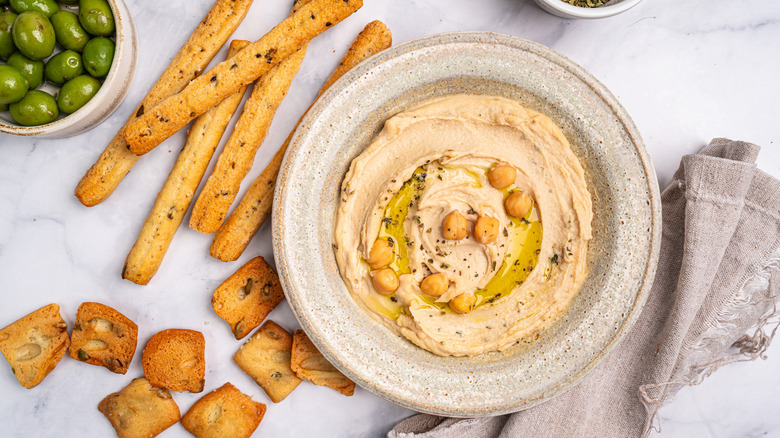
Scan the chiller cabinet at the grocery store and you'll see a variety of hummus flavors, combining red pepper with garlic and za'atar with pine nuts. However, if you're a pro at making hummus and want to exercise those creative culinary muscles at home, you should consider a more unusual take. Enter a simple seafood addition that will give your hummus a surprising umami boost: shrimp stock.
A classic batch of hummus is made by blending cooked chickpeas with tahini, lemon juice, and seasonings. While this basic recipe has a bright and breezy vibe, there is an abundance of other yummy types of hummus that stray from the norm by incorporating vibrant beets and creamy yogurt to verdant fava beans and aromatic herbs. Adding shrimp stock to hummus puts another twist on this iconic Middle Eastern favorite and transforms it into a deeply savory and delectable dish. The meaty flavor of the concentrated shrimp-y broth is mixed into the chickpeas, lending it an umami quality and velvety consistency.
To make shrimp stock, you'll need to saute your chopped shrimp (including the shells) until they develop a touch of color — the caramelization will intensify their flavor. Then you can add in aromatics, such as shallots or garlic, before simmering with a splash of water. After five to seven minutes, strain the shrimp and you'll be left with a fragrant seafood stock. However, to extract the maximum flavor from the shrimp, whizz them up in a blender with the shells, and strain before reducing down.
Shrimp shells are full of oceanic flavor
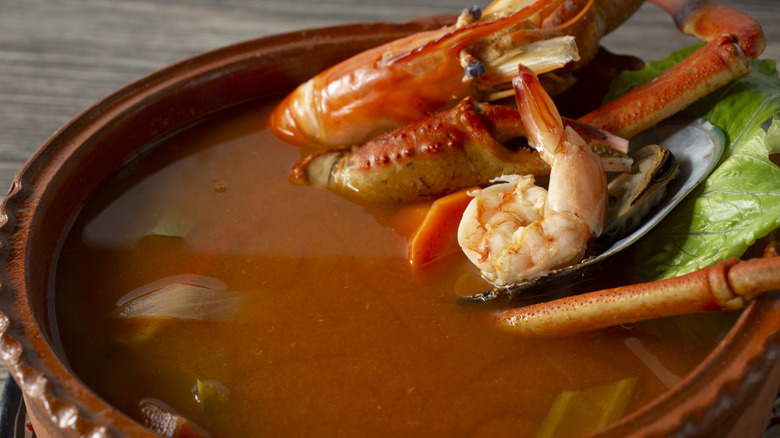
Cooking shrimp with the shells and heads on intensifies a shrimp stock because the shells are where the majority of the flavor molecules (or the ribonucleotides) lie. The heads of the shrimp also have a high fat content, which lends the stock a buttery consistency and depth. Reducing your strained stock until it has thickened into a punchy jus magnifies its flavor and means you will only need to add a small amount to your chickpeas before blending, resulting in a rich, creamy, and savory result. As you're jus won't contain salt, you'll need to season up your hummus accordingly (leaving your stock unsalted means you can flexibly use any leftovers in other meals too).
If you aren't keen on seafood, consider making garlic Parmesan hummus. This recipe combines the aroma and sweetness of roasted garlic with the salty twang of fresh Parmesan, which is naturally rich in glutamate (the clever amino acid that lends foods, like tomatoes, anchovies, and soy sauce, their savory quality). A gorgeously green alternative that skips the chickpeas altogether is this 5-ingredient edamame hummus. These podded and steamed soybeans are jam-packed with umami flavor and are also an awesome source of fiber.