

Martha Stewart's Creative Way To Make Kitchen Jars Fun And Functional

Martha Stewart's aesthetic is its own kind of empire, built as much on beauty as on utility. Long before social media made "kitchen goals" a thing, Stewart was setting the standard for what a home could look like, turning simple routines into celebrated rituals and ordinary storage into something beautiful and worth displaying. Visual harmony and balance run through every detail, down to the wide-mouth jars she uses to store her dry ingredients, lending a structured dependability to her pantry shelves.
A kitchen is often the busiest, most experimental room in the house, where ingredients, tools, and technique come together under constant pressure. Disorganization in this space doesn't just look messy, it actively gets in the way, making each step slower and more frustrating. As revealed on her blog, Martha Stewart's thoughtful kitchen organizational system addresses this head-on, using transparent, wide-mouth jars that make every ingredient instantly visible and accessible. This orderly touch allows for a smoother, more focused experience, meaning you can work with less mess and keep the focus on the creative process of what you're making instead of what you're missing.
Stewart's storage style also transforms the look and mood of the kitchen itself. Each container is intentionally selected to fit its contents and purpose, creating a sense of structure without sacrificing beauty. The repetition of shapes and the play of light through the glass add subtle texture to the space, making everyday staples feel like part of the decor. The result is a workspace that feels calm and inviting, where efficiency and aesthetics work together to make cooking less stressful and more rewarding.
Martha Stewart's managed manner: Mess to method
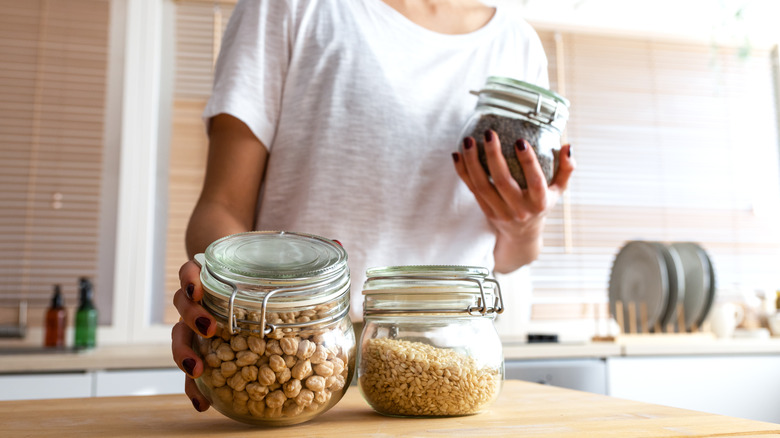
The wide-mouth glass jars in Martha Stewart's kitchen serve a practical purpose. A tight seal helps pantry staples like flour, sugar, and grains stay fresher for longer by blocking out air, humidity, and the pests that so often sneak into bags. When ingredients are protected in glass, there's much less risk that one mishap or infestation will spread throughout the whole pantry. Paper and plastic bags, on the other hand, tend to rip, leak, and invite disarray. Jars create a solid barrier, keeping freshness and flavor in and everything else out.
Jars with wide mouths make it possible to dip in with a full-sized scoop or measuring cup, not just a spoon. This makes baking and batch cooking (which is different than meal prepping) simpler, with fewer tools, less mess, and barely any spills. There's also a satisfying, trustworthy logic to seeing pantry staples clearly. Transparent jars prompt you to use what you have and make it easy to spot when supplies are running low. No more sifting through dusty mystery bags or stumbling upon forgotten, stale ingredients hidden at the back of the shelf. Even the smallest kitchen feels more ordered when ingredients are displayed in jars rather than scattered in mismatched and deteriorating packaging.
Stewart often chooses a mix of jar shapes and sizes, adding texture and personality to her shelves. Some are tall and slim, others short and broad, each container an intentional design element. The most-used jars often live right on the countertop, making meal prep feel easy and inviting. This kind of accessibility is just as central to her aesthetic as the visual order; it's storage designed for real cooks who want beauty and utility close at hand.